
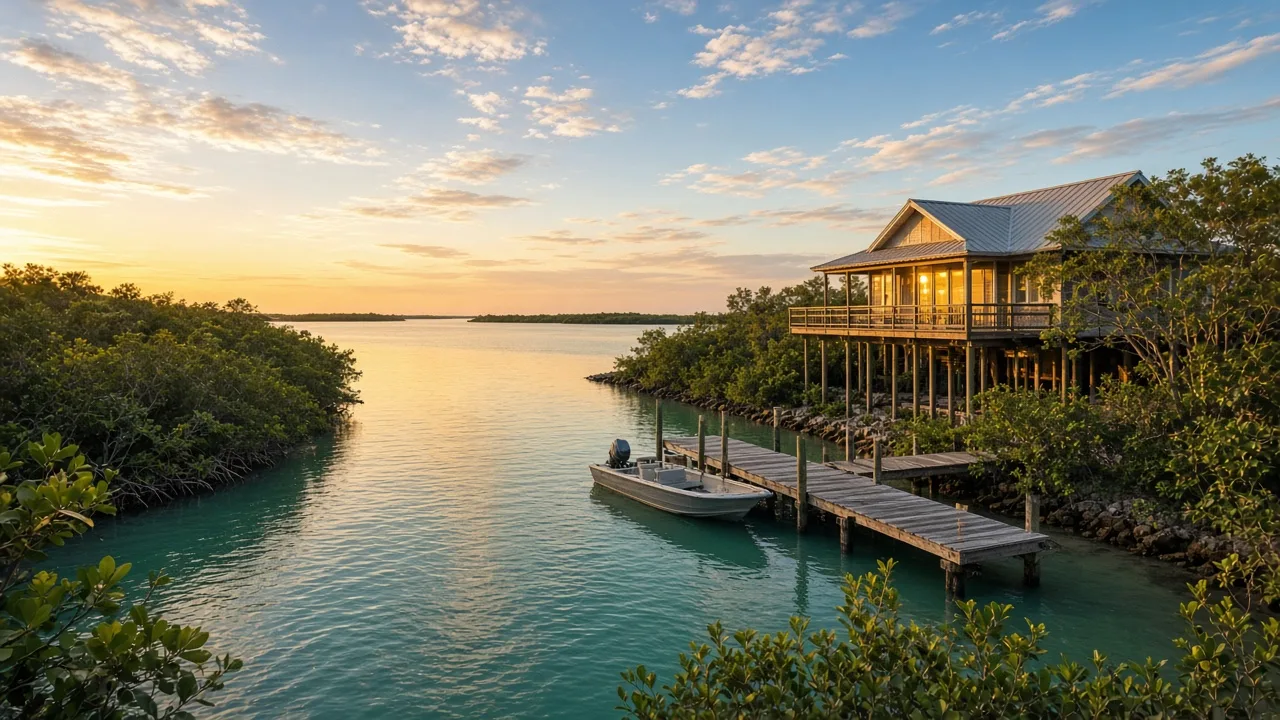
Buying a Waterfront Home in the Lower Florida Keys: A Complete Step-by-Step Process for Buyers
From Big Pine Key to Sugarloaf Key, the quiet stretch of the island chain has its own waterfront, its own rules, and its own rhythm. Here is how the buying process actually works here.
Key Takeaways
- The Lower Keys are the quiet islands southwest of the Seven Mile Bridge: Big Pine Key, Little Torch, Ramrod, Summerland, Cudjoe, and Sugarloaf, each with a different waterfront character.
- Most Lower Keys waterfront is on natural, tide-cut canals rather than dredged marina communities, so depth at mean low water, seagrass, and dock permits matter more than they do in the Upper Keys.
- The National Key Deer Refuge and Monroe County land-use rules shape what you can build, renovate, and dock, and the ROGO allocation attached to a parcel is part of its value.
- The purchase steps mirror the rest of the Keys, with extra weight on flood zone, elevation, septic and well, and the condition of the seawall, dock, and boat lift.
- Work with a team that reads Lower Keys water and zoning fluently, from pre-approval through title and survey, and you can close with confidence on a stretch of paradise that never feels rushed.
The Lower Florida Keys are the quiet islands that string southwest of the Seven Mile Bridge, where the Overseas Highway crosses a chain of low, mangrove-lined keys on its way to the end of the road. Big Pine Key anchors the group around mile markers 29 to 33, with Little Torch Key near MM 28, Ramrod Key at MM 27, Summerland Key between MM 24 and 25, Cudjoe Key from roughly MM 21 to 23, and Sugarloaf Key from about MM 16 to 20. Buyers shop this stretch for a slower pace, bigger water, and a version of the Keys that still feels undiscovered. The purchase process follows the same Florida contract used across the islands, but the water, the zoning, and the neighborhoods ask you to plan differently. This guide walks the full process from pre-approval to the closing table, with the Lower Keys specifics that matter at every step.
Why the Lower Keys Buying Process Deserves Its Own Guide
The Lower Keys are not a smaller version of Key Largo. The canals here are largely natural, carved by the tides through a chain of low islands, rather than the dredged, lined-up canals of the Upper Keys. Much of the land sits inside or beside the National Key Deer Refuge, and Monroe County treats the area as the most environmentally protected stretch of the island chain. That reality shapes every step of a purchase: the building allocation attached to a parcel, the water depth at your dock, the flood zone, and the pace of the community all behave differently here than they do farther north.
The result is a market built on trade-offs rather than formulas. A Big Pine canal home with a Key deer in the yard feels completely different from a Little Torch lot with open-water access and a 40-foot boat at the dock. Before you ever write an offer, spend a weekend driving the islands, walking the docks, and matching each key's character to the way you actually want to live. My guide to choosing where to buy in the Florida Keys gives you the comparison framework, and the Big Pine Key and Lower Keys community guide lays out the character of this stretch in detail.
Step 1: Get Pre-Approved and Set Your Waterfront Priorities
Start with a lender's pre-approval, not with listings. In a market where many waterfront homes trade for seven figures and some buyers pay cash, knowing your number before you shop keeps every later step moving. If you plan to finance, a local lender who understands flood zones and second-home rules will save you weeks, and my guide to securing financing for a Florida Keys waterfront home covers the requirements that surprise out-of-state buyers.
Then write down what the water has to do for you. Do you need dockage for a 40-foot sportfisher, or is a skiff and a kayak enough? Do you want open water at your seawall, or a protected canal that stays calm in an afternoon blow? Do you plan to live here full time, rent it out, or visit seasonally? The answers set your island shortlist, and they are the same questions the Florida Keys buyer's guide walks through before a single showing.
Step 2: Learn the Lower Keys Waterfront Vocabulary
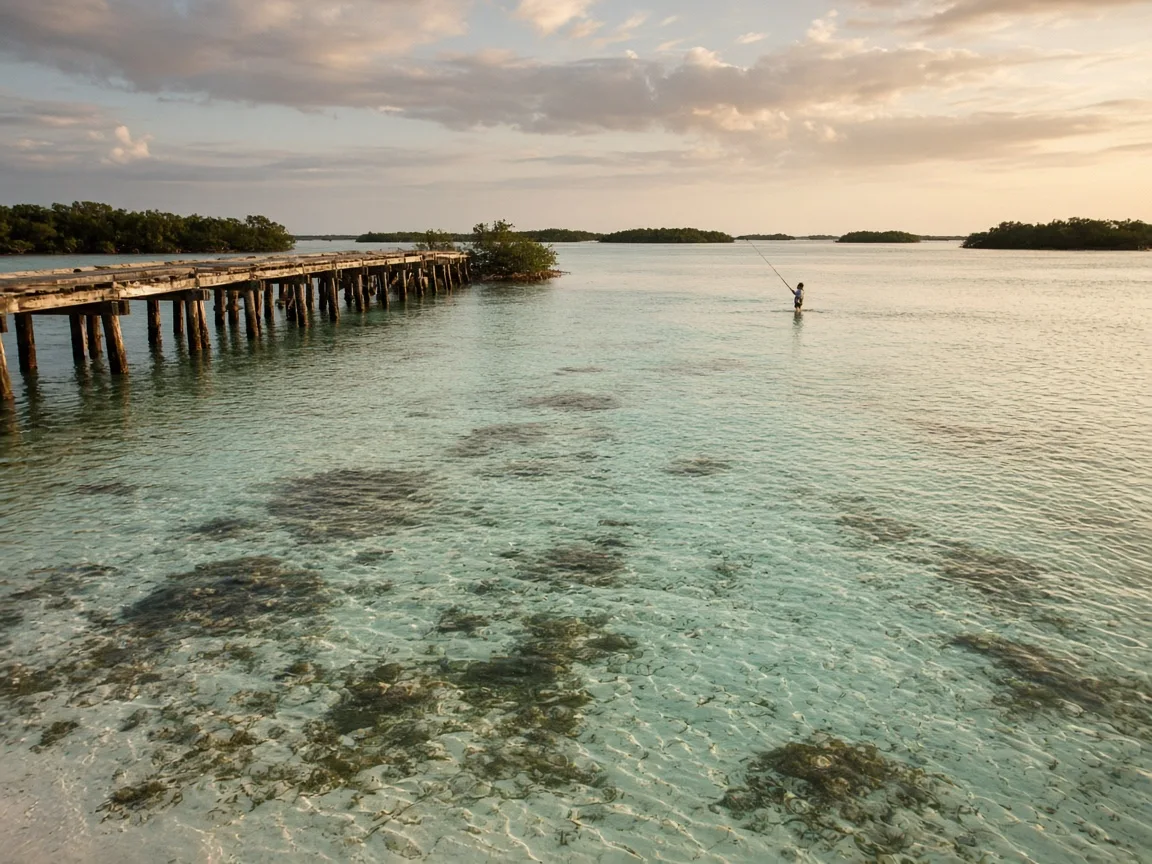
Three phrases will come up in nearly every Lower Keys listing, and you should understand them before you tour. Natural canal depth at mean low water tells you how much boat you can float at the lowest tide of the year, and in the Lower Keys that number can swing more than in dredged canals. Open-water frontage means your seawall sits on the bay or the ocean side with no opposite bank, usually with deeper water and better current. And the word seagrass, especially where it appears in a listing or a permit, tells you the bottom is protected habitat that shapes what you can do at the waterline.
Depth, draft, and access are the whole game here, which is why my guide to how to read a Florida Keys waterfront listing is worth reading before you meet an agent. You want to arrive at a showing already knowing what the listing is really promising, and what it is leaving unsaid.
Step 3: Match the Island to Your Boat and Your Life
Each Lower Keys island attracts a different buyer, and the match is worth getting right. Big Pine Key is the community center: groceries, restaurants, the Key deer, and a protected, family-friendly pace, with waterfront that ranges from quiet bayside lots to deeper canal homes. It is the natural first stop for most buyers, and the step-by-step guide to buying a waterfront home in Big Pine Key is built around it.
Little Torch Key, just south, holds some of the most reliable deep water in the Lower Keys and a serious boater's following. Ramrod Key and Summerland Key are the practical, fish-first islands, with working marinas, easy ramp access, and some of the best backcountry fishing in the chain. Cudjoe Key is secluded and wooded, with a quieter feel and marina options for larger vessels. Sugarloaf Key, the largest of the group, offers variety from deep-water canals to open bay frontage, and it is the most convenient to the amenities of the island chain's southern end.
Drive them all, then come back and read the feature on the authentic Big Pine Key and Lower Keys lifestyle to see which one sounds like your mornings. The island that matches your boat and your daily habits is the one that will still feel right in year five.
Step 4: Tour With a Waterfront Checklist
When you tour, bring a checklist, not just a wish list. On a Lower Keys waterfront home, the dock is a working part of the property, so look at the seawall face for cracking and erosion, check the dock pilings for rot and marine borers, ask for the dock and boat lift permits, and confirm the depth at the dock at mean low water. Inside, the list turns to flood vents, pilings, the roof system, impact glass, and the elevation certificate, because those details drive both your safety and your insurance premium.
This is where my credentials change how you buy. As a licensed contractor and home inspector, I read the structure the way an engineer would, and the guide to touring Florida Keys waterfront homes is the exact checklist I walk with clients from dock to roofline.
Step 5: Make Your Offer
With a pre-approval, a shortlist, and a tour under your belt, you can move with confidence. In the Lower Keys, as across the islands, the strongest offers pair a realistic price with a realistic timeline, and the complete guide to making an offer on a Florida Keys waterfront home walks through strategy, negotiation, and contingencies. Cash buyers have extra leverage, and the guide to making an all-cash offer explains when and how to use it.
Step 6: Inspections and Due Diligence in the Lower Keys
The inspection period is where a Lower Keys purchase is won or lost. Beyond the standard home inspection, plan for a flood zone review and an elevation certificate check, a septic or well assessment if the property is not on county water and sewer, and a marine inspection of the seawall, dock, pilings, and lift. If the listing promises deep water, verify the actual depth at low tide, and if the property has a dock, confirm every permit is in place and assignable.
The Florida Keys waterfront due diligence guide lays out the full sequence between accepted offer and closing, and the insurance and flood zone buyer's guide covers the coverage questions that come up on nearly every Lower Keys property. Monroe County publishes the flood maps and building rules that govern this stretch, and its official county website is the authoritative place to check them before you commit.
Step 7: Title, Survey, and Closing
The final stretch is about paper, and the Lower Keys adds its own wrinkles. The survey confirms where your upland ends and the sovereign land or submerged bottom begins, the title search confirms the dock, easement, and lease history, and the closing itself runs through a Florida title agency. My guide to title search, survey, and closing mechanics for Florida Keys waterfront property explains each document and what protects you at the table.
The Bottom Line
Buying in the Lower Keys rewards patience and preparation. The islands are quieter, the water is bigger, and the rules are more protective, which is exactly why the lifestyle has stayed so intact. If you take each step in order, work with people who read Lower Keys water and zoning fluently, and keep your own priorities in writing, the process is calm and the outcome is a slice of paradise that never feels like a compromise.
When you are ready to talk through the Lower Keys market, contact Steve Conley for a consultation. Whether your target is a deep-water Little Torch dock, a Key deer yard in Big Pine, or a secluded Cudjoe canal, the same local process applies, and the goal is always the same: match you to the water you will actually use.
Buying in the Lower Keys, explained.
What islands make up the Lower Florida Keys?
Southwest of the Seven Mile Bridge, the chain includes Big Pine Key (MM 29 to 33), Little Torch Key (MM 28), Ramrod Key (MM 27), Summerland Key (MM 24 to 25), Cudjoe Key (MM 21 to 23), and Sugarloaf Key (MM 16 to 20), along with smaller keys in between.
Do I need a ROGO allocation to buy a waterfront home in the Lower Keys?
The allocation is tied to the parcel, not to you as a buyer. What matters is whether the existing home carries a valid building allocation and what it permits, since Monroe County's Rate of Growth Ordinance caps new construction and major redevelopment. Verify the allocation on the property before you make an offer.
Is the water deep enough for a large boat in the Lower Keys?
It depends on the island and the lot. Little Torch Key and parts of Sugarloaf and Cudjoe are known for reliable deep water, while other Lower Keys canals are shallow, natural cuts. Always verify the depth at the dock at mean low water and match it to your boat's draft before you offer.
How is buying in the Lower Keys different from the Upper Keys?
The contract and process are the same, but the water, zoning, and pace differ. Most Lower Keys canals are natural and tide-cut rather than dredged, the National Key Deer Refuge and Monroe County protections shape building and docking, and the communities are quieter and more spread out.
Helpful Resources & Related Guides
Go deeper on the Lower Keys buying process, from matching the right island to your boat to the inspections and closing steps that protect every waterfront purchase.
Internal Resources

Steve Conley
Principal, Conley Sales Group at COMPASS, the exclusive Compass office in the Florida Keys. Licensed Sales Associate, Contractor, and Home Inspector with over 30 years and $1.4 billion in career sales serving the island chain.
Full Bio
Thinking About Buying or Selling
in the Florida Keys?
Steve Conley brings 30 years of Keys expertise, $1.4 billion in career sales, and contractor-inspector credentials to every transaction. Let him match you to the island and the waterfront that fit the life you want.
Connect with Steve