
Big Pine Key and the Lower Keys: Quiet Luxury Waterfront and Long-Term Investment in the Florida Keys
The Lower Keys offer a rarer kind of luxury: protected canals, refuge-protected open space, and a waterfront market with genuinely limited inventory. Here is the investment case and what to look for.
Key Takeaways
- Big Pine Key, at roughly mile markers 29 to 33, is a single-family island with no condo fabric, which keeps waterfront inventory scarce and the community stable by design.
- The National Key Deer Refuge protects roughly 8,500 acres on Big Pine and No Name Key, creating permanent open space that buffers neighborhoods and supports long-term value.
- Protected canals with quick access to Pine Channel deliver serious boating without open-ocean exposure, a combination that appeals to a discerning, privacy-minded buyer.
- Because so many homes sit on natural canals, seawall, dock, elevation, and insurance due diligence determines which properties earn and hold their premium.
- For patient buyers, the Lower Keys combine scarcity, authentic Florida character, and values below the Upper Keys, a setup that has historically rewarded long holds.
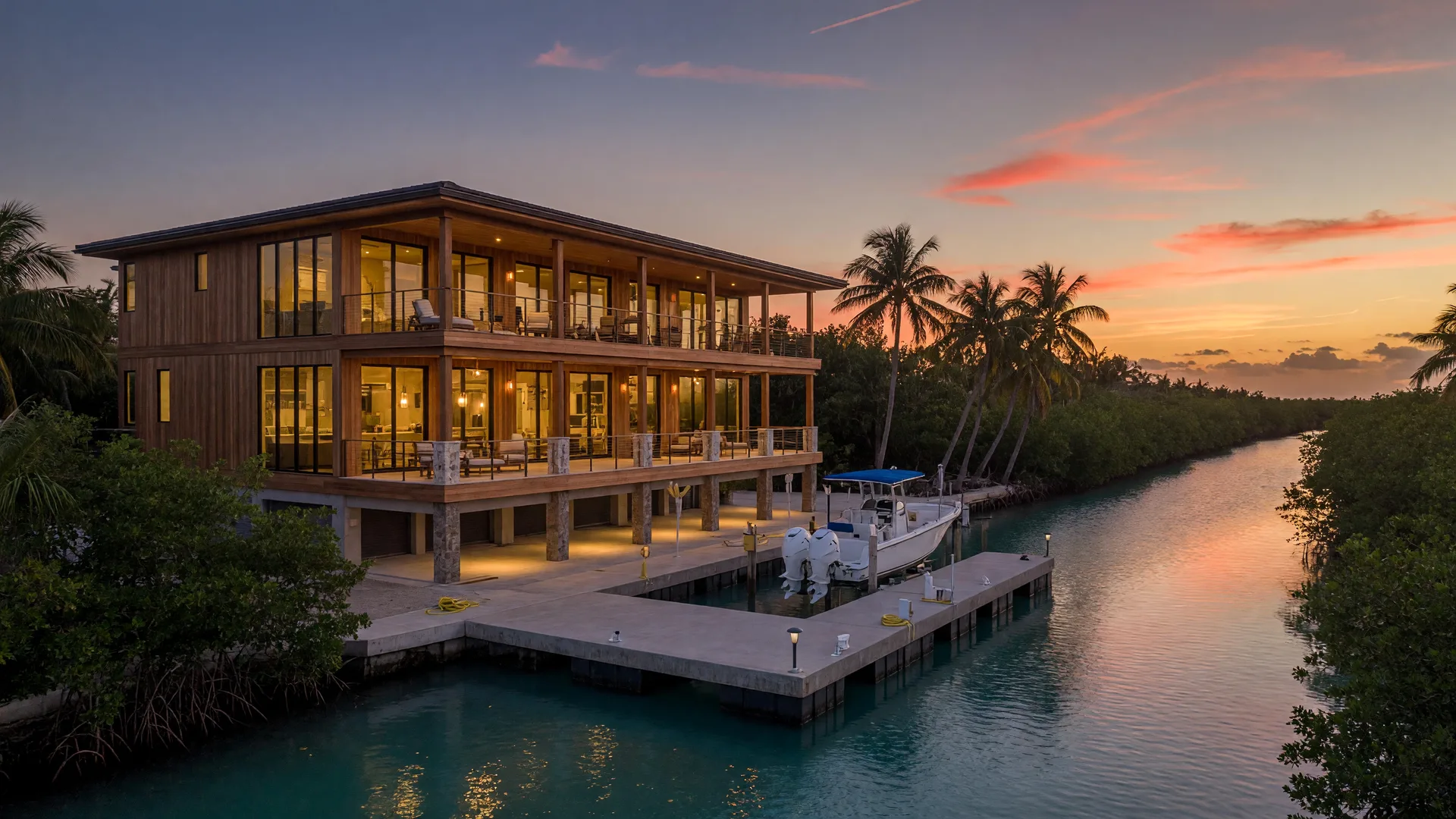
Luxury in the Florida Keys does not always mean the loudest waterfront. In the Lower Keys, and on Big Pine Key in particular, luxury means space, privacy, protected water, and permanent open space around the property line. This is the quiet end of the Keys luxury market, and for the right buyer it is also one of the most durable long-term investments in the chain. Here is the case for it, and what separates a sound Lower Keys purchase from a costly one.
I have represented buyers and sellers up and down the island chain for more than three decades, and the Lower Keys has always had a patient, knowing energy. It rewards buyers who understand scarcity, who respect the natural shoreline, and who see value in what cannot be replicated: an authentic, protected-waterfront estate on an island that will never be built out.
A Different Kind of Luxury
Big Pine Key sits on U.S. 1 at roughly mile markers 29 to 33, the first substantial residential island south of the Seven Mile Bridge. It has no condo towers and no commercial strip of waterfront hotels. Instead, the waterfront market is single-family homes, most on protected canals, many inward-facing to mangrove shorelines that feel like private nature preserves. That is the point.
Buyers who want the trophy, the crowd, and the action find that on other islands. Buyers who want an estate with real acreage of water and wilderness, five minutes from a quiet dock and twenty minutes from the fishing grounds, find it here. Our Big Pine Key community guide profiles the island in full, and the feature on the authentic lifestyle of Big Pine and the Lower Keys captures the daily reality of living in this kind of quiet.
The Scarcity Argument
Every luxury waterfront market in the Keys rests on scarcity, but the Lower Keys scarcity is unusually strict. The land is fixed, the waterfront is finite, and the National Key Deer Refuge protects roughly 8,500 acres on Big Pine and No Name Key as permanent open space. Add the county's growth constraints and the absence of condo density, and the practical effect is simple: the supply of waterfront estates here is structurally limited, and it cannot be manufactured.
That is the same scarcity math that drives the oceanfront premium across the Florida Keys, expressed at a quieter scale. In the Upper Keys, the premium sits on blue-water views and proximity to Miami. In the Lower Keys, the premium sits on land, water, and privacy that are protected in perpetuity by the refuge system.
Protected Water, Serious Boating
Do not mistake the quiet for shallow water. The canal neighborhoods here, including Eden Pines, Port Pine Heights, Pine Channel Estates, and Piney Point, offer genuine boating with protected approaches. From the right canal, you can be in Pine Channel in minutes, and from there into bay waters and the backcountry that make the Lower Keys a legend among anglers. The combination is what investors and owners prize: the security of a protected basin at the dock and real fishing water a short run away.
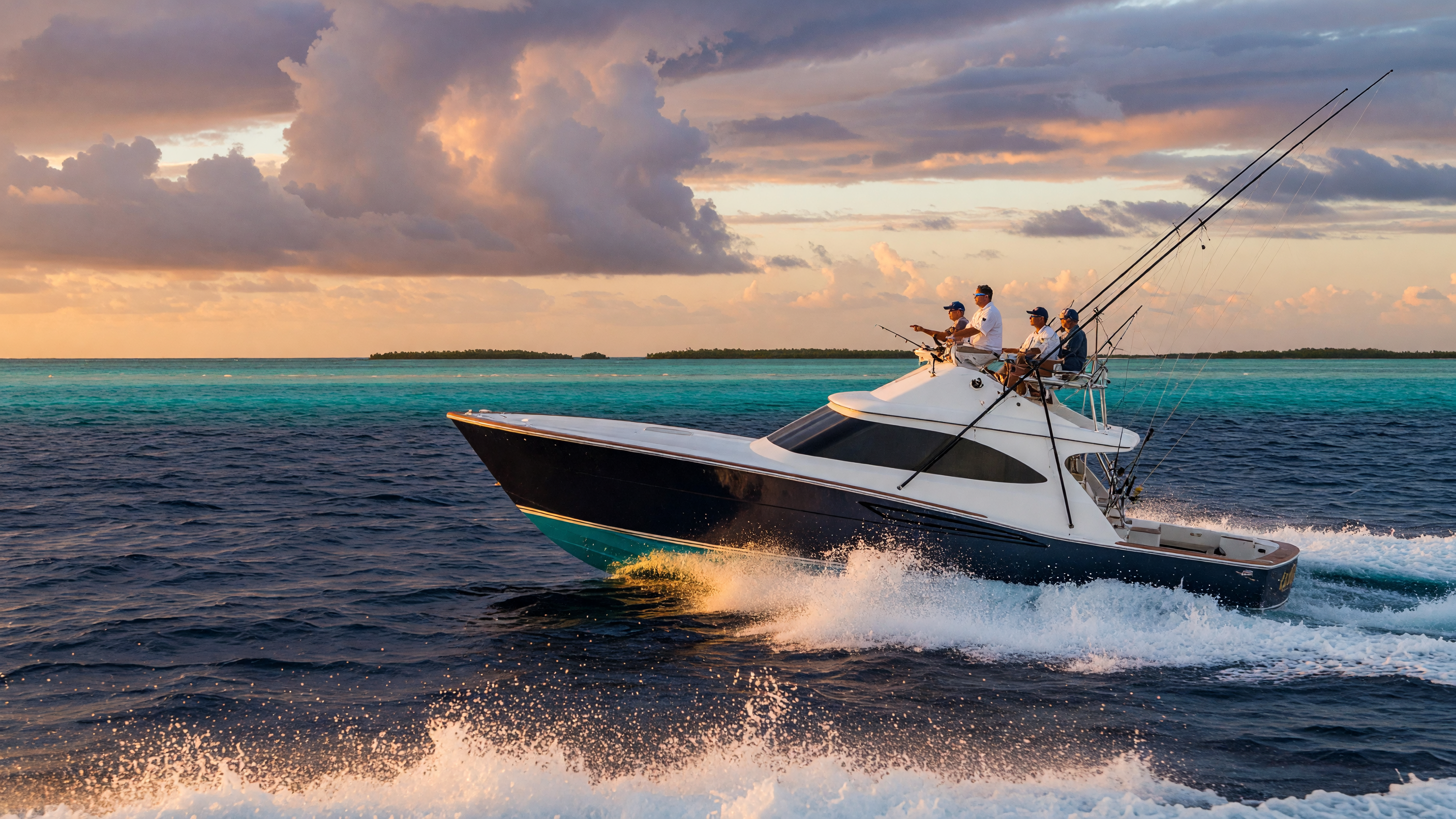
The boating and fishing lifestyle guide covers the waters of the Keys in depth, and our spotlight on Kingfisher Backcountry Charters shows the caliber of flats and backcountry fishing that operates straight out of Big Pine. For the serious boater, the Lower Keys are not a compromise. They are a preference.
The Refuge as a Neighbor
One of the most distinctive features of Lower Keys luxury real estate is what surrounds it. The National Key Deer Refuge, established in 1957, protects the endangered Key deer and roughly 8,500 acres of land and water across Big Pine and No Name Key, and the Florida Keys National Wildlife Refuges Complex makes its home on the island. For an owner, that translates into permanent, guaranteed open space around some of the most desirable waterfront parcels in Florida.
The wildlife is not scenery, it is daily life. Key deer cross yards and roads at dusk, wading birds work the shoreline at low tide, and the canals function as nature preserves with docks attached. That living-with-wildlife character is a genuine amenity for many buyers, and it is a structural value driver: development around the refuge is constrained by law, which means the island's character, and the scarcity that supports waterfront values, are protected in perpetuity.
The Infrastructure That Earns the Premium
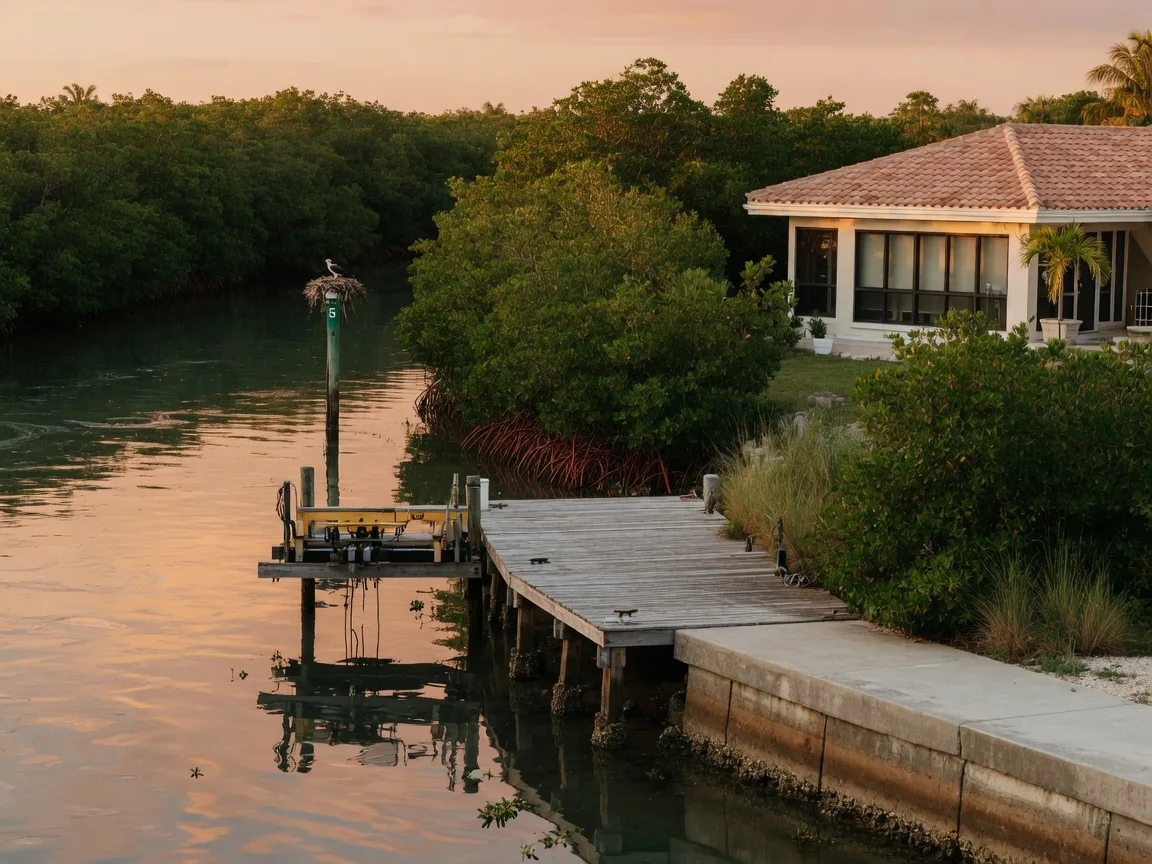
Here is where my contractor and inspector licenses come in, because the Lower Keys waterfront market is unforgiving to lazy due diligence. Many canals are natural rather than engineered, which means shoreline condition varies property to property. A sound revetment, a properly built dock, a good elevation certificate, and current wind mitigation are the difference between a premium asset and a constant repair bill.
Evaluate the seawall or revetment for settling and undercutting. Confirm the dock and boat lift are built to marine standards and properly permitted. Verify the elevation certificate against flood insurance requirements, and price wind coverage before you fall in love. My analysis of the seawall as an asset and the insurance and flood zone guide spell out exactly how these decisions move the value of a Keys waterfront home.
Who Buys Here, and Why It Holds
The Lower Keys buyer is typically a seasoned owner, often with time spent in the Upper Keys or elsewhere in Florida, who is choosing character over crowds. These buyers tend to hold their properties for years, treat them as family retreats or long-term second homes, and understand that the market moves more slowly here and rewards patience. That owner profile is itself a value stabilizer: turnover is low, listing quality is high, and the market never rushes.
For legacy-minded owners, that stability matters. The Florida Keys waterfront as a legacy asset is a theme I return to often, and the Lower Keys may be its purest expression: a fixed, protected, genuinely scarce waterfront holding that families pass down rather than flip.
The Investment View: Patience as a Strategy
Compared with the Upper Keys, the Lower Keys waterfront market has historically moved at a different cadence and carried a different entry price. For the buyer who can hold, that gap is part of the appeal: protected-waterfront estates here have room to appreciate as the chain-wide story of Keys scarcity continues, without the volatility of the trendiest markets. As always, past performance is no guarantee, and the market report is the place to follow the current numbers rather than any single article's narrative. The Florida Keys luxury market report tracks pricing, inventory, and buyer patterns by community, and it is the right companion to any investment conversation.
What I can promise is honesty about the conditions: the Lower Keys are not the right market for buyers who want immediate liquidity or year-over-year fireworks, and no one should buy a natural-canal home without contractor-grade inspections. But for the patient, discerning buyer who values scarcity, privacy, and protected water, Big Pine Key and the Lower Keys offer one of the most authentic luxury investment stories left in Florida. A conversation with Steve Conley is the best next step to test that thesis against your own goals.
Ownership Realities: The Costs That Come With Paradise
A realistic investment view of the Lower Keys has to include the carrying costs that shape every waterfront balance sheet here. Flood insurance, wind coverage, and storm hardening are part of life on a natural-canal estate, and the difference between a modern, elevated, well-built home and an older one is not just comfort, it is annual cost. Elevation certificates, impact glass, roof systems, and seawall condition all show up in the numbers, year after year.
None of this should scare off the right buyer, but it should discipline the purchase. The homes that earn and hold their premium are the ones where the infrastructure is current, which is exactly why my contractor and inspector credentials matter so much in this market. Buy the house that has been maintained, verify the elevation and the seawall, price the insurance before the offer, and the carrying cost becomes a fixed, manageable line item rather than a recurring surprise.
How to Start
Begin with the current state of the market rather than any single listing. The Florida Keys luxury market report tracks pricing and inventory by community, and it will tell you where the Lower Keys sit today. Then take the time to learn the island: drive the canal neighborhoods, walk the refuges, and spend a weekend on the water. When you have a clear picture of which canal, which water, and which level of infrastructure fits your plan, call. That is the point where the process becomes a pleasure instead of a project.

Steve Conley
Principal, Conley Sales Group at COMPASS, the exclusive Compass office in the Florida Keys. Licensed Sales Associate, Contractor, and Home Inspector with over 30 years in the Keys market.
Full BioLower Keys investment,
what to know.
Why is Big Pine Key considered a strong long-term waterfront investment?
The island combines strict scarcity with protection: a fixed supply of single-family waterfront homes, no condo density, and roughly 8,500 acres of National Key Deer Refuge open space that guarantees large parts of the island will never be developed.
Is the boating good in the Lower Keys?
Excellent. Protected canals feed quickly into Pine Channel, and from there into bay waters and the backcountry flats that make the Lower Keys famous among anglers. Many owners consider the protected basin at the dock a feature, not a compromise.
What should buyers inspect on a natural-canal Lower Keys property?
Seawall or revetment condition, dock and boat lift construction and permits, the elevation certificate, and wind mitigation. Natural canals vary property to property, so contractor-level evaluation is essential before you commit.
How does the Lower Keys market compare with the Upper Keys?
It moves at a more patient cadence with a different entry price, and it rewards holds rather than flips. Buyers trade some convenience and trendiness for scarcity, privacy, and an authentic protected-waterfront estate character.
Who is the right buyer for Big Pine Key luxury waterfront?
Experienced owners who value space, wildlife, and protected water over nightlife, who plan to hold for years, and who understand that quiet markets reward patience. It also suits legacy-minded families and serious boaters and anglers.
Helpful Resources & Related Guides
Dig deeper into Big Pine Key, the Lower Keys, and Florida Keys luxury waterfront value.
Internal Resources
Thinking About Buying or Selling
in the Florida Keys?
Steve Conley brings 30 years of Keys expertise, $1.4 billion in career sales, and contractor-inspector credentials to every transaction. Start with a conversation.
Connect with Steve