
The Florida Keys Waterfront Due Diligence Period: A Buyer's Guide to What Happens Between Accepted Offer and Closing
The window between accepted offer and closing is where a Keys waterfront deal is won or lost. Here is what happens inside it, in order, and what every buyer should protect.
Key Takeaways
- The due diligence period is your only contractual window to verify the structure, seawall, dock, water depth, title, and insurance before you are locked in.
- A waterfront inspection must go beyond the house: seawall, dock, pilings, boat lift, flood vents, and the elevation certificate all need a close look.
- Appraisal, financing, and insurance approvals run inside the same window, and a low appraisal or an insurance surprise can change the deal.
- Title and survey work proves what you are buying, including the dock, the shoreline, and any ARCO restrictions or easements attached to the water.
- Most Keys waterfront transactions close in 30 to 45 days, with the due diligence period occupying the first 10 to 15 days of that timeline.
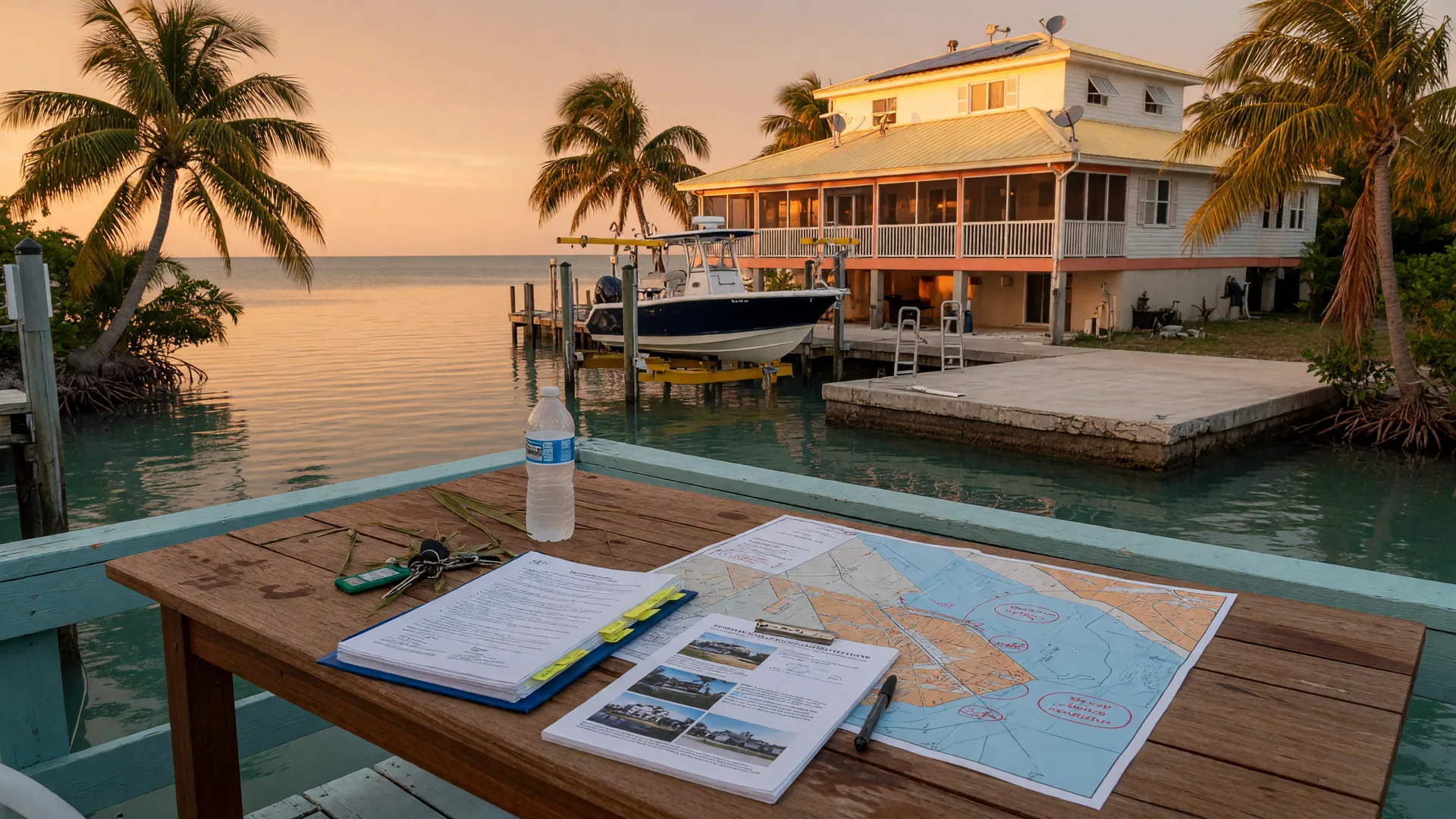
The Florida Keys waterfront due diligence period is the window between accepted offer and closing when a buyer verifies everything that matters about a property: the structure, the seawall, the dock, the water depth, the title, and the numbers. For a waterfront home in the Keys, this period is where deals are won or lost, because the marine environment hides problems that a standard home inspection never sees. This guide walks through what happens inside that window, in order, and what every Keys buyer should protect.
Why the Due Diligence Period Works Differently in the Keys
On the mainland, due diligence is mostly about the house. On a Keys waterfront property, it is about the house plus the marine environment around it: the seawall holding the yard, the dock and pilings holding your boat, the depth of the canal at low tide, and the flood zone that sets your insurance. All of it is verified in the same short window, and none of it can be rushed.
The period is defined by the contract. In Florida, most residential purchase contracts set a fixed number of days for inspections and due diligence, typically 10 to 15 days, though the number is negotiable. The clock starts the day the contract is executed, not the day you get around to calling your inspector. Every day counts, and in a competitive market a seller may push for a shorter window. My guide to making an offer on a Florida Keys waterfront home covers how to negotiate those dates before you sign.
The Inspection: Structure, Seawall, and Dock
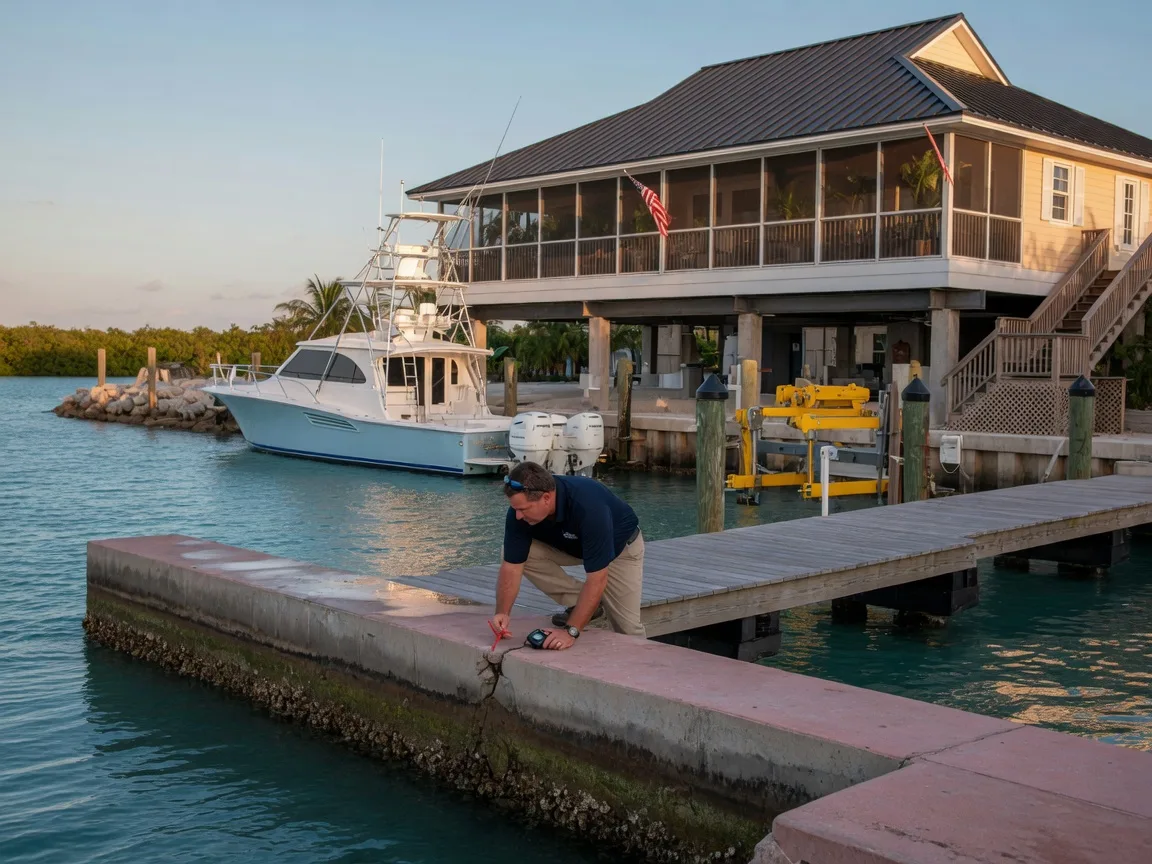
The inspection contingency is the backbone of the due diligence period. A licensed home inspector covers the house: roof, impact glass, air conditioning, electrical, plumbing, and the elevated structure on pilings. But on the water, the inspection must go further. The seawall needs a close look at the waterline for cracks, spalling, and signs of failure. The dock and pilings need the same attention: rot, marine borers, and the condition of the decking, cleats, and the boat lift.
This is where a contractor-inspector perspective changes the conversation. A general inspector may note that the seawall is aging. A contractor who has built in the Keys can tell you whether it will need repair in five years or twenty, and roughly what that repair costs. That distinction changes how you negotiate. The same logic applies to the roof, the impact glass, and the flood vents: knowing the remaining life of each is worth more than knowing it passed a checklist. My guide to the advantage of a licensed contractor-inspector agent explains why, and the complete Florida Keys waterfront inspection checklist lays out every item in order.
The Appraisal: What the Lender Says It's Worth
The appraisal protects the lender, but it shapes your deal. The appraiser compares your contract price to recent closed sales of comparable waterfront homes, then adjusts for canal depth, seawall condition, dock size, flood zone, and views. In the Keys, comparables can be thin, so the appraisal is more judgment than formula, and it can come in below contract price.
If it does, you have options: renegotiate, pay the difference in cash, or walk away. The appraisal contingency protects you, but only if you understand the numbers. My guide to how the appraisal works when you buy a Florida Keys waterfront home walks through what moves the number and what to do when it lands short.
Financing and Insurance: The Two Approvals That Matter
Your loan commitment and your insurance quote are the two approvals that can quietly end a waterfront deal. Lenders want the property to appraise, the title to be clean, and the flood zone to be insurable. Insurers want elevation, construction quality, and wind mitigation. A home that checks every box on the tour can still stumble at the insurance quote if the roof is old or the flood zone is high-velocity.
The smart move is to start the insurance conversation on day one of the due diligence period, not the week before closing. Flood and wind coverage in the Keys is a specialty product, and the quote depends on details you can verify during inspections: the elevation certificate, the roof age, the impact glass, and the flood zone designation. The insurance and flood zone buying guide covers what lenders and insurers will ask for.
Title, Survey, and the Dock: Proving What You're Buying
On a waterfront property, title and survey work matters more than it does on land. The title search verifies ownership and any liens, easements, or restrictions, including ARCO covenants that can limit docks, rentals, or construction. The survey shows the property lines, the waterline, and the dock, and it is the document that proves what you are buying along the shoreline.
Waterfront buyers should ask specifically about the dock and the canal bottom. Some docks sit on land you own; some sit on sovereign submerged lands with permits attached. A survey and a title review by a Florida real estate attorney settle these questions before closing, not after. The guide to title search, survey, and closing mechanics for Keys waterfront properties explains the documents in detail.
Common Mistakes Buyers Make in the Due Diligence Window
The first mistake is treating the inspection like a formality. Many buyers skim the report and focus on the price, but on a waterfront home the inspection is the single most valuable document in the file. Read every line, ask about every flagged item, and get a contractor's opinion on anything that involves the seawall, the dock, or the roof. A small crack at the waterline today can become a costly repair in a few years, and the difference between aging and failing is exactly what a contractor can tell you.
The second mistake is waiting too long to start the insurance conversation. Flood and wind coverage in the Keys is a specialty product, and the quote depends on details you verify during inspections: the elevation certificate, the roof age, the impact glass, and the flood zone. If you wait until the week before closing, you may discover the premium is far higher than you budgeted, with little time to negotiate the price or walk away cleanly.
The third mistake is skipping the survey or the title review of the dock. Waterfront ownership comes with questions that a standard closing never raises: does the dock sit on your land or on sovereign submerged lands, and are there easements across the shoreline? Answering these before closing protects you from surprises that are expensive and difficult to unwind afterward. A few hundred dollars in due diligence now can save a great deal of money and stress later.
The Final Walkthrough and Closing Day
In the final days, the buyer completes a final walkthrough to confirm the property is in the agreed condition. Then closing day brings the settlement statement, the deed, and the keys. In the Keys, closings often include a wire transfer for the down payment, flood and wind insurance binders, and the transfer of any dock permit attached to the property.
The goal of the entire due diligence period is to reach closing with no surprises. A buyer who used the window properly knows the seawall is sound, the dock is permitted, the insurance is bound, and the numbers are final. That peace of mind is the entire point of the process.
How Long Does the Whole Window Take?
Most Keys waterfront transactions close in 30 to 45 days from the executed contract. The due diligence period typically occupies the first 10 to 15 days, with the inspection, appraisal, and survey running in parallel. Financing and insurance continue through the rest of the window. A cash buyer can close faster, sometimes in two to three weeks, but the due diligence period should never be skipped, even with cash on the table.
The full sequence, from pre-approval to moving day, is laid out in the Florida Keys luxury home buying timeline. Knowing the order of events makes the process feel calm instead of chaotic, and it helps you ask the right questions at the right moment.
The Bottom Line
The due diligence period is the most important protection a Florida Keys waterfront buyer has. Use every day of it, ask the hard questions about the seawall and the dock, and lean on people who have built and inspected in the marine environment. That is the difference between buying a home and buying a maintenance project.
If you are in the due diligence window now, or about to be, contact Steve Conley at (305) 393-5859. With contractor and inspector licenses alongside 30 years of Keys transactions, he can tell you what to verify first, what to negotiate, and what is worth walking away from, before the window closes.
The window,
demystified.
How long is the due diligence period for a Florida Keys waterfront home?
Most Florida residential purchase contracts set a due diligence window of 10 to 15 days from the executed contract, though the number is negotiable. In a competitive market, sellers may ask for a shorter window, so it is worth agreeing on the inspection, appraisal, and survey schedule before you sign, not after.
What should the inspection cover on a waterfront property?
Beyond the standard house systems, a waterfront inspection must cover the seawall at the waterline, the dock and pilings, the boat lift, flood vents, the elevation certificate, and the roof's remaining life. These marine elements carry the largest repair risk, and they are exactly what a contractor-inspector agent knows how to read.
Can I waive the inspection contingency to win a competitive offer?
You can, and some buyers do, but on a Keys waterfront property it is a serious risk. Seawall and dock repairs are expensive, and problems are not visible from the dock. A better strategy is to keep the contingency and shorten the window, or complete a pre-offer inspection so you can bid with confidence and minimal contingency.
What happens if the appraisal comes in below the contract price?
You can renegotiate the price with the seller, pay the difference in cash, or terminate under the appraisal contingency. In the Keys, thin comparable sales make low appraisals more common than buyers expect, which is why reviewing the appraiser's comparable selection matters as much as the final number.
Do I need a survey when buying a waterfront home?
Yes. The survey shows the property lines, the waterline, and the dock, and it verifies what you are buying along the shoreline. Waterfront buyers should also confirm whether the dock sits on owned land or on sovereign submerged lands with permits, and whether any easements or ARCO restrictions attach to the water.
Helpful Resources & Related Guides
Build your Florida Keys buying library with the community guides, the local buying process, and the market data that help you close with confidence.
Internal Resources
- Key Largo Luxury Waterfront Community Guide
- Making an Offer on a Florida Keys Waterfront Home
- How the Appraisal Works When You Buy a Keys Waterfront Home
- Title Search, Survey, and Closing Mechanics for Keys Waterfront Properties
- The Complete Florida Keys Waterfront Inspection Checklist
- The Complete Florida Keys Buyer's Guide
- Contact Steve Conley About Your Due Diligence

Steve Conley
Principal, Conley Sales Group at COMPASS, the exclusive Compass office in the Florida Keys. Licensed Sales Associate, Contractor, and Home Inspector with over 30 years and $1.4 billion in career sales serving the island chain.
Full Bio
Thinking About Buying or Selling
in the Florida Keys?
Steve Conley brings 30 years of Keys expertise, $1.4 billion in career sales, and contractor-inspector credentials to every transaction, from the first tour to the final closing. Let him guide you through the due diligence period with confidence.
Connect with Steve