
Touring Florida Keys Waterfront Homes: What to Check From Dock to Roofline
Photos sell a feeling. A tour sells the truth. Here is the checklist a licensed contractor and inspector walks with every waterfront buyer in Key Largo, Tavernier, and Islamorada, from the dock to the roofline.
Key Takeaways
- Begin every tour at the water: dock length, seawall condition, boat lift capacity, and canal depth at the dock and at the canal entrance tell you more than any room in the house.
- Get below the house: pilings, flood vents, and finished floor elevation are the structural facts a failing inspection report would cost you dearly to learn later.
- Read the outside of the house: metal roof, impact glass, AC age, and the condition of exterior trim all factor into insurance cost and long-term maintenance.
- Walk the neighborhood and the canal system: tidal flow, nearby boat traffic, community character, and the views you actually live with are only visible on foot.
- End every tour with the same questions: flood zone and elevation certificate, permit history, HOA and ARCO rules, and recent seawall or dock work with receipts.
Touring a Florida Keys waterfront home is different from touring anywhere else. On the mainland you look at kitchens, closets, and light. In the Keys you look at water, pilings, flood vents, and a seawall that may cost more than the kitchen to replace. This is the checklist I walk with every buyer, in the order that matters most, so that by the time you leave the dock you know exactly what you are buying.
I have represented buyers in Key Largo, Tavernier, and Islamorada for more than three decades, and I hold licensed contractor and home inspector credentials on top of my real estate license. That combination changes how I tour a property: I read a house the way the next owner will have to maintain it. Here is the short version of the method, then we will walk it together.
Before You Tour: Choose the Right Kind of Day
A Key Largo canal at mid-tide on a sunlit afternoon flatters every property. The same canal at low tide, on a windy day, tells a different story. When you schedule tours of waterfront homes, ask your agent to arrange at least one visit near low tide, and choose a day with a breeze strong enough to move the water. You want to see the seawall line, the shallows at the canal mouth, and the exposure of the property when conditions are honest, not just when they are pretty.
Bring the essentials: good walking shoes with grip for dock boards, a flashlight for under the house, sunglasses for glare off the water, and a notebook. Even better, bring a copy of the listing and my guide to reading a Florida Keys waterfront listing, so you can compare what the sheet claims with what your eyes confirm. The tour is where listings are verified or exposed.
The Dock and Seawall: Read These First
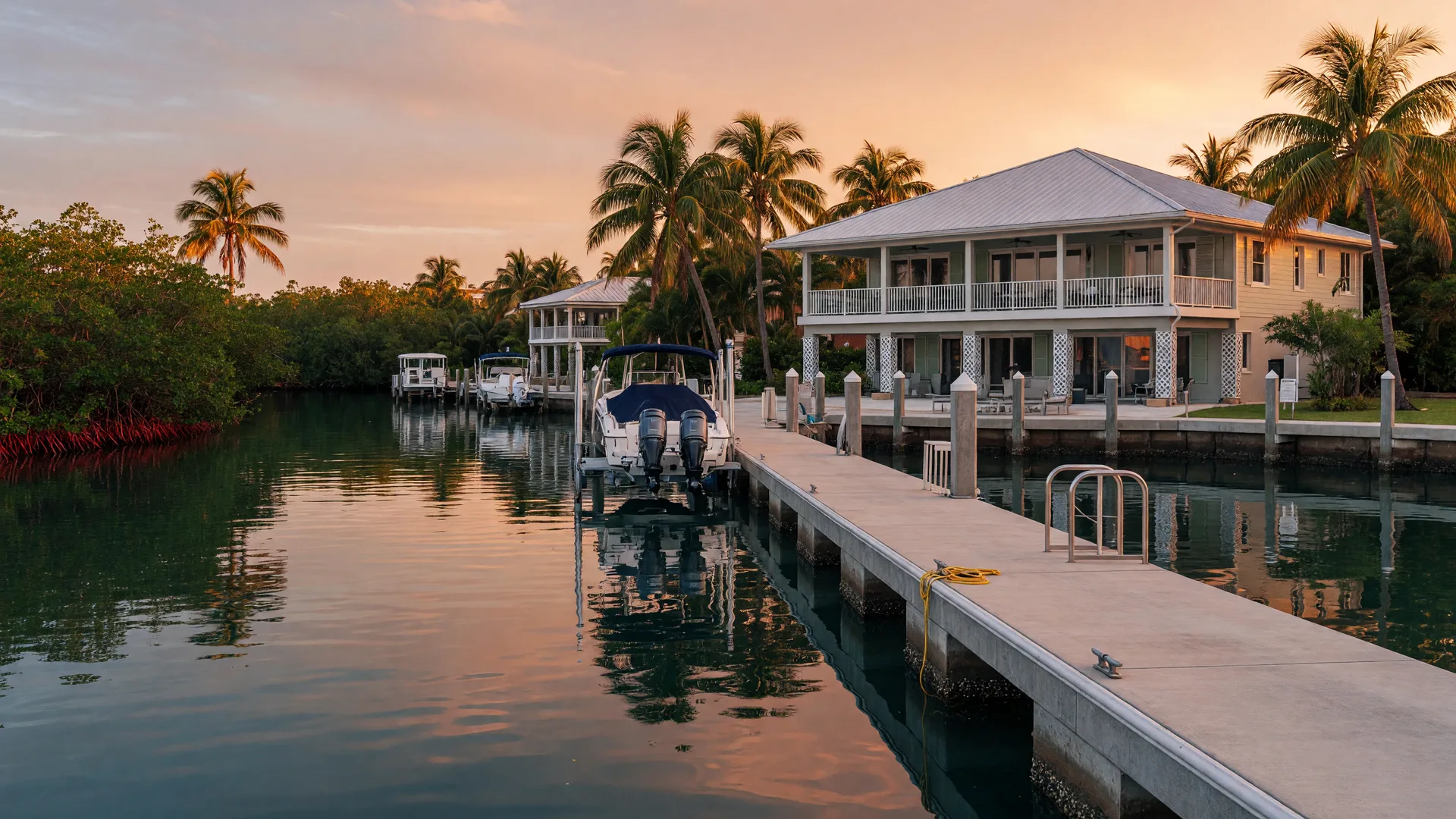
Start at the water, not the front door. Stand at the dock and take stock in this order: how long is the dock, how old are the pilings, what does the boat lift actually rate, and what shape is the seawall in. Run your hand along the seawall cap. Look for hairline cracks, spalling concrete, exposed and rusting rebar, and any leaning or bowing sections. A seawall flexing under load or shedding its face is a five- and six-figure project, and it is the single most expensive line item most tourists never think to check.
Then read the water. Ask where the depth was last measured and what it is at mean low water at the dock, at the canal entrance, and in the approach channel. Look for the tide line on the pilings and the seawall so you can see how much the water rises and falls. Note whether the canal has good flow or sits like a pond, because tidal flushing keeps a canal clean, the fish active, and the value real. My seawall and dock inspection guide for Keys buyers lists every item to verify, from tie-back rods to electrical service, all of it checkable in the first ten minutes of a tour.
Under the House: Pilings, Flood Vents, and Clearance
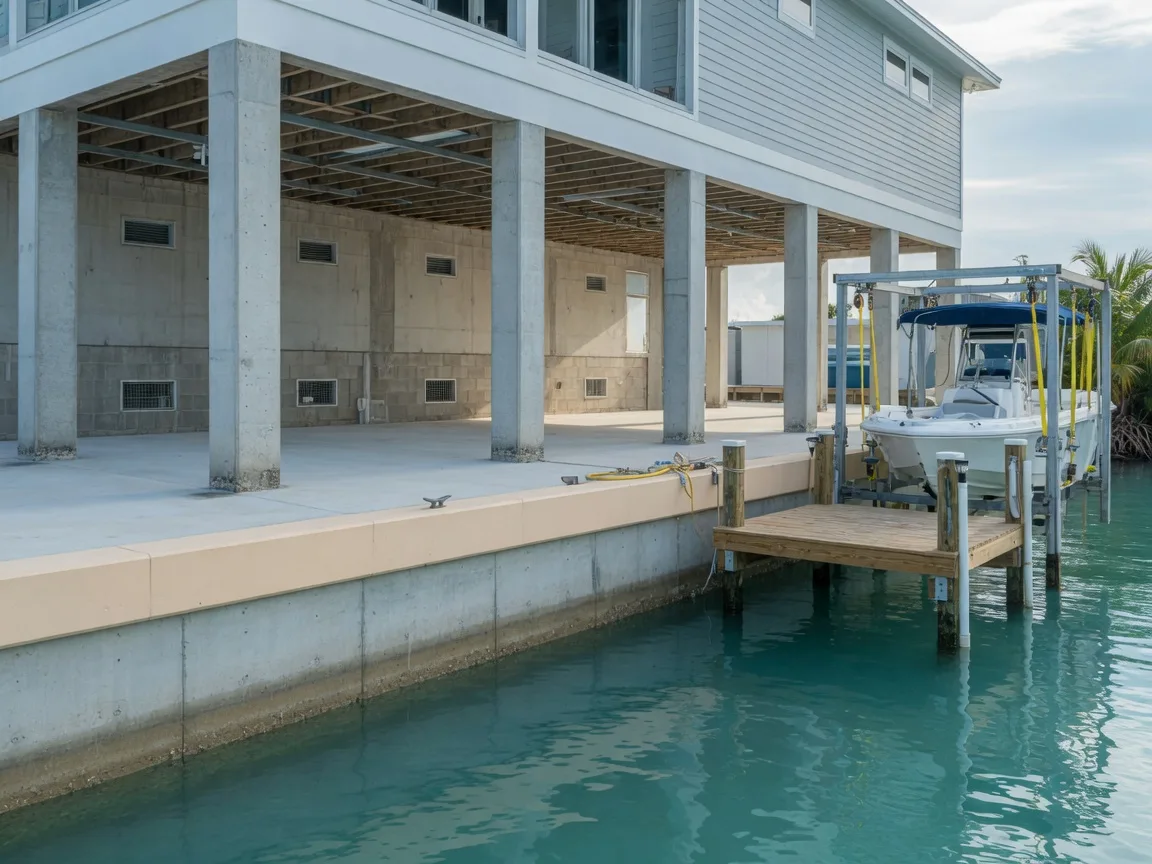
Get below the house. Keys waterfront homes are elevated for a reason, and the space beneath is full of information. Check the pilings: concrete piles should be sound with no spalling or exposed rebar near the waterline; wood piles should be treated and free of rot at the mud line. Look for flood vents, the openings near the base that let rising water pass through so hydrostatic pressure does not push the structure. Their presence tells you the home was built or renovated to current flood code in Florida.
Measure your headroom and think about what you will store below: boats on trailers, kayaks, a workshop, beach gear. Then look up at the floor system above you and check the insulation, the wiring, and any signs of old water intrusion. A clean, well-organized, dry space under the house is the signature of an owner who maintained the property. A damp, clutter-filled one is a warning you should take seriously before you ever open the front door upstairs.
The Structure From the Outside In
Above grade, three exterior features matter more than paint and landscaping. The roof comes first: in the Keys, a standing-seam or impact-rated metal roof is the gold standard, sheds rain and debris, and usually earns insurance credits. Asphalt in the islands is a shorter-lived, higher-maintenance proposition. Second is the glass: impact-rated windows and doors are the difference between a storm-ready home and one that will need plywood and stress every August. Third is the HVAC: a coastal air conditioner works hard, and the age and condition of the units affect both comfort and your first-year budget.
Walk the exterior once, slowly. Look for corrosion on metal trim, rot in fascia boards, cracked caulking around windows, and the condition of exterior stairs, railings, and decks, all of which the salt air attacks relentlessly. The complete Florida Keys buyer's guide explains how these structural realities translate to insurance cost, maintenance budgets, and resale value, and my guide to insurance and flood zone requirements for Keys waterfront buyers shows you which documents to collect while you are on site.
Walk the Canal and the Neighborhood
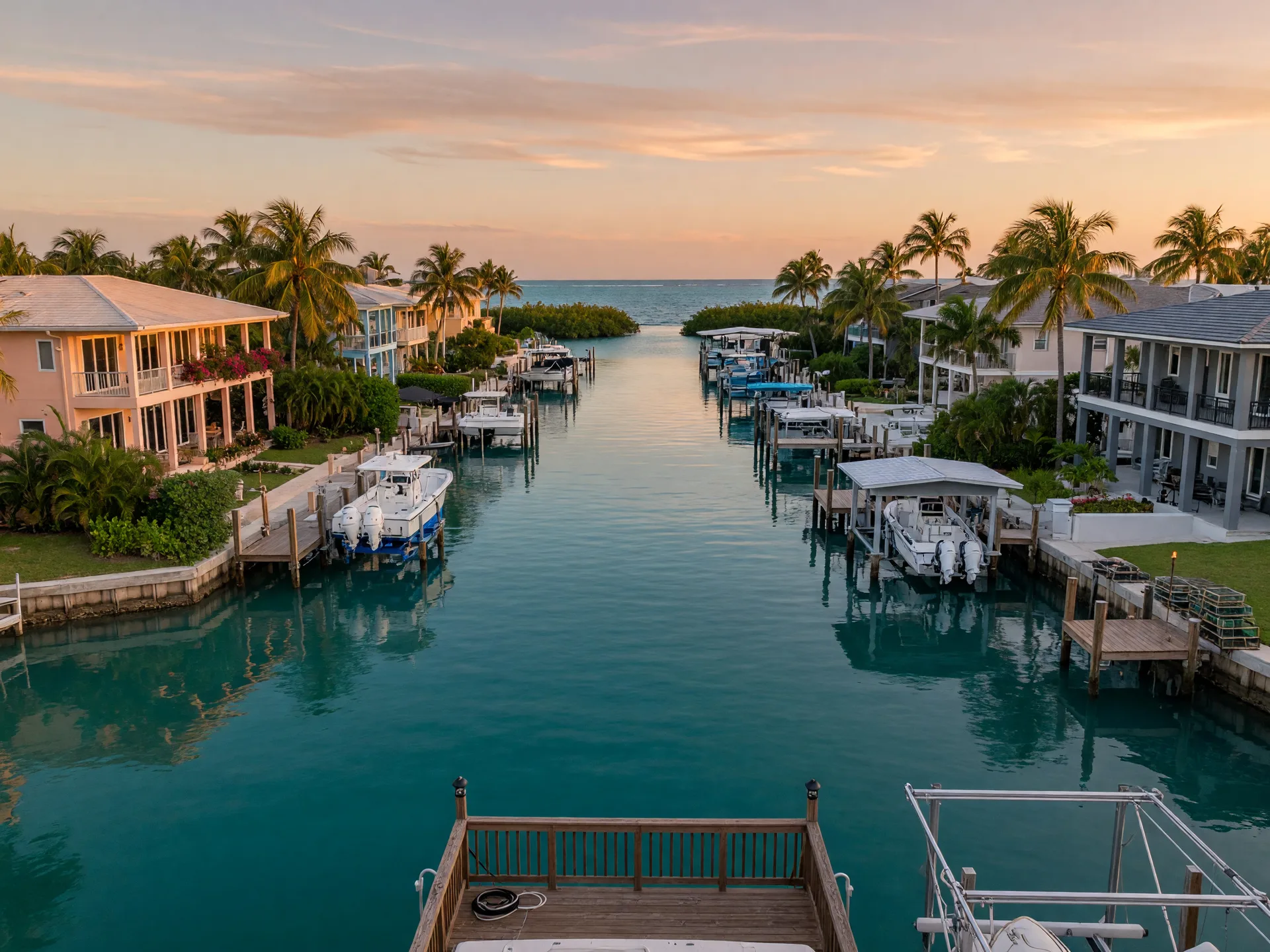
The house is finished; now walk the water and the streets. Walk the length of the canal, not just the lot. See what the neighbors store at their docks, how many boats anchor out, and whether the canal ends in a quiet pocket or opens wide to the bay. Check for fixed bridges between the dock and open water if you keep a boat with height. Then walk the neighborhood: the condition of surrounding homes, the character of the street, the distance to groceries, marinas, boat ramps, and restaurants, and the feel of the community at the hour you will actually live there.
This is where the Key Largo luxury waterfront community guide, the Tavernier guide, and the Islamorada guide earn their keep: each maps the canal systems, water access, and neighborhood character of the Upper Keys so your tour time goes to the places that fit your life. Drive the route to work or the airport the way you would on a school morning. Visit the local marina. Buy a coffee. Five minutes of neighborhood life tells you more than any listing narrative.
What the Listing Couldn't Tell You
Some of the most important tour facts live in documents, not in walls. Before you leave, ask the listing agent for the flood zone letter and the elevation certificate, the wind mitigation report, the age of the roof and HVAC, any recent seawall or dock work with receipts, and the HOA or subdivision rules including mooring, storage, and rental restrictions. Follow up on the permit history, because Monroe County's ROGO allocation and ARC review affect what you can do with the property later. A seller who answers these questions openly is signaling confidence; one who hesitates is telling you something too.
Take photos of everything, including the under-house space, the seawall, and the dock electrical panel. Compare them to the listing photos when you get home, because the listing was staged and the tour was real. Then do what the best buyers do: rank the properties you toured, note the questions each one still owes you, and decide which home deserves your next step.
Turn the Tour Into an Offer
A great tour ends with clarity, not exhaustion. You should leave knowing the water story, the structure story, the neighborhood story, and the numbers story of every home you saw. The next step is the professional layer: a depth survey where water matters, a licensed marine and structural inspection, and an offer built on facts. That is the process my buyer's team runs every time, and it is why the homes we close on are the homes that pass every check after the keys are handed over.
If you are planning a tour weekend in the Upper Keys, call Steve Conley at (305) 393-5859 and bring your shortlist. I will walk the docks and the rooflines with you, one checklist at a time, starting with the water.
The tour,
before the offer.
How long should I plan for a Florida Keys waterfront home tour?
Plan at least 45 minutes per property, longer for estate-scale homes, and add time to walk the canal and the neighborhood. A rushed tour misses the seawall, the under-house space, and the water conditions that matter most for Keys value.
What is the most important thing to check at the dock?
The seawall and the water in that order. A failing seawall is a six-figure project, and canal depth at mean low water determines whether your boat can actually reach the dock. Check both before you fall for the kitchen.
Why do Keys homes sit on pilings, and what does that mean for me?
Elevation protects the home from storm surge and flooding, and pilings are the foundation of that defense. Check the pilings for spalling or rot, confirm the flood vents are present, and look for clean, dry storage space beneath.
Should I check flood zone and insurance before or after touring?
Before, if you can, and at the tour if not. Ask for the flood zone letter and elevation certificate while you are on site. The difference between VE and AE and the elevation score drives insurance cost more than almost any other factor.
What questions should I ask the listing agent at the end of a tour?
Ask for the age and receipts for the roof, HVAC, seawall, and dock; the canal depth history; the flood zone and elevation certificate; and the HOA, ARCO, and ROGO status. Open answers signal a confident seller, and hesitation is information too.
Helpful Resources & Related Guides
Build your Florida Keys tour and due-diligence library with these related guides on waterfront infrastructure, listings, insurance, and the buying process.
Internal Resources
- Key Largo Luxury Waterfront Community Guide
- Seawall and Dock Inspection Guide for Florida Keys Waterfront Buyers
- How to Read a Florida Keys Waterfront Listing
- Insurance and Flood Zone Requirements for Keys Waterfront Buyers
- The Complete Florida Keys Buyer's Guide
- Contact Steve Conley About Your Tour Shortlist

Steve Conley
Principal, Conley Sales Group at COMPASS, the exclusive Compass office in the Florida Keys. Licensed Sales Associate, Contractor, and Home Inspector with over 30 years and $1.4 billion in career sales serving the island chain.
Full Bio
Thinking About Buying or Selling
in the Florida Keys?
Steve Conley brings 30 years of Keys expertise, $1.4 billion in career sales, and contractor-inspector credentials to every tour. Bring your shortlist and walk the docks and rooflines with someone who reads both like a spec sheet.
Connect with Steve