
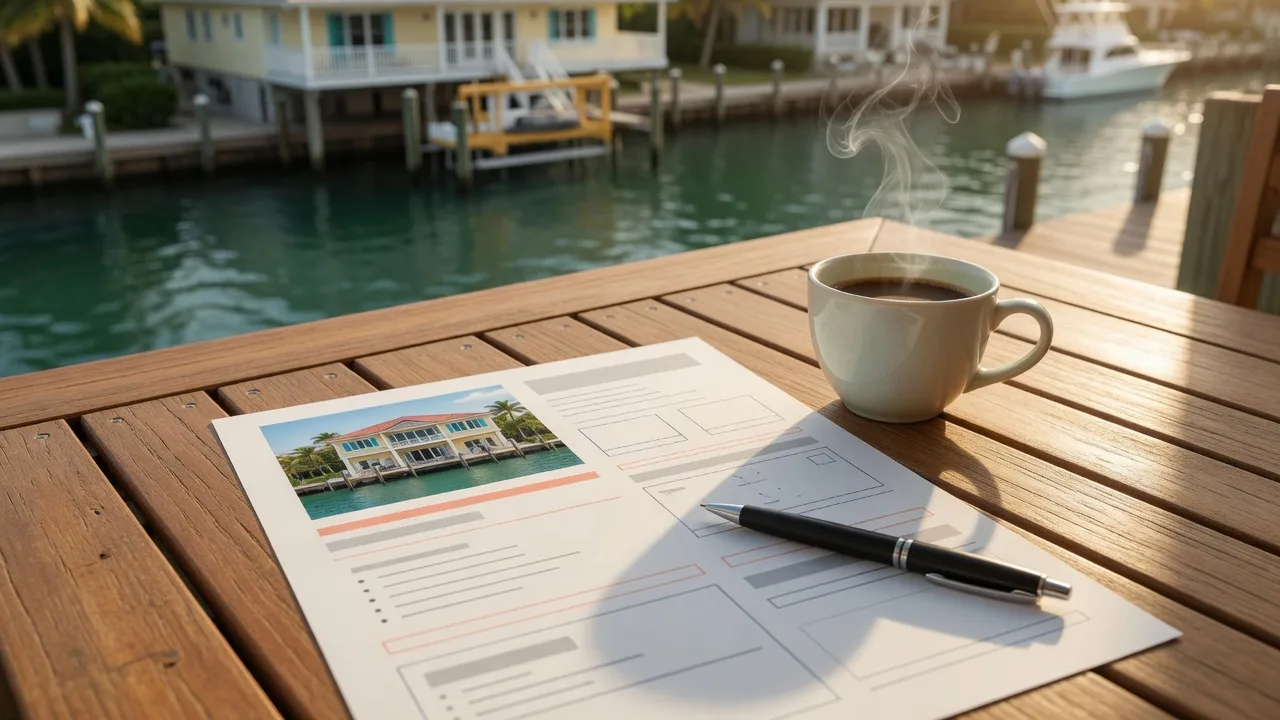
How to Read a Florida Keys Waterfront Listing: A Buyer's Guide to the Fine Print
Every Keys waterfront listing is a starting point, not a fact sheet. Here is how to read the water depth, flood zone, dock notes, and fine print so the homes you tour are the homes worth your time.
Key Takeaways
- Canal depth at mean low water is the first number to find in any listing, and the phrase "no fixed bridges" is just as important as the depth itself.
- Flood zone letters (VE versus AE) and the elevation certificate tell you more about insurance and true cost than almost any other line in the listing.
- Habitable area is the square footage that counts in the Keys; garages, lanais, and dock space are not living space, no matter how nicely the listing photos them.
- Dock length, lift capacity, and seawall condition are infrastructure, and a listing that says nothing about them is telling you something all by itself.
- HOA fees, ARCO review, and ROGO permit status live in the fine print, and they can change what a property is worth buying by more than any single room.
Most buyers start their Florida Keys search the way they would anywhere else: skimming pretty listings and bookmarking the ones that look great. Then they fly down, walk the dock, and discover the canal is too shallow for their boat, the flood insurance doubles the budget, or the "waterfront" is across a busy road. The listing sheet was telling the truth the whole time, but only to people who knew how to read it. This guide shows you exactly what to look for on every Keys waterfront listing, so the homes you tour are the homes worth your time.
I have represented buyers in Key Largo, Tavernier, and Islamorada for more than three decades, and I have licensed contractor and inspector credentials on top of my real estate license. That combination means I read listings the way an engineer reads a spec sheet. Here is the short version: the water comes first, the structure comes second, and the fine print decides whether the deal makes sense at all.
Start With the Water, Not the House
When you open a Keys waterfront listing, find the water facts before you look at a single photo. Four things matter: the depth of the canal at mean low water, whether there are fixed bridges between the dock and open water, the length of the dock, and whether the listing mentions a boat lift or davits. If the listing is silent on all four, treat that as a yellow flag and ask the listing agent directly. A well-prepared seller agent in the Keys puts the water story in the listing, because it is usually the strongest selling point the property has.
The depth question deserves the most weight. "Deep-water" is a marketing word and "mean low water" is a measurement. A canal that holds five feet or more at mean low water floats serious sportfishing yachts, while a canal shoaled to three feet may struggle with a center console at low tide. The difference shows up in price more than almost anything else, which is why the deep canals of Key Largo's luxury waterfront communities command the premiums they do. Start your reading there.
Canal Depth at Mean Low Water: The Number That Filters the Whole Market
Mean low water, often written as MLW, is the average height of the lowest daily tides. It is the honest baseline for boating access because it tells you what the canal looks like at its shallowest, ordinary moment. When a listing says "deep-water canal," ask what that means in feet at MLW at the dock, and just as important, at the canal entrance and in the approach channel. A deep dock does you no good if a shallow bar at the canal mouth keeps your draft from ever reaching it.
Many of the canals in the Keys were dredged in the 1950s and 1960s, and depth today depends on the original cut, decades of tidal flushing, and seawall maintenance. A listing may carry a depth notation from years ago, so the smart buyer treats it as a lead, not a fact. My guide to buying a Keys waterfront home for your boat walks through the process of matching a listing's water story to your actual vessel.
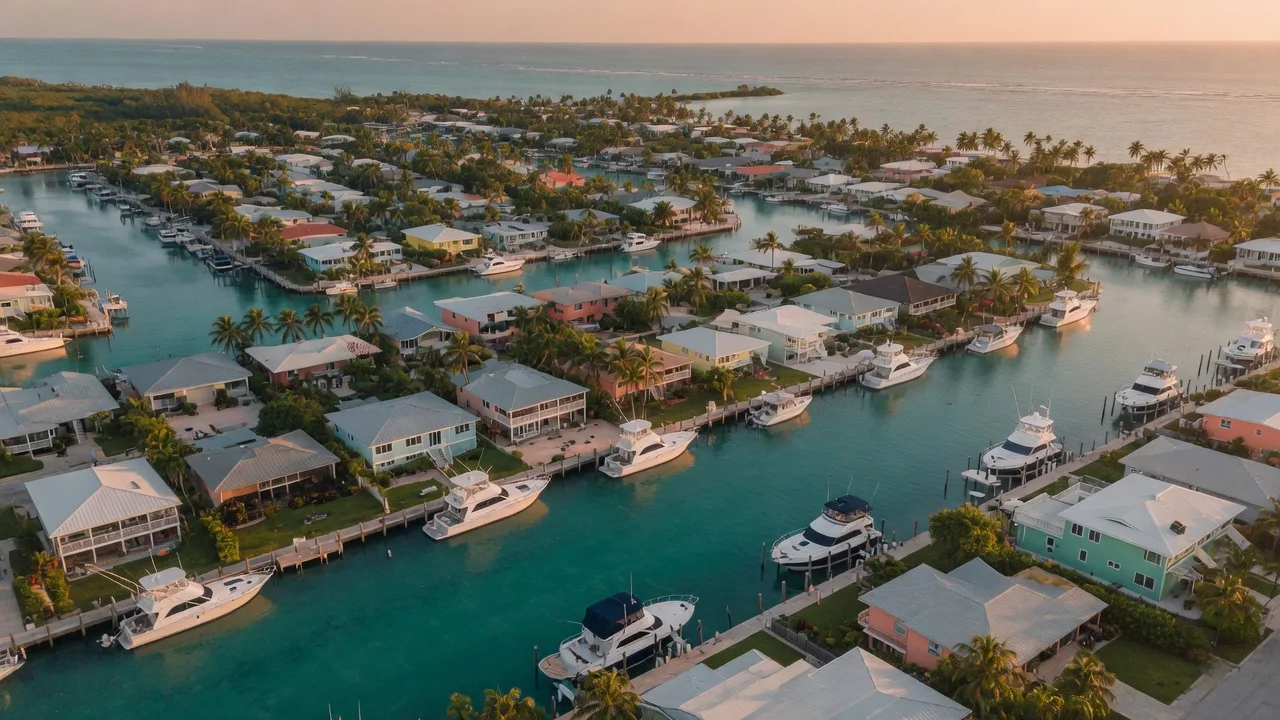
The phrase "no fixed bridges" is the second most valuable water fact in a Keys listing. Some canal systems sit behind bridges that block tall masts, antennas, tower arches, and the air draft of large boats. A listing that promises direct ocean access with no fixed bridges means you can run your boat from the dock to the reef, the Gulf Stream, or the backcountry without a bridge schedule. That access is a large part of why canal-front homes hold their value, and you should read it as a premium, not a footnote.
Flood Zone Letters and the Elevation Certificate
Every Keys waterfront property sits in a flood zone, and the letter on the map drives the insurance bill. Most waterfront homes fall in VE or AE zones. VE is the coastal high hazard area, the line of ocean-facing properties where waves can arrive with a storm, and it commands the highest flood insurance rates. AE is the special flood hazard area, also insurable under the National Flood Insurance Program, generally at lower rates than VE. Neither is a deal-breaker, they are simply numbers you need in the budget from the start.
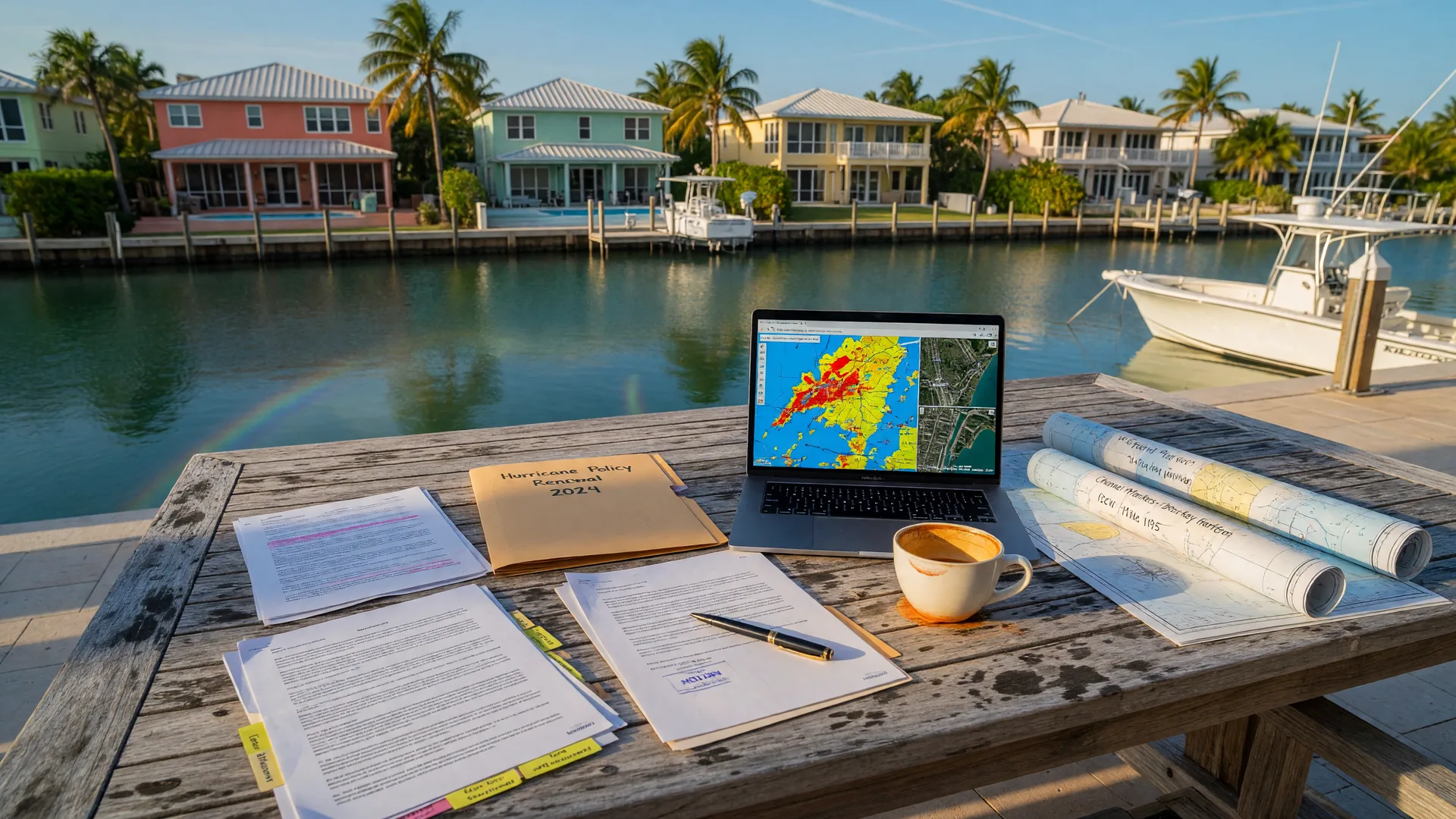
The elevation certificate is the document that turns the letter into dollars: it records the finished floor elevation of the home, and in the Keys a home built well above base flood elevation can qualify for meaningfully better rates. When a listing does not mention flood zone or elevation, ask for the elevation certificate before you tour. Pair it with the wind mitigation report to see the whole insurance picture. My guide to insurance and flood zone requirements for Keys waterfront buyers explains how to read both documents like a local.
Habitable Area: The Square Footage That Actually Counts
Keys listings list total square footage and habitable area, and the difference matters to your price-per-square-foot math. Habitable area is the living space: the air-conditioned rooms you actually occupy. Garages, covered lanais, storage, and the space under an elevated home are not habitable area, no matter how beautifully the listing photographs the outdoor living. A 3,000-square-foot home with 1,900 square feet of habitable area is an honest, common Keys configuration, and it should price accordingly.
Read the listing's square footage against the lot, too. A deep lot with room to add, expand, or build a separate dock-side structure carries value a postage-stamp lot cannot. When you compare two listings, compare habitable area to habitable area and lot dimensions to lot dimensions, and ask what share of the property sits in a flood zone. That is where the real differences between similar homes show up.
Dock, Lift, and Seawall Notes: What the Listing Says and What It Hides
The dock and seawall are the most expensive infrastructure a waterfront home owns, and listings treat them differently. A confident listing says: "60-foot concrete dock, 16,000-pound lift, poured concrete seawall with buried tie-backs." A cautious listing says: "dockage available." And a surprising number of listings say nothing at all. Read the silence as a question: what condition is the seawall in, how old is the dock, and what does that lift actually rate for?
As a licensed contractor and home inspector, I can tell you that a failing seawall is a six-figure project and a dock built for jet skis will not hold a 30,000-pound yacht, no matter how good the house looks. Pull the insurance screening and, when the property matters, a marine contractor's opinion before you make an offer. My seawall and dock inspection guide for Keys buyers lists exactly what to check, so you can start reading the condition from the listing photos the moment you open them.
The Fine Print: HOA, ARCO, and ROGO
The last page of every listing hides the rules that govern the property. Homeowners association fees and rules appear in the remarks or the supplements, and they decide what you can do with the dock, the boat, and the yard. The entire island chain also sits within an Area of Critical State Concern, or ARCO, which adds county scrutiny to shoreline changes and new construction. And because Monroe County's Rate of Growth Ordinance, or ROGO, caps new residential permits, a home with its permits already in place carries real value a raw lot simply cannot match.
None of these are reasons to walk away, they are reasons to read carefully. Ask for the association documents and the ROGO history before you tour, not after you fall in love. My guide to HOA and ARCO covenants for Keys waterfront buyers covers the questions that separate smooth closings from surprises, and it applies to every waterfront listing you will open.
Photos Tell Part of the Story
Aerial photos flatter every property, and you should read them with a skeptical eye. They compress depth, so a canal that photographs like open ocean may hold three feet of water at low tide. They also hide what sits across the canal, behind the house, and next door. Look for the photos that reveal honest detail: the seawall line, the dock pilings, the neighbors' roofline, the utility pole, the boat traffic. A listing shot at golden hour from the dock is beautiful, and it is also the angle the seller wants you to see.
When a property clears your reading of the listing, the next step is straightforward: verify the water with a depth survey, verify the structure with a marine inspection, and verify the numbers with a competent local agent. That is the process my complete Florida Keys buyer's guide lays out step by step, from first listing to closing day.
Your Five-Line Checklist Before You Call
Here is the checklist I keep beside every listing I read. Run it on any property before you call the agent: water depth at MLW at the dock and at the canal entrance, fixed bridges between you and open water, flood zone letter and elevation certificate, dock length and lift capacity, and the seawall's age and condition. Add the fine print: HOA rules and fees, ARCO status, and ROGO permit history. A listing that answers all seven lines is a serious property. A listing that dodges them is a conversation, not a commitment, and it deserves a straightforward set of questions before you spend a weekend in the Keys looking at it.
Reading listings this way will save you trips, protect your budget, and put you in the small group of buyers who see the whole picture before the first showing. When you are ready to put the reading into practice, call Steve Conley at (305) 393-5859 and bring your shortlist. We will read every line together, starting with the water.
The fine print,
decoded.
What does "mean low water" mean in a Florida Keys listing?
Mean low water (MLW) is the average height of the lowest daily tides. It is the honest baseline for boating access because it describes the canal at its shallowest ordinary moment, which is when your draft matters most.
What is the difference between flood zone AE and VE in the Keys?
VE is the coastal high hazard area where storm waves can arrive with flooding, and it generally carries higher flood insurance rates. AE is the special flood hazard area, insurable under the National Flood Insurance Program, typically at lower rates. Both are common on Keys waterfront properties, and the elevation certificate determines the actual premium.
Why is habitable area different from total square footage?
Habitable area is the air-conditioned living space you occupy. Garages, covered lanais, storage, and the open space beneath an elevated Keys home are not habitable, even though many listings photograph them beautifully. Compare habitable to habitable when pricing two homes against each other.
Should I trust the dock and lift notes in a listing?
Treat them as a starting point, not a guarantee. Verify the lift's rated capacity against your boat's weight, check the dock's pilings and electrical service, and have a marine contractor or inspector look at the seawall before you commit. Silent listings need the most questions.
What is ROGO, and why does it appear in Keys listing fine print?
ROGO is Monroe County's Rate of Growth Ordinance, which caps new residential building permits across the Keys. A home that already carries its permits is worth more than a raw lot that must wait in the allocation queue, which is why permit history belongs in your listing review.
Helpful Resources & Related Guides
Build your Florida Keys due-diligence library with these related guides on the buying process, waterfront infrastructure, and insurance.
Internal Resources
- Key Largo Luxury Waterfront Community Guide
- Insurance and Flood Zone Requirements for Keys Waterfront Buyers
- Seawall and Dock Inspection Guide for Florida Keys Waterfront Buyers
- Navigating HOA and ARCO Covenants When Buying a Keys Waterfront Home
- Buying a Florida Keys Waterfront Home for Your Boat
- Contact Steve Conley About Your Waterfront Shortlist

Steve Conley
Principal, Conley Sales Group at COMPASS, the exclusive Compass office in the Florida Keys. Licensed Sales Associate, Contractor, and Home Inspector with over 30 years and $1.4 billion in career sales serving the island chain.
Full Bio
Thinking About Buying or Selling
in the Florida Keys?
Steve Conley brings 30 years of Keys expertise, $1.4 billion in career sales, and contractor-inspector credentials to every transaction. Send him your shortlist and he will read every line with you, starting with the water.
Connect with Steve