
Buying a Waterfront Home in Big Pine Key: The Complete Step-by-Step Process for Florida Keys Buyers
Big Pine Key is a different kind of Keys market: protected canals, national wildlife refuge open space, and a single-family island with no rushing crowds. Here is the complete process for buying waterfront there.
Key Takeaways
- Big Pine Key spans roughly mile markers 29 to 33 and is the first substantial residential island south of the Seven Mile Bridge, with a single-family character and no condo towers.
- Waterfront buying here means choosing between protected canal lots and dry lots, then weighing canal depth, boat access to Pine Channel, and the condition of natural-canal seawalls and docks.
- The National Key Deer Refuge surrounds the island, which makes permanent open space part of the everyday landscape and shapes how development can occur.
- Because many homes sit on natural canals, contractor-level due diligence on seawalls, docks, elevation, wind mitigation, and flood insurance matters as much as the view.
- The buying process mirrors the rest of the Keys: pre-approval, a local team, inspections, insurance, and closing, paced for a market where patience rewards the careful buyer.
Buying a waterfront home in Big Pine Key is not like buying in the Upper Keys, and it should not be. The Lower Keys market moves at its own pace, rewards buyers who understand protected water, and offers a kind of quiet that is becoming rare anywhere in the Florida Keys. This guide walks through the complete process, from choosing the right canal to closing day, with the local specifics that actually matter.
As a licensed Sales Associate, Contractor, and Home Inspector who has evaluated waterfront property across the entire island chain, I have always appreciated what Big Pine offers: an island where the natural Florida still runs the show. The buying process is disciplined, but the reward is a waterfront lifestyle with space, wildlife, and protected water that no other Keys community quite replicates.
Why Big Pine Key Is Different
Big Pine Key sits on U.S. 1 at roughly mile markers 29 to 33, the first substantial residential island heading south after the Seven Mile Bridge. It is a full-time community with grocery stores, restaurants, a medical center, and a genuine school presence, but it wears its rural, laid-back character openly. There are no condo towers here. The island is mostly single-family homes on waterfront canal lots and dry lots, which keeps the community fabric remarkably stable.
The island is also defined by the National Key Deer Refuge, home to the endangered Key deer and roughly 8,500 acres of protected land and water on Big Pine and No Name Key. That refuge land is permanent open space, which means parts of the island will never be developed. For buyers, that is both a lifestyle benefit and a property-value story, and it makes due diligence on location especially important. Our Big Pine Key luxury community guide covers the neighborhoods in detail, and our feature on the authentic Florida Keys lifestyle of Big Pine and the Lower Keys shows what daily life here feels like.
Step 1: Choose Your Water
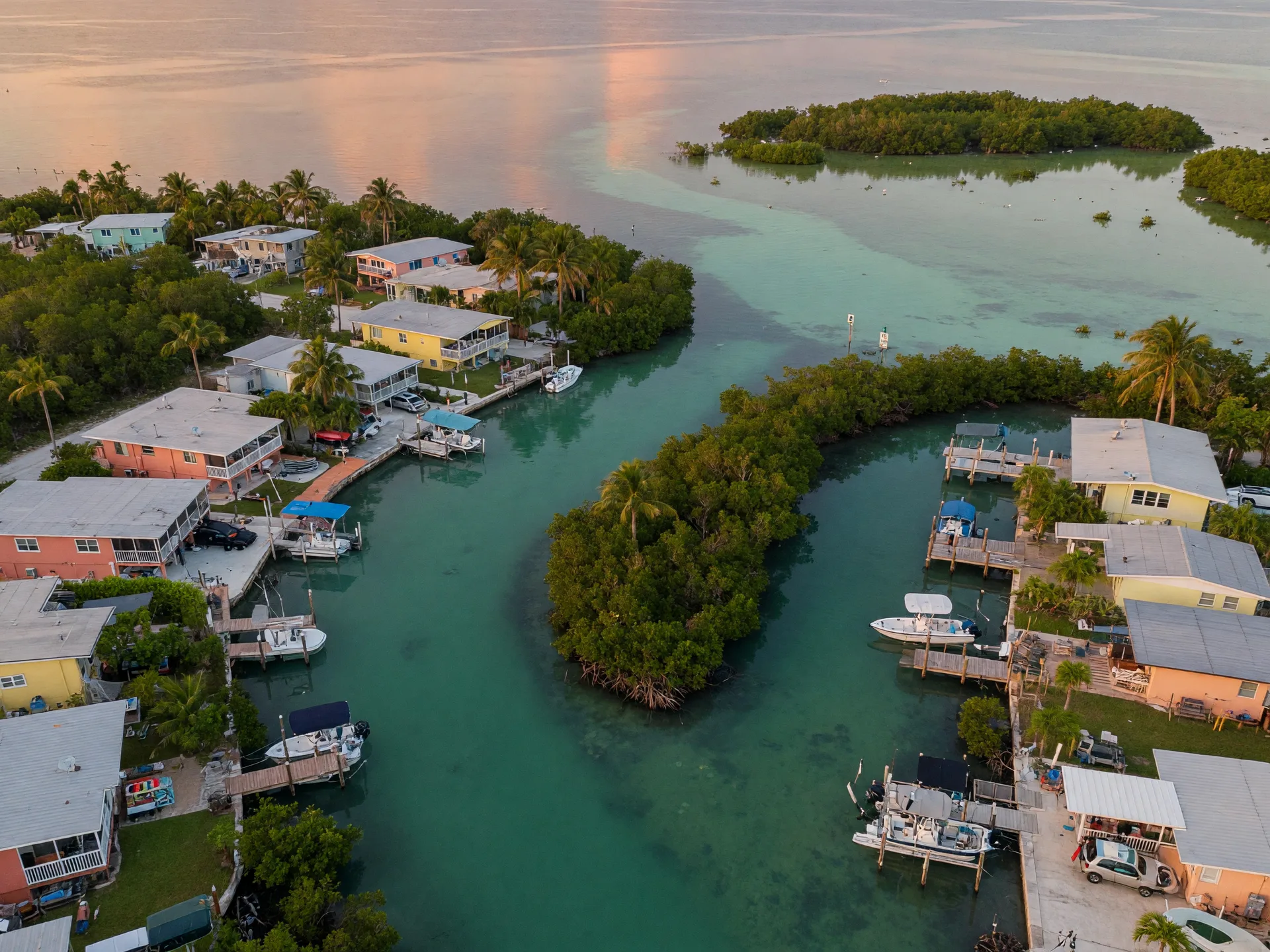
Waterfront listings on Big Pine fall into two broad camps: protected canal homes with dockage, and dry-lot homes where the water is near but not at the doorstep. Most buyers serious about the boating lifestyle want the canal lot, and that is where the market's character really shows.
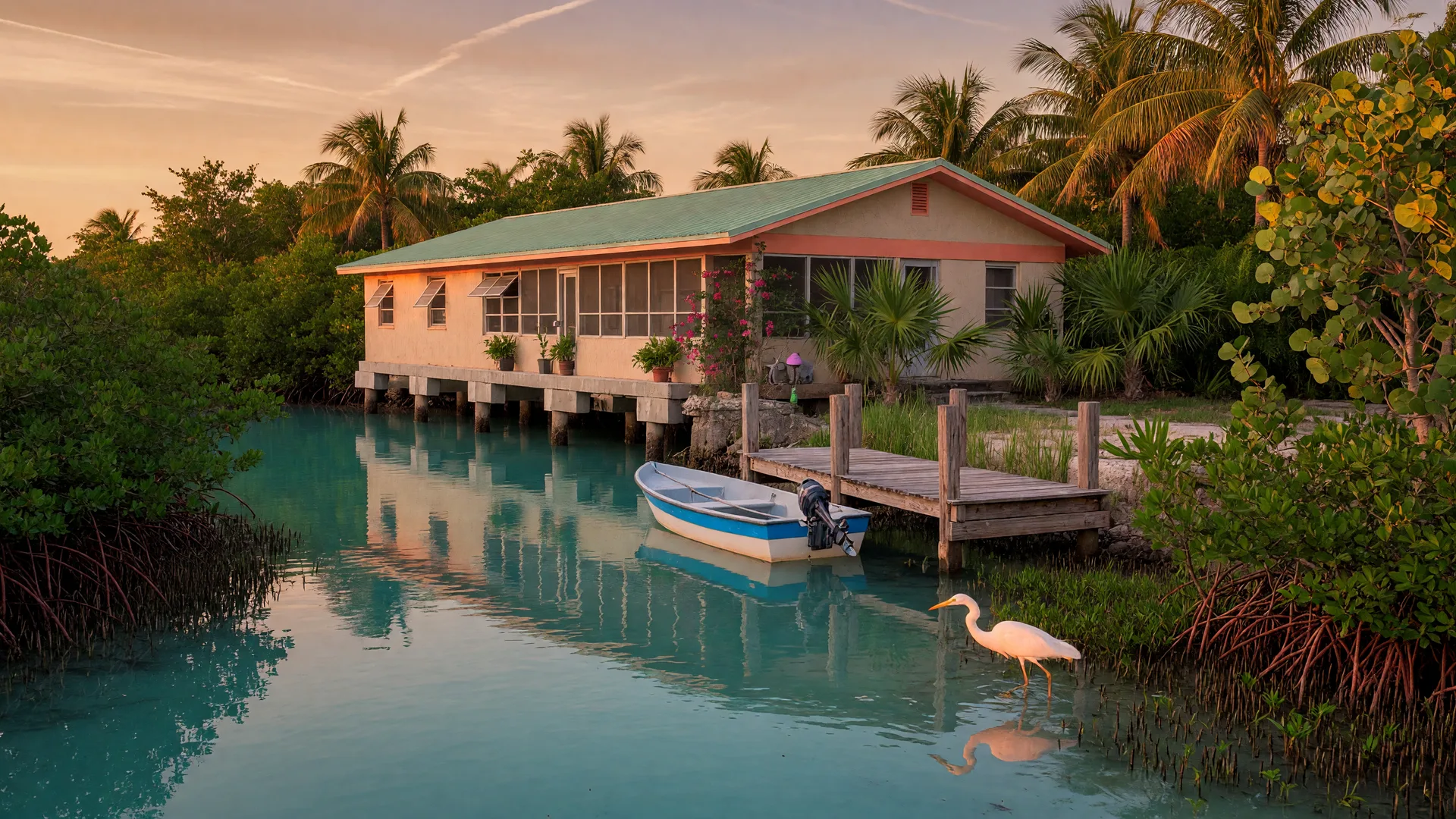
Established canal neighborhoods include Eden Pines, Port Pine Heights, Pine Channel Estates, Piney Point, and Cahill Pines and Palms. Each has its own water personality, so the first step is matching the canal to the way you boat. Some canals sit closer to Pine Channel and give you a fast, protected run to open water. Others are quieter and more natural, with mangrove-lined banks, deeper privacy, and gentler current. "Ocean side" and "bay side" are shorthand for which water a given canal leads toward, and the difference shows up in salt exposure, tide, and how quickly you can be fishing or cruising.
This is the moment to define the boating brief honestly: what boat do you keep, what draft does it draw, and how often will you actually leave the dock? The answer decides which canal is right. For a broader frame on water types across the Keys, our guide to bayside, oceanfront, and gulfside frontage explains the trade-offs in plain terms.
The Dry-Lot Option
Not every Big Pine buyer needs a boat slip at the doorstep, and the dry-lot side of the market deserves respect. Dry lots sit outside the canal system, often on elevated land with native hammock and easy access to public boat ramps and marinas nearby. They typically carry lower flood and insurance exposure, and they can be the smartest entry point for buyers who want the island's character without the seawall budget.
The right choice comes down to math and lifestyle. If the boat stays in the water most of the year and you want to walk out your door and cast off, a canal lot is the answer, and the dock, lift, and seawall costs belong in your budget. If the boat lives at a marina and the home is about quiet, wildlife, and space, a dry lot can deliver the same island at a more forgiving price of admission. Both exist on Big Pine in healthy supply, and both have served buyers well.
Step 2: Get Pre-Approved and Assemble Your Team
Waterfront purchases in the Keys are almost always financed with special attention to flood zones, wind coverage, and insurance cost, so pre-approval comes before house hunting. Lenders underwrite waterfront differently here, and a pre-approval letter that reflects the real cost of insurance and the property's flood designation is the one that closes deals.
Your team should include a local agent, a lender who knows Keys waterfront, a title company, an insurance specialist, and a licensed inspector who understands marine construction. My guide to assembling your dream team for a Florida Keys purchase lists who you actually need and why each seat matters. On Big Pine, the property's canal, elevation, and seawall history are the details your team will chase, and they are the details that separate a smooth close from a stressful one.
Step 3: Evaluate the Property Like a Contractor
Big Pine's natural canals are beautiful, and they are different from the engineered canals of the Upper Keys. The banks are often natural and mangrove-lined rather than concrete, and the seawalls and docks range from excellent to tired. That is exactly where my contractor and inspector licenses earn their keep.
Evaluate the seawall and revetment for settling, cracks, and undercutting, and note whether it is concrete, riprap, or natural shoreline. Inspect the dock and boat lift for marine-grade materials and signs of rot or corrosion. Check the elevation certificate against flood insurance requirements, and review wind mitigation features such as roof strapping, impact glass, and hurricane shutters. Waterfront homes here take weather seriously, and the ones that have been maintained command the premium. Our seawall and dock inspection guide and the complete waterfront inspection checklist walk through the exact items to verify, and my article on evaluating a Keys waterfront home as a contractor explains how to read what you find.
Living With the Key Deer
Buying on Big Pine means buying into a neighborhood where the wildlife is the point. The Key deer, an endangered species found nowhere else on earth, move through yards, cross roads, and treat the island's green spaces as home. Residents plant native and deer-safe landscaping, keep small dogs close, and drive slowly after dusk, because the deer are never more than a block away.
That shared responsibility is not a burden, it is the community's identity. Neighbors look out for one another and for the deer, and newcomers are welcomed into that pact quickly. It also shapes the practical side of homeownership: refuge proximity limits some kinds of coastal development, which is precisely why the island keeps its character, and why the open space around your property is unlikely to change. Buyers who want guaranteed wilderness views find real comfort in that permanence.
Step 4: Make Your Offer and Run Due Diligence
In a steady market like Big Pine's, offers should be clean, credible, and backed by proof of funds or a real pre-approval. Pricing here follows comparable canal sales more than emotion, so a well-prepared buyer can negotiate from knowledge rather than hope.
Once under contract, the due diligence period is when the property earns its value. Order the inspections, review the survey and title work, and confirm the dock, boat lift, and seawall are properly permitted. Waterfront rules in the Keys extend to what you can do with your shoreline, so confirm the property's ability to support your planned use before closing. My guide to title search, survey, and closing mechanics lays out what happens at the table and what to verify in the contract window.
Step 5: Insurance, Flood Zones, and Closing
Insurance is the single most practical issue in any Big Pine waterfront purchase. Flood zone designation, elevation certificate, and wind coverage all drive the annual cost, and buyers who price insurance before making an offer are never surprised at closing. Our guide to insurance and flood zone requirements in the Keys explains the terms every buyer needs to know, and your local agent should run the numbers on any specific property before you commit.
At closing, expect the normal Keys lineup: title commitment, survey, HOA or community disclosures where they apply, and county transfer documentation. Big Pine closings are rarely dramatic when the work has been done in advance. The buyer who evaluated the water, priced the insurance, and inspected the infrastructure closes on schedule and moves into a waterfront home with confidence.
The whole process is a slower, steadier version of the Keys buying journey, and that suits the island. If you would like the step-by-step process for the Upper Keys instead, our complete guides to buying waterfront in Key Largo and buying waterfront in Marathon mirror the same structure for those markets. The complete Keys buyer's guide ties the entire process together, from first questions to keys in hand.
A Market That Rewards Patience
Big Pine Key rarely produces the bidding energy of the Upper Keys, and that is by design. Waterfront listings come to market steadily rather than in waves, and the buyers who succeed are the ones who take the time to learn the canals, walk the neighborhoods, and let the right property find them. There is no rush, which is the point of living here, and the buying process should respect that rhythm.
When the right canal home does appear, the prepared buyer wins it: pre-approval in hand, insurance numbers run, inspector scheduled, and an agent who knows exactly what the water should look like at high tide and low. That preparation is not about pressure, it is about clarity. It is the difference between wavering on a rare listing and closing with confidence on an island where the good ones do not linger.

Steve Conley
Principal, Conley Sales Group at COMPASS, the exclusive Compass office in the Florida Keys. Licensed Sales Associate, Contractor, and Home Inspector with over 30 years in the Keys market.
Full BioBuying on Big Pine
what to know.
How is Big Pine Key different from the Upper Keys for waterfront buyers?
Big Pine Key is a single-family island with no condo towers, protected natural canals, and the National Key Deer Refuge surrounding it. The market is quieter and more patient than the Upper Keys, and buyers trade a little convenience for unmatched natural character.
Which Big Pine Key canals are best for boaters?
Neighborhoods such as Eden Pines, Port Pine Heights, Pine Channel Estates, Piney Point, and Cahill Pines and Palms all offer canal living, but each has its own depth, tide, and speed of access to Pine Channel. Match the canal to your boat's draft and how often you plan to leave the dock.
Do I need a seawall and dock inspection on a Big Pine property?
Yes, absolutely. Many Big Pine canals are natural and mangrove-lined rather than engineered, so seawalls, revetments, docks, and boat lifts vary widely in condition. A contractor-level inspection protects you from deferred maintenance that a standard home inspection will miss.
How does flood insurance work on Big Pine Key waterfront homes?
Waterfront properties are generally in designated flood zones, and the elevation certificate, flood designation, and wind coverage drive the annual cost. Price insurance before making an offer so the real cost of ownership is part of your budget from the start.
Is Big Pine Key a good place for a full-time home or a second home?
Both work well. The island has grocery stores, restaurants, a medical center, and a genuine community, while the refuge and protected water keep the character intact. Many second-home buyers come for the quiet and stay for the wildlife and boating on their doorstep.
Helpful Resources & Related Guides
Continue your research on buying waterfront property in the Florida Keys with these guides.
Internal Resources
Thinking About Buying or Selling
in the Florida Keys?
Steve Conley brings 30 years of Keys expertise, $1.4 billion in career sales, and contractor-inspector credentials to every transaction. Start with a conversation.
Connect with Steve