
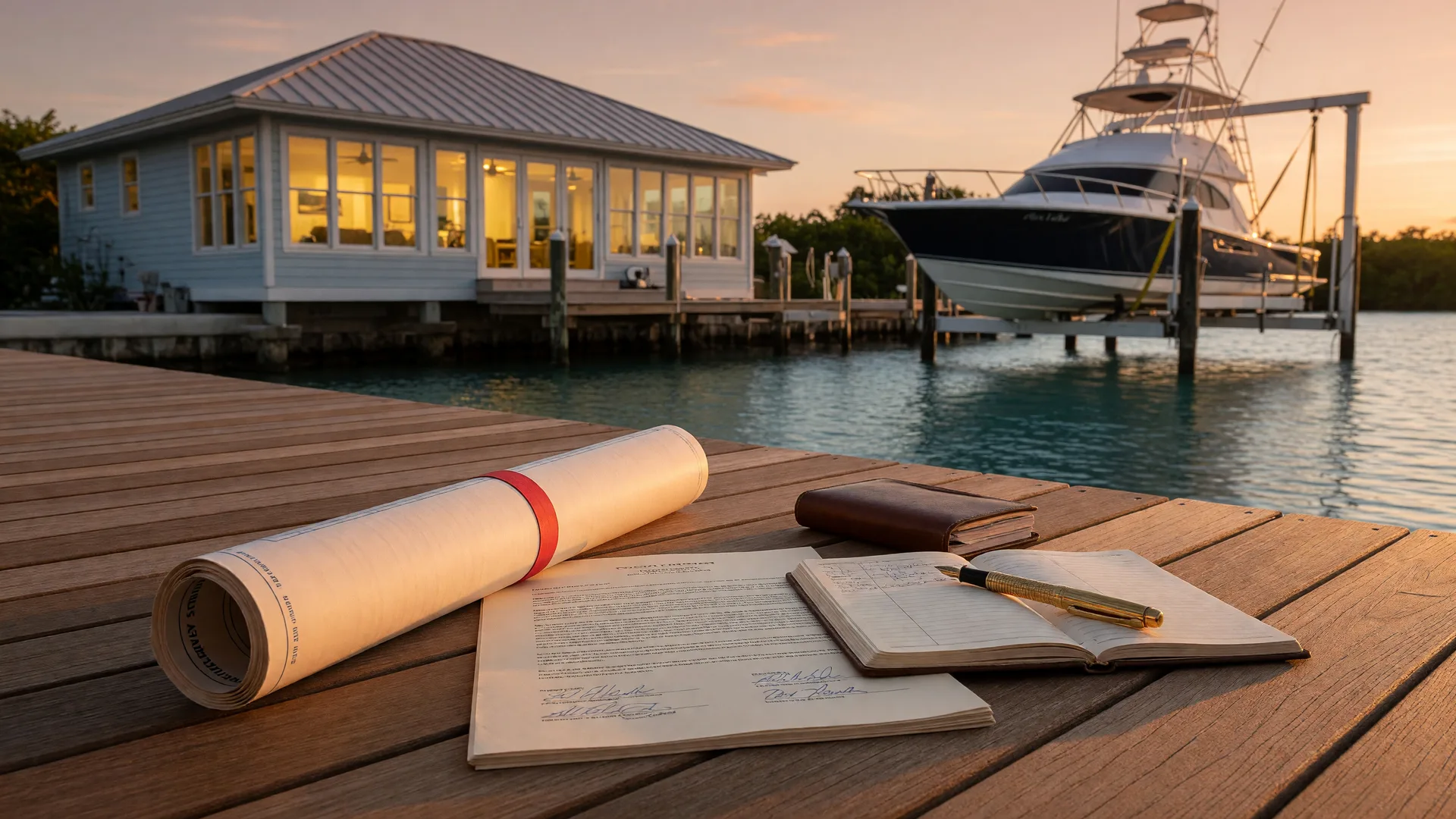
Contingencies and Timelines in a Florida Keys Waterfront Contract: What Happens Between Accepted Offer and Closing
Once your offer is accepted, the contract calendar takes over. On a Florida Keys waterfront purchase, the contingencies and their deadlines determine how smoothly the next 30 to 45 days go, and where your money and your rights are protected.
Key Takeaways
- A Florida Keys waterfront contract is a chain of contingencies and deadlines: inspection, financing, appraisal, survey, and title work each run on their own timetable inside the closing window.
- The inspection period is the buyer's main chance to evaluate the home, the seawall, the dock, and the boat lift, and the deadline drives every repair negotiation that follows.
- Financing and appraisal contingencies protect you from paying more than the property is worth or committing to terms that do not work, but they expire on fixed dates and must be handled in writing.
- Waterfront purchases add layers the calendar rarely shows: canal depth records, seawall surveys, permits, and ARCO or HOA reviews that can take longer than a mainland closing.
- Missed deadlines cost leverage, not just time. An experienced Keys agent builds realistic buffers into the calendar so weather, lenders, and paperwork seldom derail closing.
The moment your offer on a Florida Keys waterfront home is accepted, the transaction stops being about finding the right house and becomes about managing a calendar. Every contract is built from contingencies, and every contingency has a deadline. Understanding how those clauses work, which ones matter most on waterfront property, and what happens when a date slips is the difference between a calm closing and a stressful one. This guide walks through the standard timeline between accepted offer and closing, with the waterfront specifics that a mainland buyer would never think to watch.
Why Contingencies and Timelines Matter More in the Keys
A contingency is a condition that must be satisfied before the deal moves forward. It protects you: if the inspection reveals a failing seawall, the inspection contingency lets you negotiate, ask for repairs, or walk away with your earnest money. What makes the Florida Keys different is how much of a waterfront purchase happens outside the house. The home is only part of the value. The dock, the boat lift, the canal, and the flood exposure carry costs and risks that show up in these clauses, and the timelines have to fit the marine world, not just the real estate one.
In practice, a Keys waterfront closing typically runs from about 30 to 45 days, sometimes longer when a community association, a permit, or a lender adds review time. Buyers in Key Largo, Tavernier, or Islamorada often come from out of state, which makes the calendar even more important: every step needs to fit travel, remote signing, and a lender that may not know waterfront property. My guide to the Keys waterfront due diligence period covers the full arc, and this post zooms in on the contract clauses that keep it moving.
The Inspection Period: The First Big Deadline
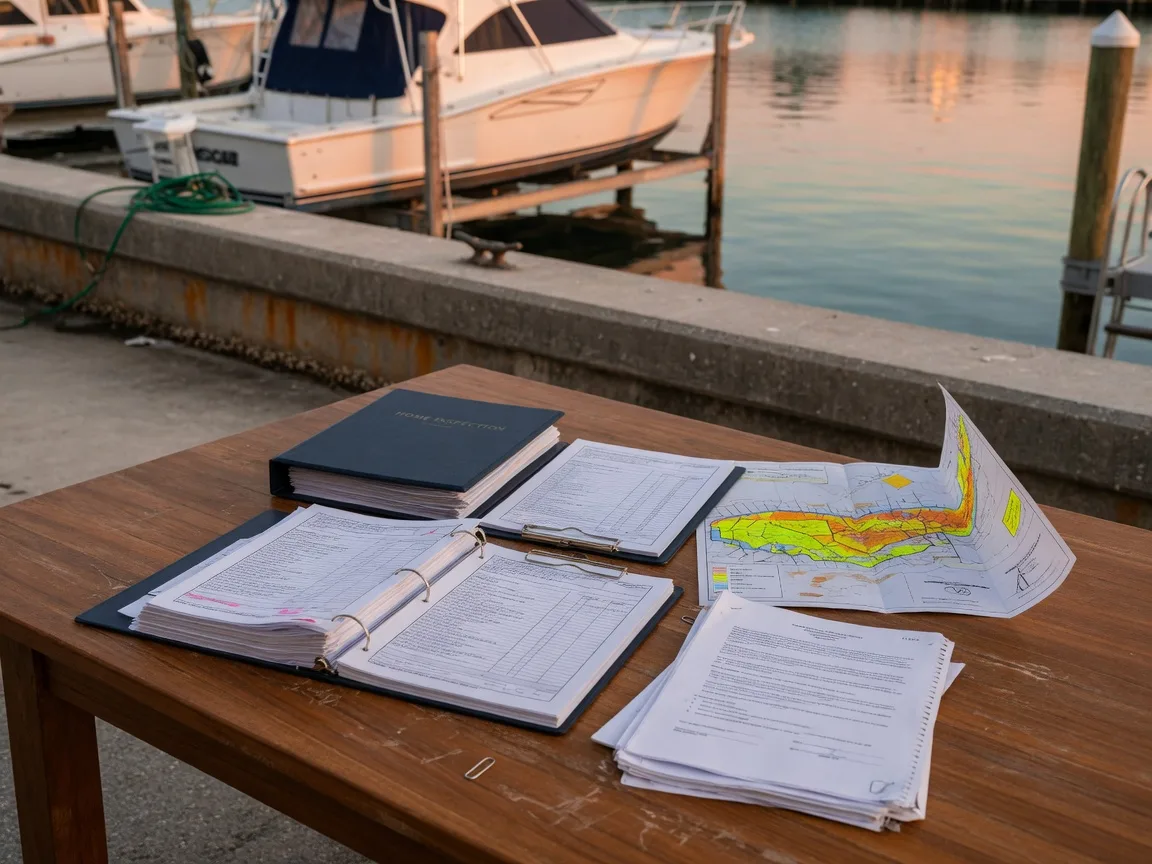
The inspection contingency is usually the first date on the contract, and it is the one that protects the most money. It gives you a set window, commonly 10 to 15 days in the Keys, to run the inspections and decide how to proceed. On a waterfront home that means more than a general home inspection. You want the structure and systems inspected, and you want the seawall, the dock, and any marine equipment looked at with the same seriousness.
What you find in this window shapes everything after it. If the report is clean, you remove the inspection contingency in writing and the calendar moves on. If the report flags issues, you enter the repair conversation, which my guide to negotiating repairs after the Keys home inspection walks through in detail. Either way, the deadline forces the decision, and letting it pass without acting means you accept the property as inspected, which is rarely the position you want to be in.
The Financing Contingency and Your Lender's Clock
If you are financing the purchase, the contract will include a financing contingency with its own deadline, and it is tied to what your lender can actually deliver. In the Keys, waterfront financing is a specialty. Lenders ask harder questions about flood zones, elevation certificates, wind insurance, and the condition of coastal structures, and some loan products simply are not available on certain properties. Your commitment deadline on the contract should line up with a realistic estimate from a lender who has closed Keys waterfront transactions before.
The appraisal deadline usually sits alongside financing. The lender orders an appraisal to confirm the home is worth the contract price, and if it comes in low, you have choices: renegotiate, bring more cash, challenge the appraisal, or walk under the contingency. On waterfront property, appraisals lean on comparable canal homes, dock conditions, and water access, and my guide to how the appraisal works when you buy a Keys waterfront home explains what appraisers actually weigh. The key point for the calendar: these dates move only with proper notice, so keep your lender and your agent in constant communication.
Survey, Canal Depth, and Title Work
Alongside inspections and financing, the contract schedules the survey and title review. The survey confirms the property lines, the dock footprint, and any easements, and on a waterfront property it should also capture the seawall line and the waterward extent of your ownership. Many Keys waterfront parcels include submerged land, dock rights, and canal access that the survey documents, so this is not a formality.
Title work verifies that the seller can convey clean title, including any declarations, restrictions, and easements that run with the property. If you are buying into a canal community with HOA and ARCO rules, that review can take longer and deserves a real place on the calendar rather than a squeeze at the end. My guide to title search, survey, and closing mechanics details the final paperwork, but the planning starts here, in the first days after acceptance.
Waterfront Conditions That Add Time
A mainland contract rarely worries about canal depth. A Keys contract should. If the listing promises deep-water access, someone has to verify it, whether through the property's records, a canal depth survey, or a conversation with the local community. A boat lift that does not match the draft of the boat you own is a negotiation point, not a surprise to discover at closing. These checks do not always have their own named clause, but they live inside the inspection and survey windows, which is exactly why those windows need enough days.
Permits and association approvals add their own timelines. Some dock work, seawall repairs, and even some landscaping changes require county or state permitting, and if your purchase depends on a permit being in place, the contract needs language and time for it. In a marina or gated community, the association's approval process can run two to four weeks on its own. An agent with local experience builds these into the contract up front rather than discovering them in week three.
What Happens When a Deadline Slips
Contracts are written to keep deadlines meaningful. If you miss an inspection deadline without acting, you may be deemed to have accepted the property. If you miss a financing deadline, the seller may have the right to cancel and keep your earnest money or demand a deposit increase. The dates are there to protect both sides, and they work only if everyone respects them.
When a legitimate issue appears, the answer is a written extension or an amendment, agreed by both parties before the deadline passes. Keys sellers who have been through weather delays and insurance surprises are usually reasonable when buyers communicate early and in writing. The failure mode is silence: a buyer who lets a date slide without notice loses the leverage that the clause was designed to protect. Communicate early, document clearly, and keep the calendar honest.
Weather, Storms, and the Written Fallback
The Florida Keys add a factor that no contract can schedule: the weather. If a named storm threatens the islands during your contract period, insurance carriers pause bindings, inspectors postpone rooftop work, and closings can legitimately slide. Well-drafted Keys contracts include language that addresses weather delays, and your agent's job is to get a written agreement in place the moment a storm enters the picture, not after the deadline goes by.
This is where the contractor and inspector side of my work shows up in the transaction itself. I have watched the same house go from clean inspection to storm-tossed dock in a single week, and the walkthrough after a storm is a very different exercise from the one before it. My guide to the final walkthrough before closing covers how to verify condition in those final days. The point for the calendar is simple: build the contract so a storm is an inconvenience, not a catastrophe.
How an Experienced Keys Agent Keeps the Calendar on Track
The difference between a smooth Keys closing and a stressful one is rarely the price. It is the calendar. An experienced local agent knows which lenders close on time, which inspectors know seawalls, which title companies have seen Keys waterfront before, and how long an ARCO review really takes. That knowledge shows up as reasonable deadlines, proactive reminders, and written extensions that arrive before the clock runs out.
You can manage the calendar yourself, and I have seen buyers do it well. But the buyer's side pays for exactness here: a single missed deadline on earnest money, on inspection removal, or on a financing commitment can cost leverage, time, or the deposit itself. Having someone who has run this exact process dozens of times on Keys waterfront property is the most valuable contingency you can add to the contract.
The Bottom Line
Between accepted offer and closing, a Florida Keys waterfront contract is a sequence of protected steps, each with a deadline and each with a purpose. Know which contingencies you have, understand what the waterfront adds to each one, and never let a date slip silently. With the right calendar and the right team, the weeks between offer and closing become the calm run-up to the day you take the keys.
Whether you are negotiating your first Keys contract or your fifth, contact Steve Conley before you sign. With three decades of Keys transactions and contractor and inspector credentials, he structures the contract and the calendar to protect you from the first deadline to the last. Start with the complete Keys waterfront buyer's guide to see the full process from the beginning.
Florida Keys contract contingencies, explained.
What are the typical contingencies in a Florida Keys waterfront purchase contract?
The standard protections are the inspection contingency, the financing contingency, and the appraisal contingency, along with the survey and title review. On Keys waterfront property, buyers also commonly protect canal depth, dock and seawall condition, permits, and association approvals, often within the inspection and survey windows.
How long is the inspection period on a Keys waterfront home?
A typical Keys contract allows 10 to 15 days for inspections, and waterfront buyers need every day of it. Beyond the house itself, the window should cover the seawall, the dock, the boat lift, and the marine systems, which take time to evaluate properly.
What happens if a contract deadline is missed?
It depends on the clause. Missing an inspection or financing deadline without acting can mean you are deemed to have accepted the property or the terms, and the seller may gain rights to cancel or to keep the earnest money. The fix is a written extension agreed before the deadline passes, never silence.
Can a hurricane delay my Florida Keys closing?
Yes, and well-drafted Keys contracts anticipate it. If a named storm interrupts inspections, insurance, or settlement, both sides can agree to a written extension. The important habit is to put the agreement in writing as soon as a storm enters the picture, not after the deadline passes.
Why do waterfront closings take longer than mainland closings?
Because there is more to verify. Canal depth, seawall and dock condition, permits, flood and wind insurance, and HOA or ARCO approvals all run on their own schedules. A 30 to 45 day closing is common, and experienced agents build these reviews into the calendar instead of discovering them late.
Helpful Resources & Related Guides
Complete your Florida Keys buying journey with the community guides, the contract and closing resources, and the buyer's guide that walk you from accepted offer to closed, protected purchase.
Internal Resources
- Key Largo Luxury Waterfront Community Guide
- The Keys Waterfront Due Diligence Period Explained
- The Pre-Offer Paper Trail for Keys Waterfront Buyers
- Title Search, Survey, and Closing Mechanics in the Keys
- Negotiating Repairs After the Keys Home Inspection
- The Complete Buyer's Guide to Keys Waterfront Homes
- Contact Steve Conley About Your Keys Purchase

Steve Conley
Principal, Conley Sales Group at COMPASS, the exclusive Compass office in the Florida Keys. Licensed Sales Associate, Contractor, and Home Inspector with over 30 years and $1.4 billion in career sales serving the island chain.
Full Bio
Thinking About Buying or Selling
in the Florida Keys?
Steve Conley brings 30 years of Keys expertise, $1.4 billion in career sales, and contractor-inspector credentials to every transaction. Let him structure your contract and calendar so the steps between offer and closing protect you at every deadline.
Connect with Steve