
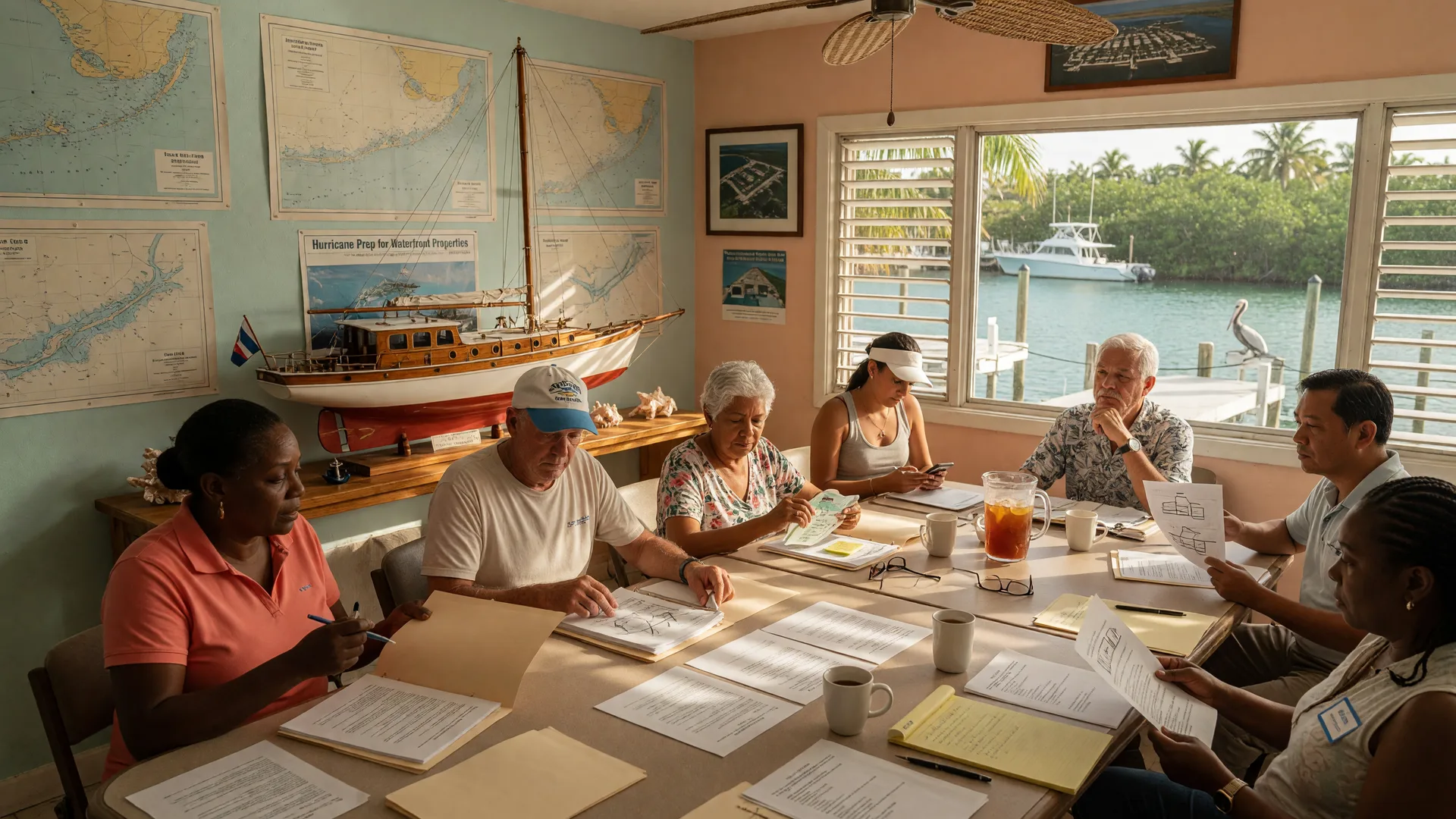
Navigating HOA and ARCO Covenants When Buying a Florida Keys Waterfront Home: What Buyers Need to Know
From dock use restrictions to seawall maintenance requirements and architectural review guidelines, understanding community covenants is essential before you commit to a waterfront property in the Keys.
Key Takeaways
- ARCO (Architectural Review Committee) covenants govern everything from dock design and seawall materials to exterior paint colors and landscaping, and they vary widely between communities.
- HOA fees in Florida Keys waterfront communities typically range from $300 to $1,200 per year for canal maintenance, and some associations also manage community docks, parks, and security.
- Canal maintenance associations are separate from HOAs and specifically manage dredging, seawall repair, and water quality in private canal systems: these fees can add $500 to $2,500 per year.
- Some waterfront communities restrict dock use to certain boat sizes, engine types, or mooring durations, which can affect how you use your property if you own a large yacht or multiple vessels.
- Reviewing covenants before making an offer is critical, as certain restrictions can fundamentally change how you use and enjoy your waterfront property. I review these documents as a standard part of my buyer representation.
When luxury buyers begin searching for waterfront property in the Florida Keys, they typically focus on the home, the water depth, the seawall condition, and the views. These are all critical factors, and I cover them extensively in my buying guide for luxury waterfront homes in the Florida Keys. But there is another layer of due diligence that is just as important and often overlooked: the covenants, conditions, and restrictions that govern how you can use your property.
Every Florida Keys waterfront community operates under a set of rules. Some are governed by formal homeowners associations with active architectural review committees. Others have canal maintenance districts with specific dredging schedules and fee structures. Some communities have no formal HOA but are subject to county-level regulations that dictate dock construction, shoreline modifications, and vegetation removal. Understanding these rules before you make an offer can save you from discovering a restriction that fundamentally changes how you planned to enjoy your property.
As a licensed Sales Associate, Contractor, and Home Inspector with over three decades in the Keys, I have seen buyers fall in love with a property only to discover after the fact that their planned dock extension is prohibited, their boat exceeds the canal's size limit, or their renovation vision conflicts with the architectural review guidelines. This guide is designed to help you ask the right questions and review the right documents before you commit.
Understanding HOA Covenants in the Florida Keys
Homeowners associations in the Florida Keys range from very active organizations with full-time staff to small volunteer-run groups that meet once a year. The scope of what an HOA governs varies significantly by community, but there are common elements that waterfront buyers should understand.
Most HOAs in the Keys collect annual or quarterly fees that fund common area maintenance, landscaping, security, and sometimes canal dredging. Fees typically range from $300 to $1,200 per year for single-family waterfront properties, though some exclusive communities with extensive amenities charge significantly more. It is important to understand what your fees cover and whether there are special assessments planned for major projects like seawall repairs or canal dredging.
The HOA declaration of covenants is a recorded legal document that runs with the property. This means that when you buy a home in an HOA-governed community, you are agreeing to abide by the covenants whether or not you actively participate in the association. A thorough review of the declaration before closing is essential.

ARCO: Architectural Review Committee Guidelines
Many luxury waterfront communities in the Keys have an Architectural Review Committee that governs the design and appearance of all structures within the community. ARCO approval is typically required for any exterior modification, including paint colors, roofing materials, dock construction, landscaping changes, and additions.
For buyers who plan to renovate, expand, or build new construction on a waterfront lot, understanding the ARCO guidelines before purchasing is critical. Some committees have very specific design standards that limit architectural styles, materials, color palettes, and even the types of vegetation you can plant. A buyer who envisions a modern coastal contemporary home might find themselves restricted to a traditional Keys cottage aesthetic in certain communities.
The ARCO approval process also takes time. Most committees meet monthly or quarterly, and they require detailed plans and specifications before granting approval. If you are on a tight timeline for a renovation or new construction project, factor the ARCO review period into your schedule. I discuss this in more detail in my guide to luxury waterfront renovation and new construction in the Florida Keys.
Canal Maintenance Associations and Dredging Districts
One of the most important and least understood elements of Florida Keys waterfront ownership is the canal maintenance association or district. These organizations are responsible for maintaining the canals that provide access to open water, including dredging, seawall repairs, and water quality management.
Not every canal in the Keys has an active maintenance association. Some canals are maintained by the county or by a municipal service district. Others are maintained by a private association of property owners who pay annual fees. And some canals have no formal maintenance arrangement at all, which means property owners may need to advocate for dredging on their own.
The condition of a canal's maintenance program directly affects property values. A well-maintained canal with regular dredging and sound seawalls supports premium pricing and strong appreciation. A neglected canal with shallow depths and deteriorating seawalls depresses values across the entire community. When I evaluate a waterfront property for a buyer, I always investigate the canal maintenance status as part of my due diligence. For more on how to evaluate these factors, see my complete waterfront property inspection checklist.
Dock Use Restrictions and Boating Regulations
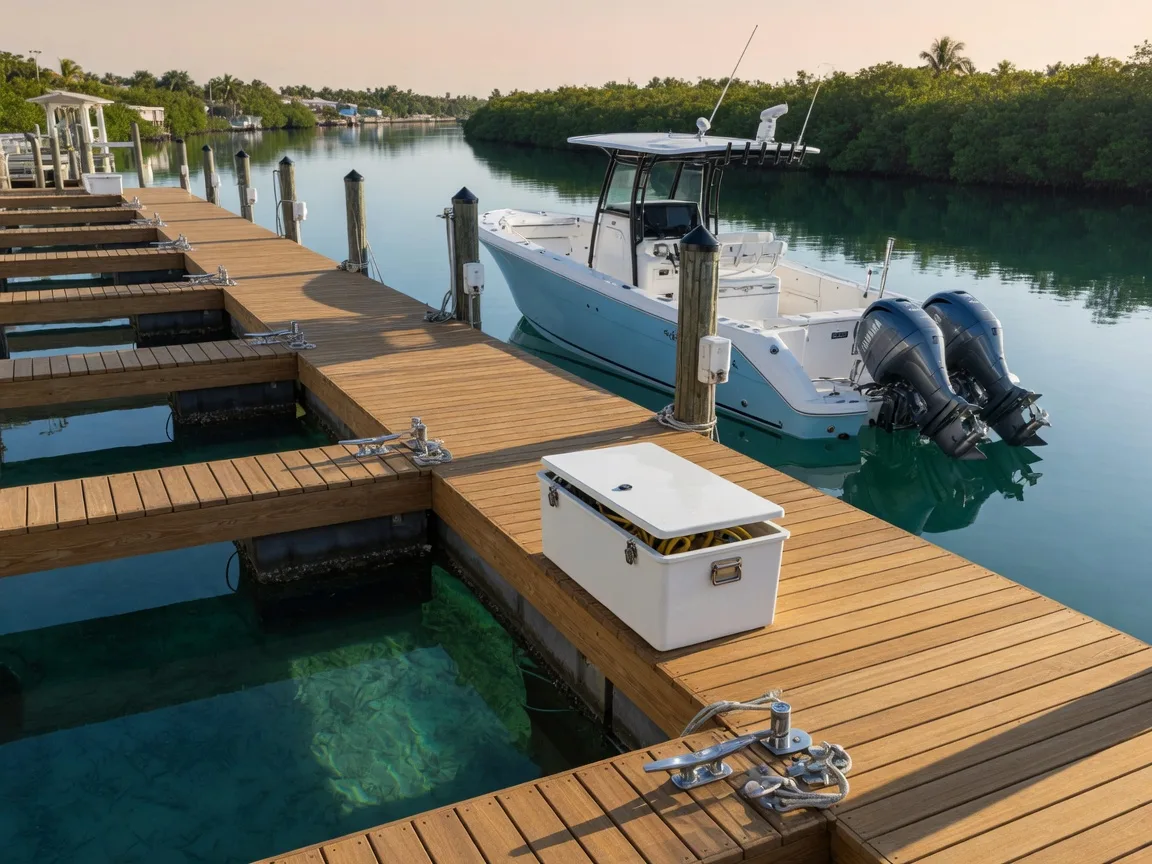
For many luxury buyers, the primary reason to own waterfront property in the Florida Keys is boat access. But not every waterfront property allows unrestricted boating. Community covenants may impose limits on:
- Vessel length and beam: Some canals have maximum boat length restrictions based on canal width and turning radius.
- Engine types: Certain communities restrict personal watercraft or specify noise limits on marine engines.
- Mooring duration: Some associations limit how long a vessel can remain at the dock without being used.
- Number of vessels: Restrictions on how many boats can be docked at a single property are common.
- Commercial use: Using your dock for charter fishing or boat rental businesses may be prohibited.
For serious boaters and yacht owners, these restrictions can be deal-breakers. If you own a 60-foot sportfishing yacht, you need a canal deep enough to accommodate its draft and wide enough for its beam, and you need a community that permits vessels of that size. I cover this topic extensively in my guide to canal versus open-water waterfront property.
Environmental and County-Level Restrictions
Beyond HOA and ARCO covenants, Monroe County imposes its own set of regulations on waterfront properties. These include shoreline setback requirements, mangrove protection rules, septic system standards, and elevation requirements for new construction and substantial renovations.
The county also enforces Florida Department of Environmental Protection regulations regarding seawall construction, dock permitting, and shoreline modifications. Any work on the water side of the property requires permits from multiple agencies, and the permitting process can take months. A buyer who plans to build a new dock or extend an existing one should factor this timeline into their planning.
Insurance requirements also tie into these regulations. Properties that meet current elevation and wind mitigation standards qualify for better insurance rates. I walk through these considerations in my guide to insurance and flood zone requirements for Florida Keys waterfront buyers.
How to Review Covenants Before You Buy
The best time to review covenants is before you make an offer. Here is my recommended approach for buyers:
- Request the declaration of covenants from the seller or their agent early in the process. Do not wait until you are under contract.
- Read the ARCO guidelines carefully, especially if you plan any exterior modifications or renovations.
- Review the association's financial statements to understand the fee structure, reserve funds, and any planned special assessments.
- Speak with the HOA board president or property manager to get a sense of the community's culture and enforcement approach.
- Walk the neighborhood and look at how properties are maintained. Are there boats in poor condition visible from the street? Are homes well-maintained? The physical condition of a community tells you a lot about the effectiveness of its covenants.
As part of my buyer representation, I review these documents with every client and flag any restrictions that could affect their plans. A covenant that prohibits short-term rentals, for example, matters enormously if you plan to use the property as a vacation rental when you are not in residence. A restriction on dock extensions matters if your planned boat is longer than the existing dock can accommodate.
Common Pitfalls to Avoid
Over the years, I have seen buyers encounter several recurring issues with community covenants. Here are the most common pitfalls to watch for:
The unapproved renovation: A buyer purchases a waterfront home with plans to add a second story or expand the dock, only to discover that the ARCO limits building height or dock dimensions. Always confirm renovation plans with the ARCO before closing.
The surprise special assessment: A buyer closes on a home in a canal community only to receive notice of a $10,000 special assessment for seawall repairs. Review the HOA's financial statements and ask about planned capital projects before you buy.
The boat that does not fit: A buyer falls in love with a canal home without checking the canal depth at low tide, only to discover that their 55-foot sportfishing yacht draws too much water. Check depth measurements and boat restrictions together.
The rental restriction: A buyer plans to use the property as a vacation rental when not in residence, only to find that the HOA prohibits short-term leases or limits rentals to minimum 30-day stays.
I help buyers navigate these issues through the due diligence process. My experience as a licensed Contractor and Home Inspector means I can evaluate both the physical condition of the property and the regulatory framework that governs it. For a comprehensive overview of the entire buying process, start with my guide to navigating the Florida Keys luxury home buying process.
Working With an Agent Who Understands Covenants
The best protection against covenant-related surprises is working with an agent who understands the regulatory landscape of Florida Keys waterfront communities. Not all real estate agents take the time to review HOA documents, ARCO guidelines, and canal maintenance status with their buyers. I consider this review an essential part of my representation.
When I work with a buyer, I provide a comprehensive overview of the covenants affecting any property they are considering, and I flag potential issues before they become problems. This is especially important in the Keys, where waterfront regulations layer on top of community covenants to create a complex ownership landscape. If you are considering a purchase in one of the communities I specialize in, including Key Largo, Tavernier, or Islamorada, I can guide you through the specific covenants that apply in each area.
The Florida Keys offer extraordinary waterfront living opportunities, but the regulatory environment requires careful navigation. With the right guidance, you can find a property that matches your vision, your boating needs, and your lifestyle without discovering unwelcome restrictions after closing.

Steve Conley
Principal, Conley Sales Group at COMPASS the exclusive Compass office in the Florida Keys. Licensed Sales Associate, Contractor, and Home Inspector. Over 30 years and $1.4 billion in career sales serving Key Largo to Key West.
Full BioHOA and ARCO covenants:
what to know.
What is the difference between an HOA and a canal maintenance association in the Florida Keys?
A homeowners association typically governs the overall community, including common areas, landscaping, architectural standards, and sometimes security. A canal maintenance association is a separate entity specifically responsible for dredging, seawall repairs, and water quality in private canal systems. Some waterfront communities have both, with separate fee structures for each. The HOA fee might cover community amenities while the canal maintenance fee covers waterway upkeep. It is important to understand both before purchasing.
Can I renovate my Florida Keys waterfront home if it is in an HOA community?
Yes, but most HOA-governed communities require Architectural Review Committee approval for any exterior modifications, including paint colors, roofing materials, dock work, landscaping changes, and structural additions. The ARCO process typically requires submitting detailed plans and specifications for review, which can take several weeks to several months depending on the committee's meeting schedule. Always review the ARCO guidelines before purchasing if you plan significant renovations.
How much do HOA fees typically cost in Florida Keys waterfront communities?
HOA fees for single-family waterfront properties in the Keys typically range from $300 to $1,200 per year, though exclusive communities with extensive amenities may charge more. Canal maintenance association fees add another $500 to $2,500 per year depending on canal size and dredging frequency. Some communities have no formal HOA but are subject to county-level regulations. Always review the association's financial statements to understand current fees, planned increases, and any upcoming special assessments.
Are there restrictions on boat size or dock use in Florida Keys canal communities?
Yes, many canal communities have specific restrictions on vessel length, beam, engine types, and mooring duration. Some associations limit the number of boats that can be docked at a single property, restrict personal watercraft, or prohibit commercial use of private docks. Canal depth at mean low water also effectively restricts the size of boat a property can accommodate. These restrictions vary widely between communities, so it is important to review them before purchasing if you own or plan to own a specific vessel.
When should I review the HOA covenants before buying a Florida Keys waterfront home?
The best time to review covenants is before making an offer, or at minimum during the due diligence period after your offer is accepted. I recommend requesting the declaration of covenants, ARCO guidelines, and association financial statements from the seller or their agent early in the process so you have time to fully understand the restrictions and budget for any fees. Reviewing these documents with an experienced buyer's agent who knows the Keys regulatory landscape helps you avoid discovering unwelcome restrictions after closing.
Helpful Resources & Related Guides
Deepen your understanding of the Florida Keys buying process with these related resources.
Internal Resources
- How to Buy a Luxury Second Home in the Florida Keys
- Key Largo Luxury Waterfront Community Guide
- Navigating the Florida Keys Luxury Home Buying Process
- The Complete Florida Keys Waterfront Property Inspection Checklist
- Understanding Insurance and Flood Zone Requirements for Florida Keys Buyers
- Contact Steve Conley for Personalized Buying Guidance

Thinking About Buying or Selling
in the Florida Keys?
Steve Conley brings 30 years of Keys expertise, $1.4 billion in career sales, and contractor-inspector credentials to every transaction. Start with a conversation.
Connect with Steve