
The Pre-Offer Paper Trail: Documents to Review Before You Make an Offer on a Florida Keys Waterfront Home
The documents behind a Keys waterfront home tell you what the photos cannot. Here is what to review before you write an offer.
Key Takeaways
- The pre-offer paper trail is where serious buyers find leverage: elevation certificates, flood claims, canal depth records, surveys, and community documents shape both price and risk.
- An elevation certificate and a flood zone letter tell you what insurance will cost and how the home was built for the water.
- Canal depth at mean low water, plus seawall and dock records, determine whether the property truly fits your boat and your lifestyle.
- HOA, ARCO, and county records such as ROGO allocation and permits can limit what you can do with the property after closing.
- Review the documents before you offer, not after: the pre-offer review protects your earnest money and strengthens your negotiating position.
Before you write an offer on a Florida Keys waterfront home, the smartest money you can spend is time with the property's paper trail. The documents behind a home tell you things the listing photos cannot: how deep the water really is, how the seawall was built and when, what the flood and insurance history looks like, and what the community rules will allow you to do with the property. This guide walks through the records every serious buyer should review before making an offer, and why each one matters.
Why the Paper Trail Matters Before the Offer
In the Keys, waterfront value lives in the details, and most of those details are documented. A home can look perfect from the dock and still carry a flood claim history, an aging seawall, or a canal that is shallower than the listing suggests. The documents reveal those realities, and they do it before you commit earnest money, before you spend on inspections, and before you negotiate a price based on assumptions.
The pre-offer review also gives you leverage. When you know the elevation certificate shows a low finished floor, or the survey reveals an encroachment, you can factor that into your offer or walk away cleanly. When you know the records are strong, you can bid with confidence. Either way, the paper trail turns guesswork into evidence, and evidence is what separates a smart offer from an emotional one. My guide to the Florida Keys waterfront due diligence period covers what happens after your offer is accepted; this guide covers what to pull before you make it.
The Elevation Certificate and Flood Zone Letter
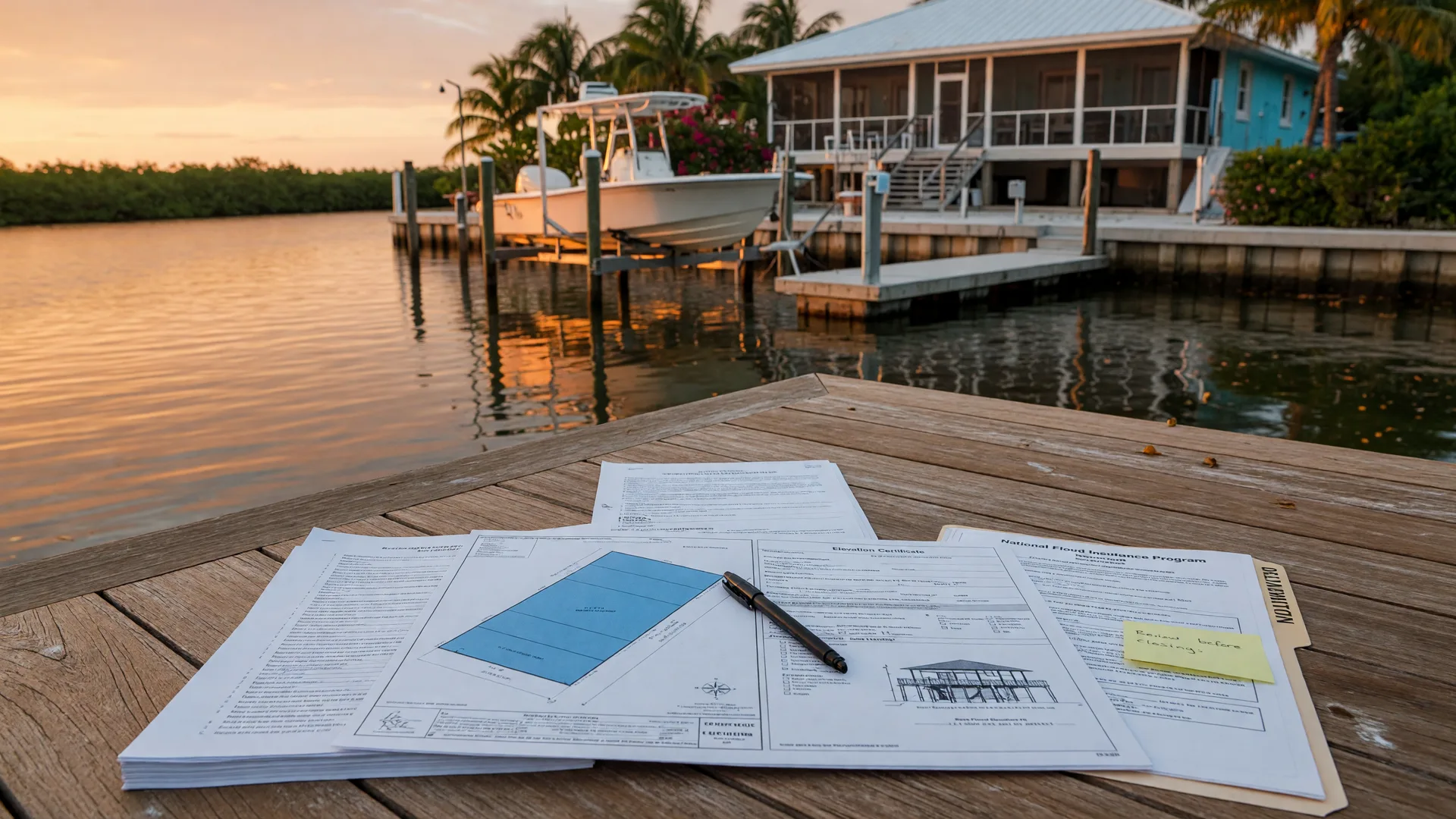
The elevation certificate is the single most important document on a Keys waterfront property. It records the height of the home's lowest floor relative to the base flood elevation, and it determines your flood insurance premium and your construction options. A home built comfortably above the base flood elevation is cheaper to insure and easier to protect; a home that barely clears it carries higher costs and more risk.
The flood zone letter tells you which flood zone the property sits in, and the two documents together give you a clear picture of the water risk. As a licensed contractor and home inspector, I read these documents first on every property, because they shape both the carrying cost and the resale value. My guide to insurance and flood zone requirements in the Florida Keys explains how the letters translate into real premiums.
Insurance and Claim History
Flood and wind insurance are a permanent part of Keys waterfront ownership, so the claim history matters as much as the premium estimate. Ask for the property's flood insurance claim history and any wind or homeowners claims on file. A property with repeated claims can be harder to insure, more expensive to cover, and a warning sign about the structure or the location.
The insurance history also tells you how the home has performed in real storms. A clean history on an older home is reassuring; a history of claims deserves a closer look at the roof, the windows, and the seawall. Pair the claim records with a wind mitigation report, which documents the features that reduce premiums, such as impact glass, roof strapping, and shutter systems. Those features are value, and they are all documented.
Canal Depth, Seawall, and Dock Records
For boat owners, the water itself is the amenity, and the records prove what the water can do. Canal depth is quoted at mean low water, the shallowest point of the tide, and that number determines whether your vessel can navigate the canal at all times of the month. Ask for the canal depth record, the dredging history, and any documents showing the maintenance of the waterway.
The seawall and dock deserve their own file. A concrete seawall with a documented build date and maintenance history is an asset; a seawall with no records, visible cracks, or signs of repair is a liability. The dock, the pilings, and the boat lift all have condition and capacity limits that should be documented before you plan around them. My guide to how to read a Florida Keys waterfront listing shows where these details hide in the fine print, and my complete buyer's guide walks through evaluating seawalls and docks in person.
The Survey: Boundaries, Bulkheads, and Easements
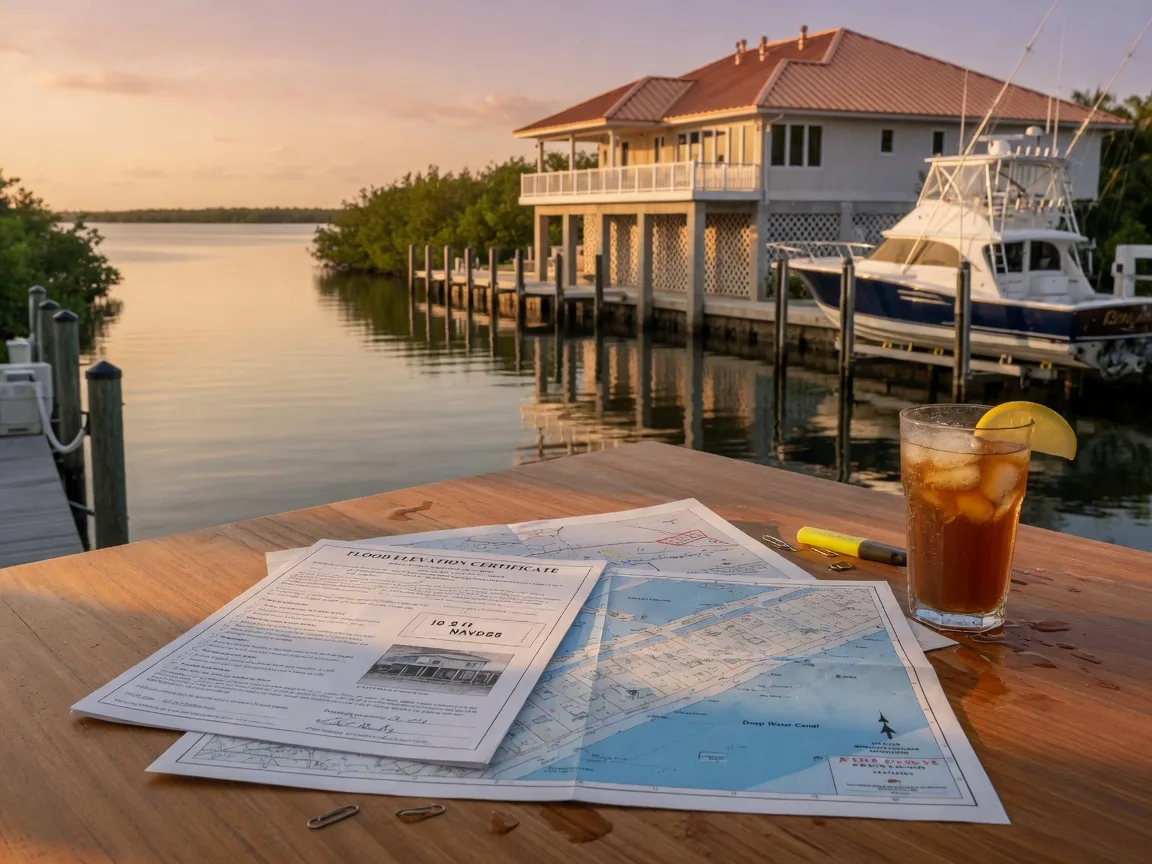
The survey is the property's ground truth on paper. It shows the lot lines, the water frontage, the bulkhead line, and any easements that cross the property. On a waterfront home, the survey answers questions that matter every single day: where does my property end and the water begin, who owns the seawall, and can the neighbor's dock or utility line cross my land.
Surveys also reveal encroachments, situations where a structure or improvement sits on the wrong side of a line. A dock that extends into a neighbor's water frontage, or a fence that crosses the lot line, is a fixable issue if you know about it and a costly surprise if you do not. Review the survey before the offer so the boundaries are part of your decision, not part of your closing drama.
HOA, ARCO, and Community Documents
Many Keys waterfront communities are governed by homeowners associations, and many waterfront neighborhoods sit inside an ARCO, an Area of Particular Concern under the county's land development regulations. The HOA documents tell you the fees, the rules, and the restrictions on everything from dock size to rental use. The ARCO designation tells you what the county allows on the property, including construction, renovation, and shoreline work.
These documents can limit what you planned to do. A home that looks perfect for vacation rentals may sit in a community that restricts them. A dock you hoped to extend may sit in an ARCO that caps it. Read the covenants before you fall in love with a plan. My guide to navigating HOA and ARCO covenants in the Florida Keys walks through the clauses that matter most to buyers.
Title History and County Records
The title search is the final layer of the paper trail, and in the Keys it includes records that surprise out-of-state buyers. Beyond the standard title issues, such as liens and ownership disputes, Monroe County waterfront property carries ROGO, the rate of growth ordinance allocation that controls new residential development. A property with a valid ROGO allocation is more valuable and more flexible than one without it, and the allocation transfers with the sale.
County records also hold the permits: the building permits, the dock permits, the seawall permits, and any violations on file. A property with a clean permit history is a property that was built and maintained the right way. A property with unpermitted work is a property with hidden cost and risk. Your title company and your agent can pull these records, and a licensed contractor can tell you what the permits actually mean for the structure.
How to Organize Your Pre-Offer Review
You do not need to become a document expert to buy well in the Keys; you need a process. Start with the listing agent and ask for the elevation certificate, the flood zone letter, the survey, the HOA or ARCO documents, and the canal depth record. Then have your agent and your title company pull the claim history, the permit history, and the title and ROGO status. Finally, bring a licensed contractor and inspector into the conversation early, because the documents point to what deserves a closer look in person.
Give yourself time for this review. In a competitive market it is tempting to offer fast, but the fastest offer is not always the smartest one. The Florida Keys market report tracks how inventory and demand move, and the right structure for your offer depends on the property's true condition, which only the documents reveal.
The Bottom Line
The pre-offer paper trail is the difference between buying a waterfront home and buying a waterfront story. Elevation certificates, flood claims, canal depth records, surveys, community rules, and title history tell you what the home really is, what it really costs to own, and what you can really do with it. Review them before you offer, and you will negotiate from strength instead of hope.
If you are preparing to make an offer on a Florida Keys waterfront home, contact Steve Conley at (305) 393-5859. As the Principal of the Conley Sales Group at COMPASS, and as a licensed contractor and home inspector, he knows exactly which documents matter and how to read them before you commit.
The paper trail,
answered.
What documents should I review before making an offer on a Florida Keys waterfront home?
Start with the elevation certificate, the flood zone letter, the survey, the canal depth record, and the HOA or ARCO documents. Then pull the flood and wind claim history, the permit history, and the title and ROGO status through your agent and title company.
Why is the elevation certificate so important in the Keys?
The elevation certificate records the height of the lowest floor relative to the base flood elevation. It drives your flood insurance premium, your construction options, and your resale value, so it is the first document a licensed contractor reads on any waterfront property.
What is ROGO and why does it matter to a buyer?
ROGO is Monroe County's rate of growth ordinance allocation, which controls new residential development. A property with a valid ROGO allocation is more flexible and more valuable, and the allocation transfers with the sale, so it belongs on every buyer's checklist.
Should I review the paper trail before or after my offer is accepted?
Both, but the pre-offer review is the one that protects you. Reviewing elevation, flood, survey, community, and title records before you offer lets you price the risk into your offer or walk away cleanly, before you commit earnest money.
Who helps me gather and read these documents?
Your real estate agent and title company pull most of the records, and a licensed contractor and home inspector can interpret what they mean for the structure. Working with a team that reads waterfront documents daily is the fastest way to a confident offer.
Helpful Resources & Related Guides
Build your Florida Keys buying library with the community guides, the market data, and the waterfront insights that help you make a confident, well-documented offer.
Internal Resources

Steve Conley
Principal, Conley Sales Group at COMPASS, the exclusive Compass office in the Florida Keys. Licensed Sales Associate, Contractor, and Home Inspector with over 30 years and $1.4 billion in career sales serving the island chain.
Full Bio
Thinking About Buying or Selling
in the Florida Keys?
Steve Conley brings 30 years of Keys expertise, $1.4 billion in career sales, and contractor-inspector credentials to every transaction. Let him help you review the documents that matter and make an offer you can stand behind.
Connect with Steve