
Bayside, Oceanfront, or Gulfside: Choosing the Florida Keys Waterfront That Fits Your Luxury Lifestyle
Every luxury Keys property is defined by the water it touches. Here is how the three kinds of waterfront differ for daily life and long-term value.
Key Takeaways
- The Florida Keys have three kinds of waterfront: open-ocean frontage, protected bay and Gulf-side frontage, and deep-water canals, and each delivers a genuinely different life.
- Oceanfront property means the sunrises and the blue water, with more exposure, while bayside and Gulf-side homes trade that energy for calm water and long sunsets.
- Deep-water canals are the classic compromise: a protected dock right at the house, quick access to open water, and the relaxed marina community lifestyle.
- Waterfront orientation shapes what a property is worth and what it costs to keep, so seawall condition, dock depth, and exposure deserve as much attention as the house itself.
- The right choice depends on your boat, your sun, and your temperament, so spend time on both sides of the island before you decide.
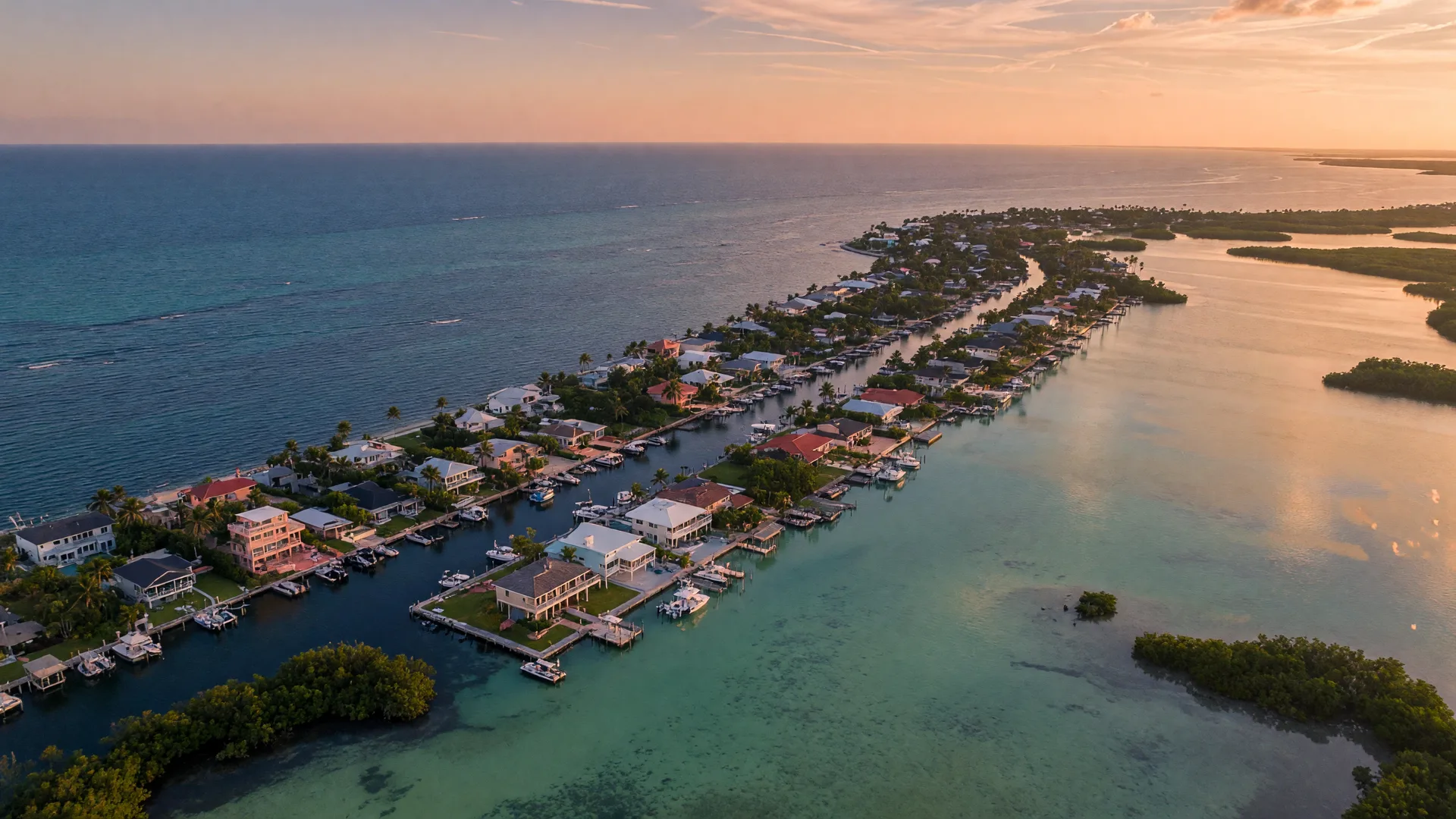
Buyers often ask me which Keys waterfront is best, and the honest answer is that there is no single best. The island chain runs in a long arc separating the Atlantic Ocean from the Gulf of Mexico, and the water around a given lot changes completely depending on whether that lot faces the open ocean, the sheltered bays and Gulf flats, or a dredged canal. Since I evaluate properties as a licensed contractor and inspector, I tend to think of waterfront in three categories rather than one. This guide explains them, what each means for daily life, and how they behave as investments.
The choice is rarely about views alone. It is about how you will actually use the water, what time of day you want the sun, and how much weather your dock can protect. Understand that, and the right property tends to announce itself.
Open-Ocean Frontage: Celebration and Wide Open Blue
Oceanfront properties sit on the saltwater-facing shore with nothing between your seawall and the open sea. In the Keys this is the deep Atlantic water side, where the light comes up over the water, the reef lies a few miles off, and the offshore fishing grounds are a short run. An oceanfront home is about spectacular water, constant sea breeze, and surf noise. For owners with serious boats, it is as close as you can get to a launchpad.
That grandeur carries trade-offs. Open frontage takes the brunt of winds and seas, so seawalls and bulkheading face more stress and cost more over time. Docking is public and somewhat exposed, so any mooring at the house must handle wave action. And because there are no neighbors across the water, oceanfront parcels are scarcer, and that scarcity sets them at the top of the value ladder. For buyers who prize unobstructed space, the trade-off is worth every penny.
Bayside and Gulf Side: Calm, Sunsets, and the Backcountry
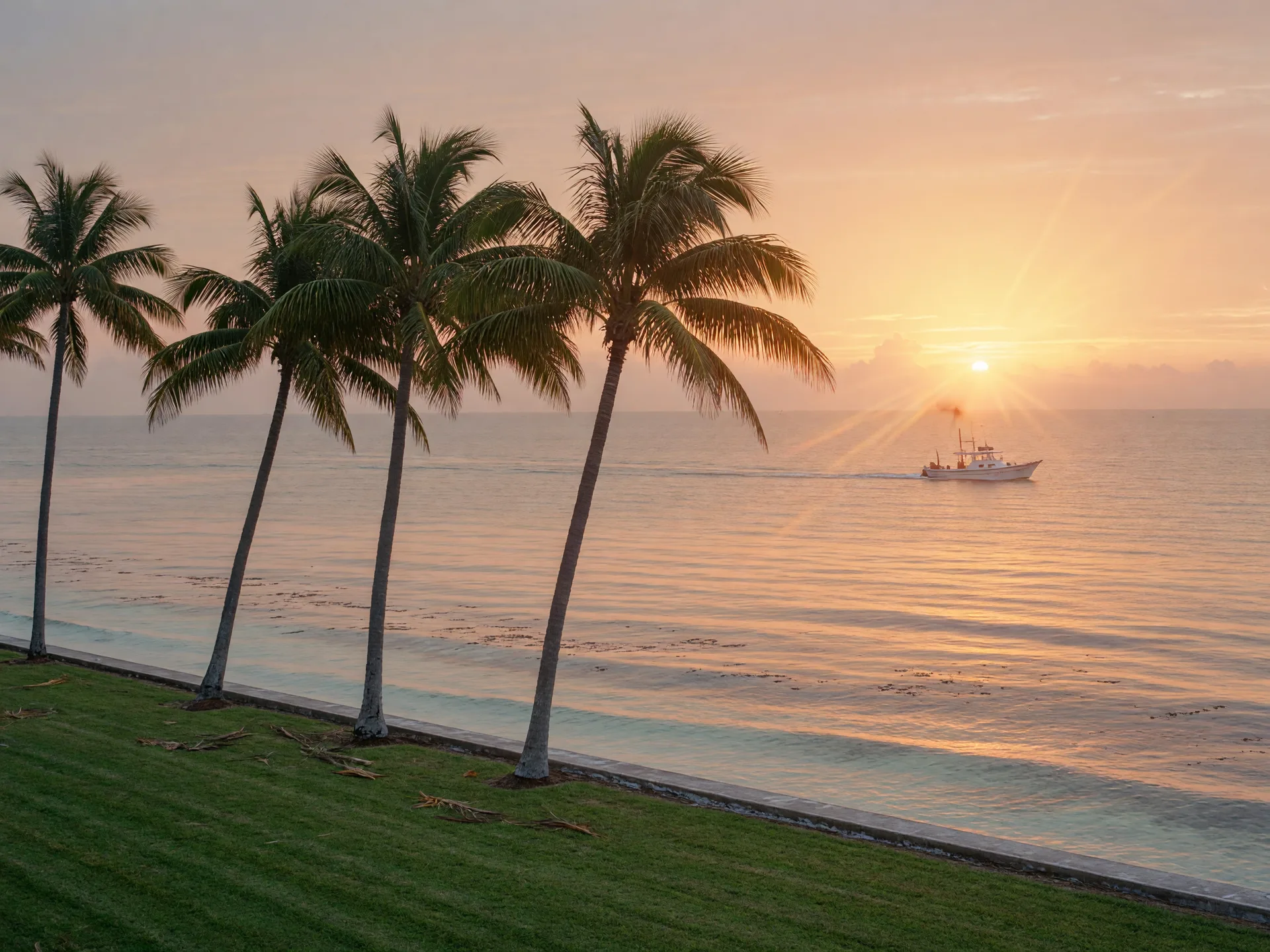
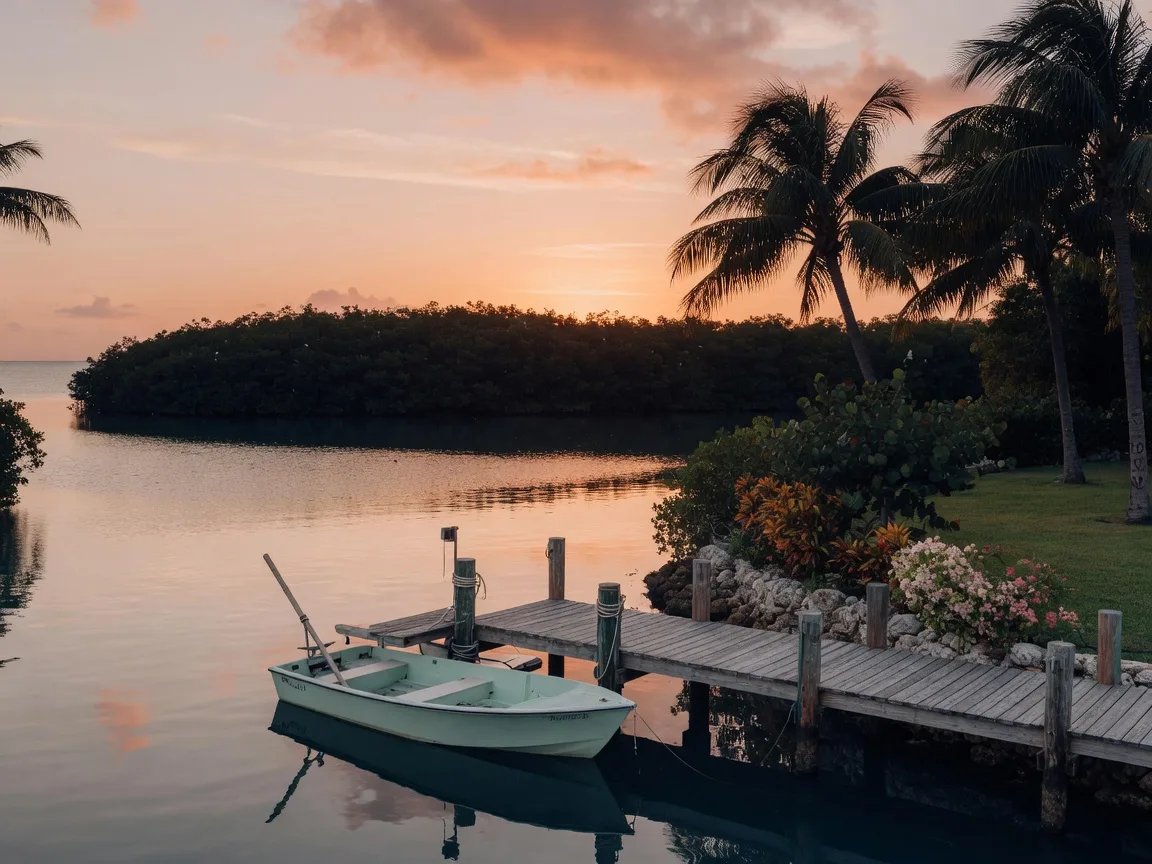
The protected side of the Keys is different in the best way. Here the water is flat, warm, and shallow. The bottom glows turquoise, and the horizon fills with some of the most dramatic sunsets in the country. Bayside and Gulf-side communities give you bird life, mangrove shorelines, and the extraordinary quiet that comes with protected water. The backcountry flats outside your front door are among the finest bonefishing and tarpon water in the world, which makes this side heaven for the flats angler and for late-afternoon cruisers too. Boats that live here are typically center consoles and skiffs with four feet of draft or less, and the cruising is sheltered: you can wander for hours in protected water.
Seawalls on the protected side face gentler conditions and typically need less maintenance, an advantage most buyers do not consider until the maintenance budget arrives. For many owners, the sunset over the bay is the single thing that closes the decision.
The Deep-Water Canal: The Best of Both
The canal is the Keys' solution to an island-wide shortage of shoreline, and for most buyers it is the smartest compromise. Instead of a home that fronts open water, a canal home sits along a dredged waterway that leads, usually through a cut, from the protected bay out to the open sea. The result is a private dock in your own backyard, a protected berth for your yacht, and quick access to either world.
For the luxury investor, the deep-water canal is the most practical of the three. Homes with deep-water slips, boat lifts, and generous dockage are the most sought after of the Keys waterfront properties. Water depth at mean low water, the integrity of the seawall, and the dock electrical system separate homes that genuinely dock a yacht from homes that only photograph well. This is exactly where the comparison between canal and open-water frontage becomes a real decision, and where my contractor background earns its keep during due diligence.
Where the Three Frontages Meet
One of the best-kept secrets of the Keys is that the categories overlap on a single island. Because the island chain sits between the Atlantic and the Gulf, many communities put you within minutes of both worlds. A canal-front home in Islamorada can cast off into protected bay water in the morning and reach the blue offshore water the same afternoon, and the canal neighborhoods of Marathon offer exactly that dual access. The two-frontage life is precisely what draws the owner who wants a calm dock at home and open water on the weekend. It is also a strong argument for touring a whole community rather than a single property, because the location of the cut and the depth of the canal decide how real that dual-sport life actually is.
When a property truly delivers that double world, it tends to hold its place in the market. The Islamorada community guide and the Marathon community guide map out where canals meet the ocean, so you can build a shortlist around the life you actually want to live.
What the Choice Means for Value
The market prices these three kinds of water in predictable but different ways. Open-ocean frontage is the most limited and typically the most sought by trophy collectors, so it trades at the high end with the strongest scarcity story. Bayside and protected frontage can deliver more home for the same money, with lower marine maintenance and the most treasured sunsets. Deep-water canals are the middle kingdom of the Keys buyer: private-dock convenience at a price below open ocean.
Whatever the water category, the infrastructure that matters is the same: seawall condition, dock depth at low tide, the boat that can actually live there, and the quality of the marine construction. A well-built seawall and a modern dock are real assets, and the properties that carry them command the strongest interest when they come to market. For a deeper look at how dockage and water depth drive value, see my guide to deep-water canal versus open-water frontage and my analysis of investing in private dockage and deep-water access.
For buyers who plan to use a Keys home part-time, the frontage decision also becomes a management decision. A protected dock on a canal is easy to hand to a caretaker and simple to check from a distance, while open-ocean frontage asks for more weather planning and more attention. Match the water to how many weeks a year you will actually be there. The empty weeks count as much as the ones you fill with fishing. When the water fits your habits, the home stops being a project and becomes the escape you came for.
The macro picture is in our Florida Keys luxury market report, which tracks pricing and inventory by community. The report shows the payoff of this distinction clearly: because the island chain is finite, waterfront that fits your lifestyle holds its value best, and the scarcity of the coastline is the constant underneath every market move.
A Short Field Checklist for Waterfront Shopping
- Check the depth at low tide at the dock you actually plan to use, and compare it with the draft of the boat you plan to keep there.
- Walk the seawall end to end and look for cracks, tilting panels, exposed tiebacks, and spalling concrete. Ask how old it is and whether it has been engineered recently.
- Ask about the passage to open water: the depth of the cut, the bridges between you and the sea, and the tidal windows that govern a big boat's schedule.
- Time your visit to the wind. Stand on the water side of the house in the afternoon breeze and imagine storm season. Exposure is easier to imagine than to repair.
- Spend one sunrise on the Atlantic side and one sunset on the bay side before you decide. The orientation you love will outlast every other feature in the house.
An Evening on the Water Decides More Than a Spreadsheet
My advice to luxury buyers is always the same: do the analysis, then go sit on the water. Rent a mooring or visit the marina at both ends of your list, watch the sunrise on the open side and the sunset on the bay, and take your boat to the dock you think you want, at the tide you care about. The right frontage reveals itself in those afternoons in a way no photograph can capture.
When you know which water you love, all the details line up to find the exact property. That is where an experienced local team matters: with a contractor and inspector behind the eyes, you buy with confidence. For help working through the choice, contact Steve Conley and let us find the frontage that fits your life. The water is honest everywhere. Spend one dusk on your shortlist and you will know which side to chase.

Steve Conley
Principal, Conley Sales Group at COMPASS, the exclusive COMPASS office in the Florida Keys. Licensed Sales Associate, Contractor, and Home Inspector with 30 plus years of experience and $1.4 billion in career sales.
Full BioThe frontage,
what to know.
Which Florida Keys frontage is best for a large boat?
A deep-water canal or a protected harbor slip suits large-format boats best, because the water is calm and the dock shelters the vessel. The numbers that matter are depth and draft at mean low water, dock length, and the navigable passage to open water. Owners who can ride an open mooring will love the ocean side, but for a yacht that sleeps at home, the canal dock is the usual answer.
Are oceanfront homes worth more in the Florida Keys?
Open-ocean frontage is the rarest category in the Keys and generally carries the highest price for well-presented homes. Value also lives in the quality of the marine infrastructure, the depth of the water, and the view in a given community. There is no blanket rule; the best comparison is an apples-to-apples look at canal and open-water sales in the same area.
Which side has sunsets, and which has sunrises?
Open-ocean Atlantic frontage catches the sunrise, while the bay and Gulf side faces the sunset. Many Keys owners consider the west side the premium side for its orange-gold last light over the water, while morning people on the Atlantic side prize starting the day with sunrise over open ocean. Both sides are honest, beautiful, and completely distinct.
What maintenance comes with a waterfront home?
The seawall is the big one: its condition is the single most expensive ticket item on a waterfront property, and pilings, dock electrical, and the wall itself deserve an annual review. Open oceanfront takes the strongest weather and the highest marine maintenance, while a protected bay or canal property is typically the most economical to keep. That is why infrastructure quality should shape both your offer and your budget.
When should I evaluate the water before buying?
As early as possible. If you plan to boat, think about the water before you tour: canal depth at low tide, the passage to open water, and any HOA or ARCO restrictions. If you are deciding between open frontage and protected water, spend a morning and a sunset on each. The frontage behind the house decides the quality of your life here.
Helpful Resources & Related Guides
Explore more of the Florida Keys waterfront, from community guides to buying strategy.
Internal Resources
Thinking About Buying or Selling
in the Florida Keys?
Steve Conley brings 30 years of Keys expertise, $1.4 billion in career sales, and contractor-inspector credentials to every transaction. Start with a conversation.
Connect with Steve