
The Complete Florida Keys Waterfront Property Inspection Checklist: What Every Buyer Must Know
When you are buying a waterfront property in the Keys, the home inspection is just the beginning. Here is a comprehensive checklist for evaluating what really matters, written by a licensed Contractor and Home Inspector.
Key Takeaways
- The seawall is the single most important structural element of any waterfront property. A failing seawall can cost $500 to $1,000 or more per linear foot to replace.
- Dock depth at mean low water determines whether your boat can access the property year-round. Always verify the actual depth measurement, not the canal's advertised depth.
- An elevation certificate is essential for understanding flood insurance costs. Properties with favorable elevation can save thousands annually compared to those in high-risk zones.
- Wind mitigation features such as impact windows, hip roof geometry, and secondary water resistance can reduce windstorm insurance premiums by 30 to 50 percent.
- Working with an agent who holds contractor and inspector licenses means these evaluations are built into the buying process, not added on as an afterthought.
Over three decades of evaluating waterfront properties in the Florida Keys, I have seen it all. Pristine estates built on failing seawalls. Luxury homes with corroded electrical systems that should have been replaced a decade ago. Beautiful properties in flood zones where the insurance costs alone would strain most budgets.
As a licensed Sales Associate, Contractor, and Home Inspector, I approach every property I represent through a lens that most agents simply do not have. When I walk onto a property, I am not just looking at the granite countertops and the pool. I am evaluating the seawall. The dock. The elevation certificate. The wind mitigation. The things that matter most to the long-term value and enjoyment of the property.
This checklist is designed to help you understand what to look for when evaluating a Florida Keys waterfront property. Whether you are working with me or another agent, these are the factors that should be on your radar.
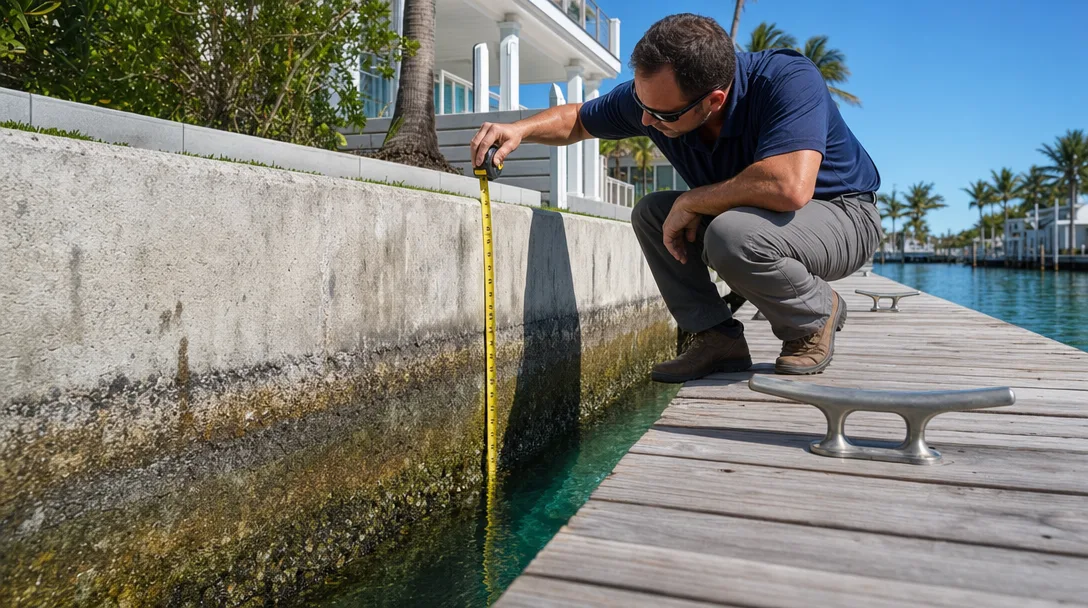
1. The Seawall: Your First Line of Defense
The seawall is the most critical structural element of any waterfront property in the Florida Keys. It holds back the water, protects the land, and determines the stability of everything behind it. A failing seawall is not just an expensive repair. It is an existential threat to the property's value and usability.
When evaluating a seawall, look for these signs of condition:
- Material and age. Modern seawalls are constructed from concrete, steel sheet piling, or vinyl. Older walls made of coral rock or timber have limited lifespans and are prone to failure. Ask when the seawall was installed and what material was used.
- Cracking and displacement. Vertical or horizontal cracks, bulging sections, or sections that have shifted out of alignment are signs of structural distress. A wall that is leaning or bowing needs immediate attention.
- Scour at the base. Erosion at the base of the seawall, particularly on the water side, can undermine its stability. This is most visible at low tide when the base of the wall is exposed.
- Tie-backs and deadmen. Modern seawalls use tie-back systems anchored to deadmen buried in the yard. If these are exposed, corroded, or missing, the wall's structural integrity is compromised.
- Corrosion of steel components. In saltwater environments, steel sheet piling and tie-backs are vulnerable to corrosion. The rate of corrosion depends on the quality of the steel, the protective coating, and the electrical environment.
Replacement costs for a failing seawall typically range from $500 to $1,000 or more per linear foot. On a typical Keys property with 80 to 120 feet of waterfront, that is a potential $40,000 to $120,000 expense. This is why seawall evaluation should be at the top of every buyer's checklist.
For a deeper dive into this topic, read my complete buyer's guide to Florida Keys luxury waterfront real estate, which covers seawall evaluation in greater detail.
2. The Dock and Boat Access
Your dock is the gateway to the Keys lifestyle. If you cannot access the water comfortably and safely, the property's value is significantly diminished. Here is what to check:
- Depth at mean low water. This is the most important measurement. The dock must have sufficient depth at the lowest tide of the year to accommodate your vessel. Ask for a verified depth measurement at the dock head, not an average canal depth. A depth of 4 to 6 feet at mean low water is generally adequate for most recreational vessels up to 40 feet. Larger vessels require 6 feet or more.
- Dock construction material. Treated lumber, composite decking, and concrete all have different lifespans and maintenance requirements. Check for rot, corrosion, and loose connections.
- Dock certification. Some docks in the Keys have been in place for decades without proper permitting. A dock that is not permitted or certified can create issues when it is time to sell or when repairs are needed.
- Electrical service. The electrical panel at the dock head must be properly grounded, protected from saltwater corrosion, and adequate for your needs. A corroded or undersized electrical system is a safety hazard and an expensive replacement.
- Pilings and hardware. Check the condition of the pilings, cleats, and fenders. Corroded hardware can fail when you need it most.
3. Elevation Certificate and Flood Zone
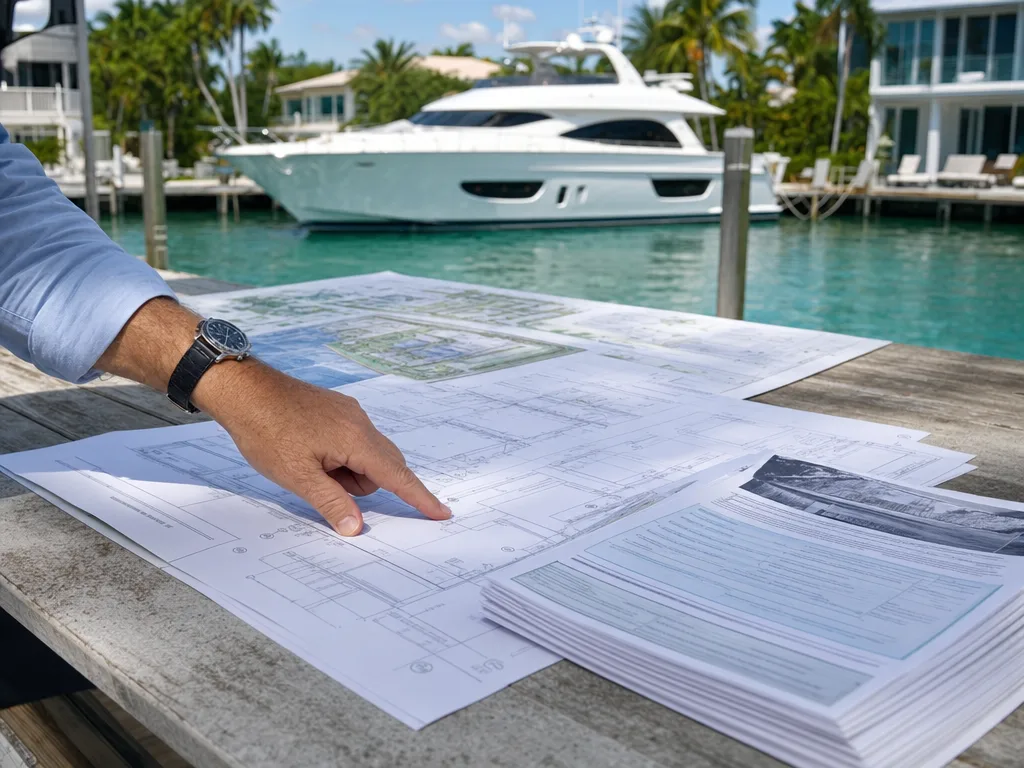
The elevation certificate is one of the most important documents you will review during the buying process. It determines your flood insurance costs, and those costs can vary by thousands of dollars per year depending on the property's elevation relative to the base flood elevation.
Key factors to evaluate:
- Lowest floor elevation. The relationship between the lowest floor elevation and the base flood elevation determines your flood zone classification. Properties with the lowest floor above the base flood elevation qualify for lower insurance rates.
- V zone vs. A zone. Properties in high-velocity flood zones (V zones) face higher insurance costs and stricter construction requirements than properties in A zones. Understanding your zone is essential before making an offer.
- Grandfathering. Some properties benefit from grandfathered flood insurance rates. Understand whether the current owner's rates are grandfathered and whether that grandfathering will transfer to you.
- Elevation certificate age. An elevation certificate should be current. If the property has been modified since the certificate was issued, the certificate may no longer be valid.
4. Wind Mitigation and Hurricane Readiness
In the Florida Keys, wind mitigation is not optional. It is a defining characteristic of a well-maintained property. The good news is that properties with modern wind mitigation features can save 30 to 50 percent on windstorm insurance compared to similar properties without these features.
What to look for:
- Impact-resistant windows and doors. These are the most important wind mitigation features. Look for impact-rated glass with proper certification labels. Check the condition of the seals and frames.
- Hip roof geometry. Hip roofs are more aerodynamic than gable roofs and face lower wind loads. A hip roof is a significant wind mitigation credit.
- Secondary water resistance. A self-adhering membrane under the roof covering provides a second line of defense if the primary roof covering is damaged in a storm.
- Roof-to-wall connections. The strength of the connections between the roof structure and the walls determines how well the roof will hold during a hurricane. Look for hurricane straps or clips.
- Storm shutters. While impact windows are the gold standard, storm shutters provide an additional layer of protection and may qualify for insurance discounts.
5. Structural Condition of the Home
Beyond the waterfront-specific elements, the home itself needs a thorough evaluation. In the Keys environment, saltwater corrosion accelerates the deterioration of everything from electrical systems to HVAC equipment.
- Roof condition and age. A roof in the Keys typically lasts 15 to 25 years, depending on the material and the quality of the installation. Look for signs of leaks, missing shingles, or deteriorated flashing.
- HVAC systems. Air conditioning units in the Keys work hard year-round. Check the age and maintenance history of all HVAC equipment. Corroded condenser coils are a common issue.
- Electrical systems. Saltwater corrosion can affect everything from the main panel to individual outlets. Look for signs of corrosion, especially in exterior outlets and fixtures.
- Plumbing. Check for signs of leaks, corrosion, and the age of the water heater. In coastal environments, galvanized pipes can corrode from the inside out, leading to unexpected failures.
- Pest damage. Termites and wood-destroying organisms are a constant threat in the Keys climate. A thorough pest inspection is essential.
As a licensed Contractor and Home Inspector, I perform these evaluations as part of my standard representation. This integrated approach saves my clients time, money, and the stress of coordinating multiple inspectors. For a detailed walkthrough of the entire buying process, read our Step-by-Step Guide to Buying a Luxury Waterfront Home in the Florida Keys.
6. Environmental and Regulatory Factors
The Florida Keys are subject to a unique set of environmental regulations and building restrictions that can affect your ownership experience. Understanding these before you buy is essential.
- ARCO rules. If the property is in an Association of Residential Communities or a similar HOA, review the rules carefully. Some communities restrict dock use, exterior modifications, and short-term rentals.
- Monroe County building codes. The county has some of the strictest building codes in Florida, particularly for waterfront construction. A property that was built or renovated recently is likely to meet current standards, while an older property may have significant deferred maintenance.
- Environmental protections. Protected species, mangrove regulations, and shoreline protection rules can affect what you can do with the property. If you plan to modify the dock, seawall, or shoreline, understand the permitting requirements before you buy.
- Short-term rental regulations. If you plan to rent the property, verify that short-term rentals are permitted in the community. Some areas restrict or prohibit short-term rentals.
Bringing It All Together
A thorough evaluation of a Florida Keys waterfront property requires looking at the whole picture. The home itself is important, but the waterfront infrastructure, the elevation certificate, the wind mitigation, and the regulatory environment are equally critical to the property's long-term value and your enjoyment of it.
This is where having the right advisor matters. A standard inspection covers the home. A standard real estate agent covers the transaction. But a licensed Contractor and Home Inspector who also holds a real estate license covers everything. When you work with me, these evaluations are built into the process from day one. You do not have to guess. You do not have to hope. You know.
If you are ready to begin your search for a Florida Keys waterfront property, contact Steve Conley for a confidential consultation. I would be honored to put my experience to work for you.

Steve Conley
Principal, Conley Sales Group at COMPASS — the exclusive Compass office in the Florida Keys. Licensed Sales Associate, Contractor, and Home Inspector. Over 30 years and $1.4 billion in career sales serving Key Largo to Key West.
Full BioWaterfront property
inspection essentials.
How much does a seawall replacement cost in the Florida Keys?
Seawall replacement costs in the Florida Keys typically range from $500 to $1,000 or more per linear foot, depending on the material, depth, and site conditions. For a property with 80 to 120 feet of waterfront, total costs can range from $40,000 to $120,000. The best way to avoid this expense is to have the seawall professionally evaluated before making an offer. As a licensed Contractor, I assess seawall condition as a standard part of my representation.
What is an elevation certificate and why does it matter?
An elevation certificate is a document prepared by a licensed surveyor that records the elevation of a property's lowest floor relative to the base flood elevation. It determines your flood zone classification and flood insurance costs. A property with a favorable elevation certificate can save thousands of dollars per year in insurance premiums compared to a similar property in a higher-risk zone. Always request the current elevation certificate before making an offer on a Keys waterfront property.
Can I negotiate the price based on inspection findings?
Yes. Inspection findings that reveal significant deferred maintenance or safety issues are legitimate grounds for negotiation. The most common negotiated items are seawall and dock repairs, roof replacement, HVAC replacement, and wind mitigation upgrades. The key is to have a clear understanding of the costs involved so that you can negotiate from a position of knowledge. Your agent's experience with waterfront property evaluations is critical in this phase of the transaction.
How do I find a qualified home inspector for a Keys waterfront property?
Look for an inspector who is licensed by the State of Florida and has specific experience with waterfront properties in the Keys. A standard home inspection covers the structure, systems, and interior of the home, but it does not typically include seawall evaluation, dock inspection, or elevation certificate analysis. You may need to hire specialized inspectors for these components. Working with an agent who holds contractor and inspector licenses, as I do, streamlines this process significantly.
What is wind mitigation and how can it save me money?
Wind mitigation refers to construction features that reduce a home's vulnerability to hurricane-force winds. These include impact-resistant windows and doors, hip roof geometry, secondary water resistance (a self-adhering membrane under the roof covering), and hurricane straps or clips. A wind mitigation inspection documents these features and can qualify you for significant insurance discounts, often reducing windstorm premiums by 30 to 50 percent. This is one of the most cost-effective improvements you can make to a Florida Keys property.
Helpful Resources & Related Guides
Deepen your understanding of the Florida Keys waterfront property evaluation process with these related resources.
Internal Resources
- How to Buy a Luxury Second Home in the Florida Keys: The Complete Guide
- A Step-by-Step Guide to Buying a Luxury Waterfront Home in the Florida Keys
- Islamorada Luxury Waterfront Community Guide
- Exceptional Florida Keys Waterfront Properties: What Defines a Trophy Estate
- Florida Keys Luxury Real Estate Market Report
- Contact Steve Conley for a Confidential Property Evaluation
Thinking About Buying or Selling
in the Florida Keys?
Steve Conley brings 30 years of Keys expertise, $1.4 billion in career sales, and contractor-inspector credentials to every transaction. Start with a conversation.
Connect with Steve