
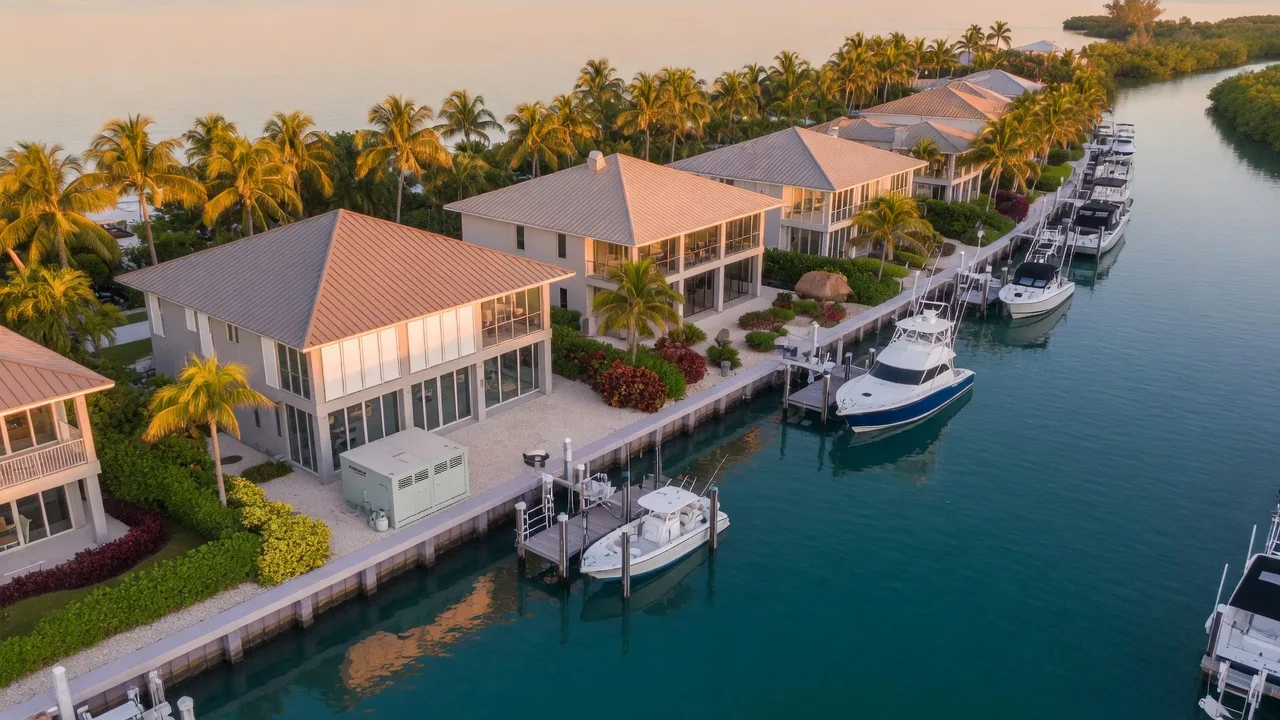
Power, Water, Septic, and Elevation: The Infrastructure That Protects Luxury Waterfront Value in the Florida Keys
Behind every luxury Keys estate is the infrastructure that keeps it livable and protects its value: electricity, piped water, wastewater, elevation, and the building allocations that govern what can be built. Here is what discerning buyers should understand.
Key Takeaways
- Behind every luxury Keys estate is infrastructure that keeps it livable: electricity, water, wastewater, elevation, and the building allocations that govern what can be built.
- Two utilities serve the island chain at the Seven-Mile Bridge: Florida Keys Electric Cooperative for the Upper and Middle Keys, and Keys Energy Services for the Lower Keys.
- Potable water is piped roughly 130 miles from the mainland by the Florida Keys Aqueduct Authority, and private wells are generally usable only for irrigation.
- Septic systems are increasingly rare and tightly regulated, with a mandatory move toward central wastewater and advanced treatment where connections exist.
- Elevation and ROGO are the quiet drivers of value: an elevated, connected, storm-ready estate carries less risk, and a buildable lot with an allocation is a rare luxury asset.
A luxury Florida Keys waterfront estate is judged first on the water, the views, and the dock. But the value that lasts is protected by what is underneath and behind the home: the electricity that powers it, the water that fills it, the way its waste is handled, and the height at which it stands. These are the systems a licensed contractor thinks about on every visit, and they are the ones discerning buyers should understand before they commit to a waterfront purchase.
The Infrastructure Behind the Lifestyle
The Keys are a chain of small islands strung across open water, and every modern convenience arrives through engineered systems rather than over the land. That reality shapes both the cost and the resilience of a waterfront home. The homes that hold their value best tend to be the ones whose infrastructure is sound: connected to reliable power, served by clean water, handled by modern wastewater systems, and raised above the flood line. Each of these is a quiet factor in the long-term investment case.
As a licensed contractor and home inspector, I look at these systems before a buyer ever makes an offer, and my guide to evaluating a Florida Keys waterfront home from a contractor's view walks through the structural side of that review. The infrastructure details here are the ones that keep an estate livable, insurable, and valuable for decades.
Electricity: Two Utilities, One Island Chain
Power in the Florida Keys is delivered by two providers that divide the island chain near the Seven-Mile Bridge. The Florida Keys Electric Cooperative, a member-owned not-for-profit cooperative, serves the Upper and Middle Keys from the Monroe County line down to the bridge. Keys Energy Services, a public power utility, serves the Lower Keys. For a buyer on a deep-water canal in the Upper Keys, the relevant provider is FKEC, and understanding its service, its rates, and its storm response is part of the due diligence.
Reliability matters more in the Keys than almost anywhere else, because a home sits at the end of a long island corridor. Storm-hardened distribution, underground lines in some neighborhoods, and the ability to restore power quickly after a storm are all part of the value equation. The carrying cost of power in the Keys also runs higher than on the mainland, and that belongs in the ownership budget. My guide to the carrying costs of luxury waterfront ownership puts utility expense in perspective alongside insurance and upkeep.
Water: Piped From the Mainland
The Florida Keys Aqueduct Authority supplies virtually all of the potable water in the islands, piped roughly 130 miles from a mainland aquifer source and treated, including low-pressure reverse osmosis, before it reaches the taps. It is an impressive system, and it means that a Keys waterfront home does not rely on a private well for drinking water. Private wells in the Keys tap shallow, brackish groundwater and are generally usable only for irrigation, not for drinking.
For buyers this is mostly reassuring: turn on the tap and the water is there, delivered through a regional system. The practical questions are about connection and billing, and whether the property is on the public system in the normal way. It is the kind of detail a local agent confirms early, because infrastructure that works quietly is easy to take for granted until it is missing.
Wastewater: Septic to Central Sewer
The wastewater picture is changing across the Keys, and it matters to the long-term value of any waterfront home. Monroe County's state-mandated wastewater program has been eliminating septic tanks and cesspits across the islands, replacing them with central sewer service where available and advanced on-site treatment where it is not. Septic systems are now rare in the Keys, and the remaining ones must meet strict performance-based treatment standards designed to protect the nearshore water quality that the entire economy depends on.
A buyer should know whether a property is connected to central sewer or relies on an on-site system, and what that means for both cost and compliance. A home on modern wastewater infrastructure carries fewer surprises than one with an aging system that may need to be upgraded. It is exactly the kind of thing that shows up in the fine print, and exactly what a contractor's eye catches during evaluation. My guide to the Keys waterfront due diligence period covers where these checks fit into the buying process.
Elevation: The Foundation of Every Decision
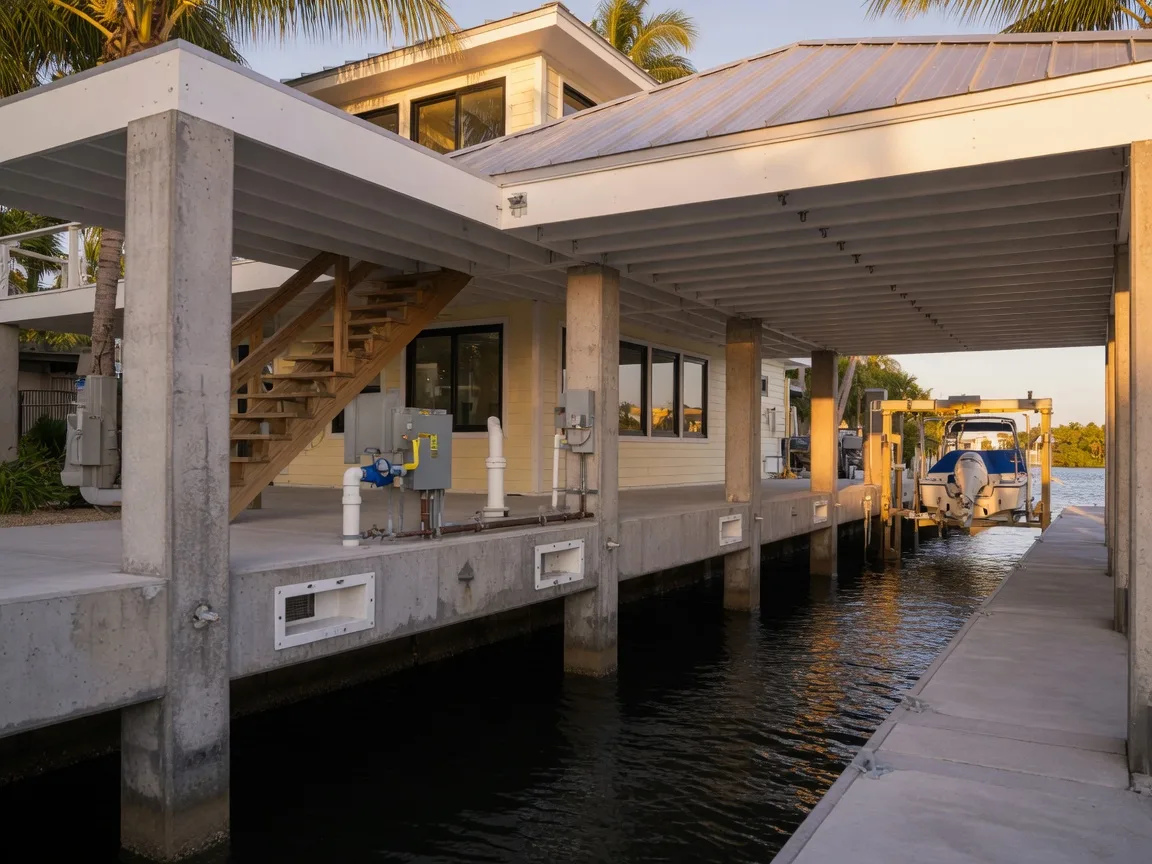
Height is the single most important structural fact about a Florida Keys waterfront home. New and substantially improved buildings must have their lowest floor, along with electrical, mechanical, and bathroom equipment, elevated to or above the base flood elevation. That requirement drives the design of every modern Keys estate, raised on pilings with flood vents and impact glass, and it directly affects insurance, safety, and resale value.
A home built to the current elevation standard earns better flood ratings, lower premiums, and a calmer hurricane season. The difference between a home that clears the flood line comfortably and one that sits too low can be a life of easy ownership or a life of worry. My guide to how elevation drives luxury value in Keys waterfront homes explains the contractor's view of height, and it belongs on every buyer's reading list.
ROGO: Why Buildable Land Is Scarce
The Monroe County Rate of Growth Ordinance, ROGO, caps new residential development through an annual allocation system. Before a vacant parcel can receive a permit for a new home, it needs a ROGO allocation, and those allocations are limited and competitive, with the market-rate pool allocated only a small number of permits each year. For a luxury buyer this is both a constraint and an asset: it protects the character and the water quality of the Keys, and it makes the few vacant buildable waterfront parcels with an allocation genuinely rare.
A buyer considering raw waterfront land should confirm whether a parcel has an allocation, can realistically obtain one, or already holds a permit. That single fact can change the value of a property by a wide margin. My guide to the rarest luxury asset in the Keys: buildable waterfront land explains the ROGO system and why scarcity compounds value, and it is essential reading for anyone looking at vacant land.
How Infrastructure Drives Luxury Value
Put the pieces together and a clear pattern emerges. The estates that hold their value best are elevated to standard, built to the wind code with impact glass and storm-ready roofs, connected to reliable power and clean water, and served by modern wastewater systems. Each of these reduces risk, and in the luxury market, reduced risk is worth real money. My guide to storm-resilient construction and luxury value shows how the same principle applies to the building envelope.
The market also prices infrastructure indirectly. A community with modern utilities and well-maintained canals tends to attract the buyers who pay top prices, because they are buying certainty as much as beauty. The current Florida Keys market report tracks these dynamics across the island chain, and a buyer's guide lays out the questions to ask about each system before you commit.
What a Buyer Should Ask
A few direct questions resolve most of the uncertainty. Who provides electricity and how is the service supplied? Is the home on public water through the Aqueduct Authority? Is it connected to central sewer or on an approved on-site system? What is the elevation of the lowest floor relative to the base flood elevation, and what does the elevation certificate show? If the property is vacant land, does it have a ROGO allocation or a path to one? Asking these questions early, and confirming the answers in writing, protects the investment from day one.
These are the details I verify as a licensed contractor and inspector, and they are the ones that separate a well-planned purchase from a pleasant surprise. For buyers on a deep-water canal in Tavernier or anywhere across the Upper and Middle Keys, infrastructure is not the glamorous part of the story, but it is the part that keeps the story going for decades.
The Bottom Line
Luxury in the Florida Keys is built on the water and protected by infrastructure. Reliable power from the co-op, clean piped water from the mainland, modern wastewater treatment, proper elevation, and a valid ROGO allocation are the quiet systems that keep an estate livable, insurable, and valuable. For the discerning buyer, understanding them is not a technicality. It is the core of a sound waterfront investment.
If you are evaluating a luxury waterfront purchase in the Florida Keys, contact Steve Conley. With three decades of Keys transactions, contractor and inspector credentials, and a complete picture of the infrastructure behind every estate, he can help you buy with both your heart and your eyes open.
Infrastructure in the Keys, answered.
Who provides electricity in the Florida Keys?
Two utilities divide the island chain near the Seven-Mile Bridge. Florida Keys Electric Cooperative serves the Upper and Middle Keys, while Keys Energy Services serves the Lower Keys. Most luxury waterfront homes in the Upper Keys are served by the cooperative.
Where does Florida Keys drinking water come from?
The Florida Keys Aqueduct Authority supplies virtually all potable water in the islands, piped roughly 130 miles from a mainland aquifer source and treated, including low-pressure reverse osmosis. Private wells tap shallow brackish groundwater and are generally usable only for irrigation.
Do Florida Keys homes have septic tanks?
Septic systems are now rare in the Keys and tightly regulated. Monroe County's state-mandated wastewater program is eliminating septic tanks and cesspits across the islands, replacing them with central sewer where available and advanced performance-based treatment where it is not.
Why does elevation matter beyond flood insurance?
Elevation sets the risk profile of the whole home. A house raised to or above the base flood elevation, with its lowest floor and mechanical equipment above the flood line, earns better flood ratings, lower premiums, and a safer, calmer hurricane season. It is also a central driver of resale value.
What is ROGO and why does it affect waterfront value?
ROGO, the Monroe County Rate of Growth Ordinance, caps new residential development through an annual allocation system. A vacant parcel needs an allocation before it can receive a permit for a new home, and the market-rate pool is limited, which makes buildable waterfront land with an allocation a rare and valuable asset.
Helpful Resources & Related Guides
Build your Florida Keys waterfront investment plan with the community guides, the infrastructure and carrying-cost resources, and the market context that make a luxury purchase a sound long-term decision.
Internal Resources
- Tavernier Luxury Waterfront Community Guide
- Buildable Waterfront Land and the ROGO Permit System
- How Elevation Drives Luxury Value in Keys Waterfront Homes
- The Carrying Costs of Luxury Waterfront Ownership
- Storm-Resilient Construction and Luxury Value in the Keys
- The Current Florida Keys Market Report
- The Complete Buyer's Guide to Keys Waterfront Homes
- Contact Steve Conley About Your Waterfront Investment

Steve Conley
Principal, Conley Sales Group at COMPASS, the exclusive Compass office in the Florida Keys. Licensed Sales Associate, Contractor, and Home Inspector with over 30 years and $1.4 billion in career sales serving the island chain.
Full Bio
Thinking About Buying or Selling
in the Florida Keys?
Steve Conley brings 30 years of Keys expertise, $1.4 billion in career sales, and contractor-inspector credentials to every transaction. Let him evaluate the infrastructure behind an estate so your waterfront purchase is as sound an investment as it is a lifestyle.
Connect with Steve