
The Rarest Luxury Asset in the Florida Keys: Buildable Waterfront Land and Why Scarcity Compounds Value
In the Keys, the permit is part of the price. Here is how Monroe County's ROGO system caps supply, why some lots carry the golden ticket, and what a builder sees before you buy.
Key Takeaways
- Building in the Florida Keys is capped by law. Monroe County's Rate of Growth Ordinance limits new residential permits, so the scarce asset is the parcel that already holds one.
- ROGO allocations are awarded through point-scored quarterly competitions, and the points follow the land: a lot's tier, its environmental condition, and improvements like solar and cisterns decide its score.
- Transferable building rights are the golden ticket. A buildable lot with an attached allocation trades at a structural premium over a comparable lot without one.
- Waterfront lots with dense mangroves, salt marsh, or wetland coverage can score poorly in the point system, which is why a contractor's read of the land condition belongs on every offer.
- Geography caps supply permanently: limited developable shoreline, refuge land, and ROGO together make scarce, permitted waterfront the strongest long-horizon asset class in the Keys.
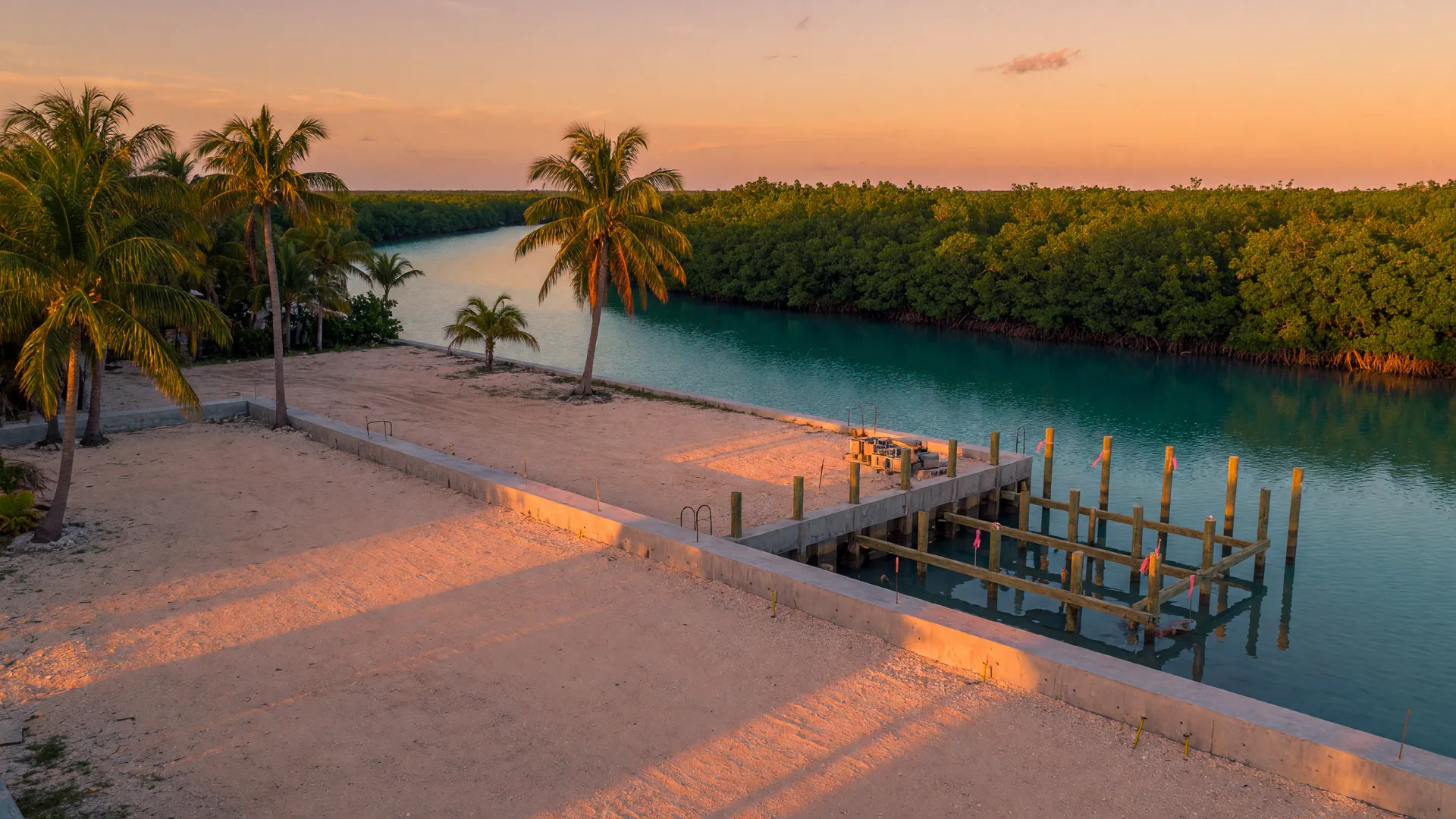
On the mainland, land is a commodity and a permit is a formality. In the Florida Keys, the exact opposite is true. Monroe County's Rate of Growth Ordinance, known as ROGO, caps how many new homes can be built in any year, which means the most valuable waterfront asset in the islands is not the house or even the dock, it is the parcel that carries the legal right to build. This guide explains how the system works, what a transferable building right is worth, and what to inspect before you buy raw waterfront land.
Adopted in 1992, ROGO exists for two serious reasons. The first is hurricane evacuation: with U.S. 1 as the only road out of the Keys, the state requires that everyone can clear the islands within 24 hours, and that standard sets a hard ceiling on how many homes can exist here. The second is the environment, because the same fragile habitats that make the Keys beautiful also make them irreplaceable. The result is the most supply-constrained luxury waterfront market in the country.
The Permit Is the Asset
Under the ROGO framework, the county may allocate a fixed number of new residential units each year. The statutory cap sits at 197 units per year, with a minimum of 71 reserved for affordable housing and market-rate allocations capped at 126. In practice, at this stage of the program the county has been distributing the remaining allocations at a slower pace, roughly 60 allocations a year through 2026, in quarterly competitions. Demand has always exceeded the supply of allocations, which is the entire point.
For a buyer, the translation is simple. A vacant waterfront lot in the Keys is only truly buildable if it holds an allocation, either one that came with the property or one earned through competition. Lots with transferable building rights attached trade at a visible premium, because the buyer is purchasing the right to build along with the dirt. When you see two similar canal lots priced differently, the difference is almost always the permit. My analysis of the Islamorada luxury waterfront market and my Keys luxury market outlook both trace how this constraint shows up in pricing across communities.
How the Point System Works
If the lot does not already carry an allocation, the path to build runs through the quarterly scoring competition. The county classifies land by environmental sensitivity into tiers: Tier I is the most sensitive and earns the fewest points, while Tier III is the most buildable and earns the most. On Big Pine Key, Tier I parcels are capped at one allocation every two years, a rule that tells you everything about how carefully the Lower Keys are rationing growth.
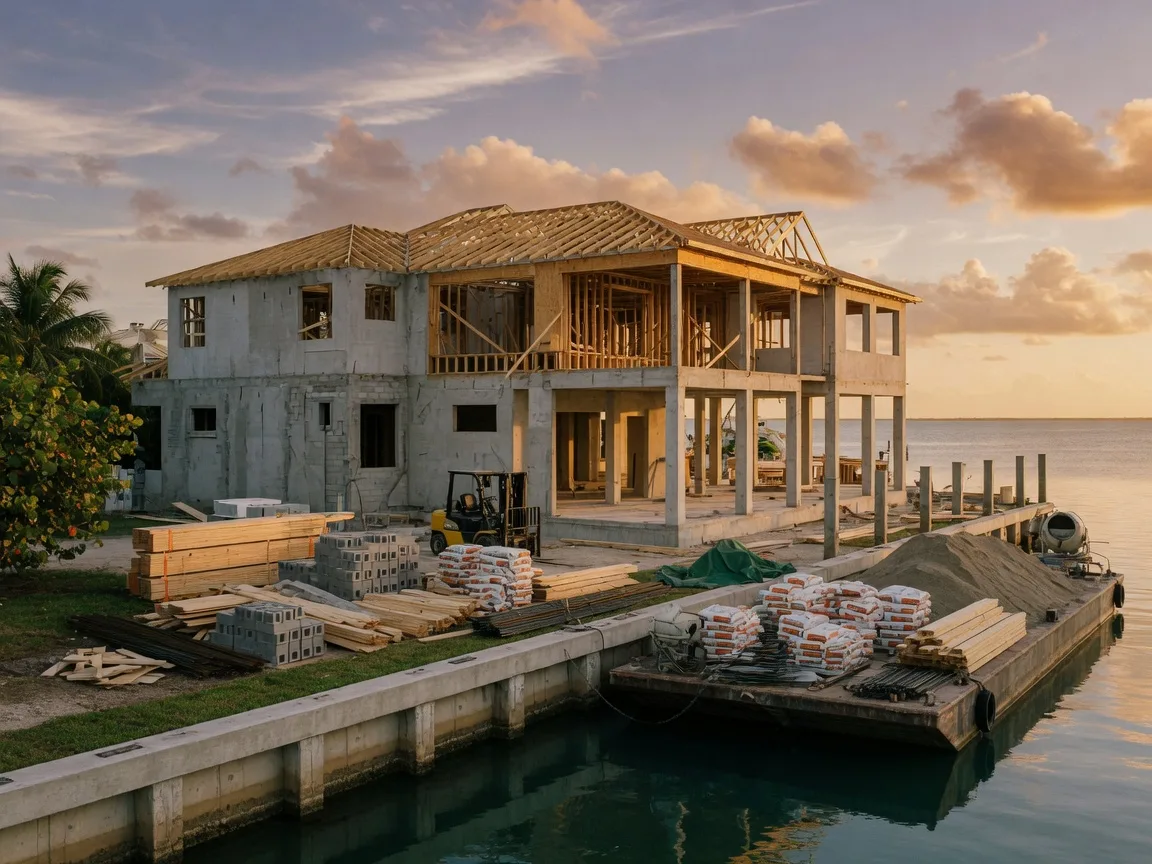
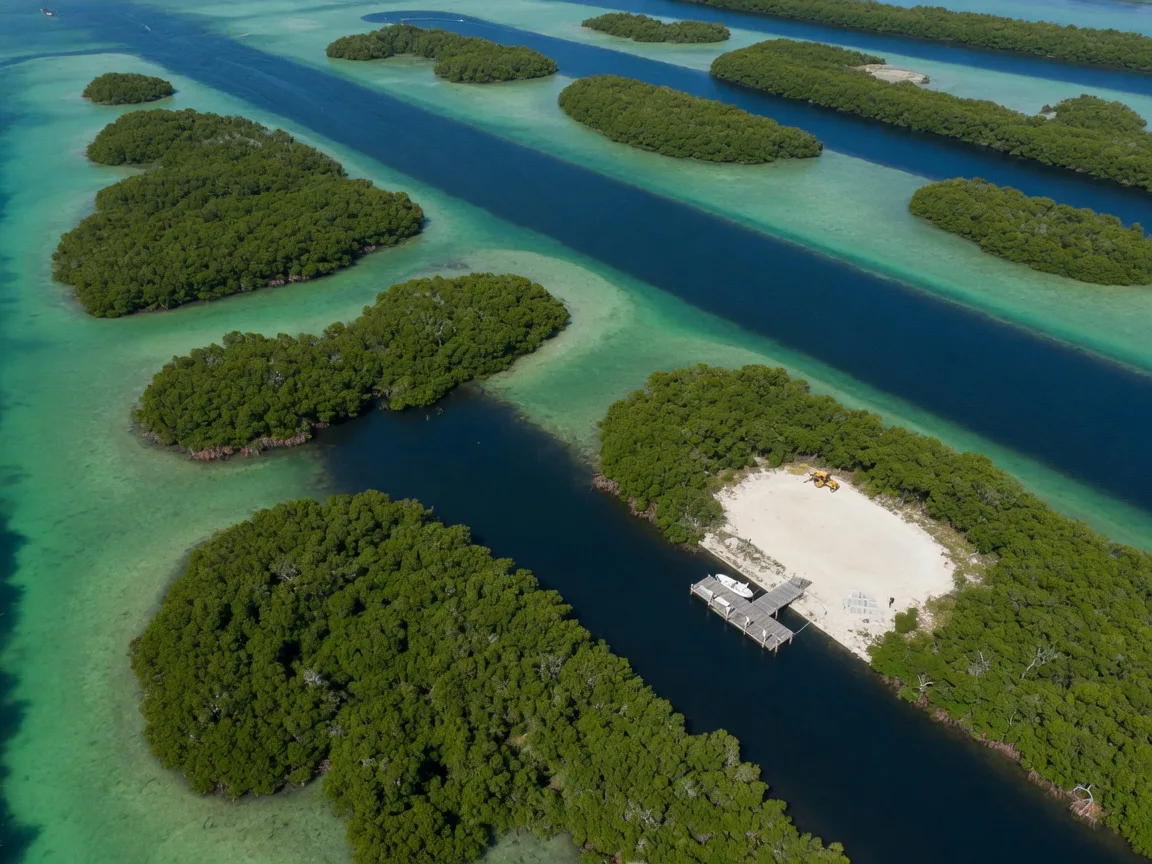
Applicants add points for good behavior: aggregating lots to reduce density, dedicating land to the county, bundling market-rate units with affordable units, green building certification, concrete cisterns, gray-water reuse, and solar arrays. They lose points for building in Lower Keys marsh rabbit habitat, Key deer corridors, and wetland areas. Here is the detail that surprises most buyers: a waterfront lot fringed with dense mangroves or undisturbed salt marsh can score lower than a comparable interior lot, because the scoring system rewards condition, not just location. The premium land is the parcel that was responsibly cleared or filled decades ago, with its shoreline intact and its buildable area ready.
What this means in practice: the character of the land itself is a financial variable. As a licensed Florida contractor, I walk a raw lot the way I walk a house, looking at fill history, drainage, wetland coverage, and the seawall, because all of it feeds the score and the price. Few buyers bring that lens to vacant land, and it is exactly where value is found or lost.
Why Scarcity Compounds in the Luxury Market
Scarcity compounds because it never relaxes. The island chain is finite, the developable shoreline is a fraction of the total coastline, refuge land removes more of it from the market every decade, and ROGO caps what can be built on what remains. A deep-water canal lot with a transferable allocation and an intact seawall is not just a piece of land, it is the end of a very short supply line. That is the structural reason the Florida Keys luxury market report keeps showing patient appreciation in the waterfront segment.
It is also why the smartest luxury buyers treat these parcels as long-horizon holdings rather than flips. A well-selected lot in a community like those featured in the Islamorada community guide holds its position through market cycles, because nobody can manufacture more of it. The asset is the scarcity itself.
What a Contractor Sees on a Buildable Lot
When I evaluate vacant waterfront land with a buyer, the checklist starts below ground. The elevation certificate establishes base flood elevation and dictates how high the home must sit. The seawall gets the same scrutiny as on a resale home, because a failing wall is a six-figure line item before the first pour. The dock position and canal depth at mean low water determine whether your boat can actually use the property. Fill history, drainage, and the location of wetlands on the plat all feed the equation, along with the tier classification and the current ROGO status.
Then comes the honest conversation about cost. Building in the Keys is expensive: materials arrive by truck over the highway, labor is specialized, and the elevated, hardened construction standards that protect the home drive the price up further. For most buyers, my guide to renovation versus new construction in the Keys is the right next read, because the build-versus-buy decision changes with every property. The lot with the allocation is only the winning play when the finished home fits the budget the buyer planned around.
The Buyer's Checklist for Waterfront Land
If you are ready to consider raw waterfront land in the Keys, verify these six things before you write an offer. First, the ROGO status: does the lot hold an allocation, and is it transferable? Second, the tier classification, which determines how competitive the lot would be in a future competition. Third, the survey and the plat, with wetlands and mangroves flagged. Fourth, the elevation certificate for the lot. Fifth, the seawall and dock condition, with the canal depth survey at mean low water. Sixth, any covenants from an association or ARCO district that restrict what can be built.
One more consideration belongs on the list: the timeline. A vacant lot with an allocation still needs design, permitting, county land development review, and construction, and in the Keys that process runs longer than it does on the mainland. Buyers who treat the calendar as part of the investment plan are rarely disappointed, and buyers who ignore it usually reset their expectations mid-build. The right purchase pairs the scarcest asset with the most patient owner.
Get all six items in writing, then negotiate. This is where an agent who also holds contractor and inspector licenses pays for himself several times over, because most of the risks on the checklist are invisible to a buyer and obvious to a builder. My complete Florida Keys buyer's guide covers the evaluation framework in full.
The Long View
Luxury waterfront land in the Florida Keys is a patient asset for patient owners. The supply is capped by ordinance, by geography, and by the refuges that protect so much of the wild shoreline. Every year the program distributes fewer permits, every finished home removes a passing opportunity from the market, and every owner of a permitted waterfront lot holds something that simply cannot be recreated. Buy it right, build it well, and hold it long.
When you are ready to explore buildable waterfront parcels, call Steve Conley at (305) 393-5859 and we will walk the land together, from the tier classification to the seawall.

Steve Conley
Principal, Conley Sales Group at COMPASS, the exclusive Compass office in the Florida Keys. Licensed Sales Associate, Contractor, and Home Inspector with over 30 years and $1.4 billion in career sales serving the island chain.
Full BioBuildable land,
what to know.
What is ROGO and how does it affect buying land in the Keys?
ROGO, the Rate of Growth Ordinance, is Monroe County's permit-allocation system that caps new residential construction each year, originally set at 197 units annually with market-rate allocations capped at 126. It exists to protect hurricane evacuation capacity and the environment. For buyers, it means only lots holding an allocation are immediately buildable, which is why permitted waterfront land trades at a premium.
Can I buy a lot that already has a building permit?
Yes. Many waterfront lots in the Keys sell with a transferable ROGO allocation or building right attached. That right is what makes the lot immediately buildable, and it is the single biggest variable in vacant land pricing. Always confirm in writing that the allocation exists and transfers with the property before you make an offer.
Why do some waterfront lots score poorly in the ROGO point system?
The scoring system rewards buildable condition. Lots where dense mangroves, salt marsh, or wetlands cover much of the shoreline can lose points, and Tier I land in the most sensitive habitats is capped or disfavored. A responsibly cleared or filled lot with intact shoreline and drainage in place competes far better, which is why the land's condition is a financial variable, not just an environmental one.
Is it cheaper to build new or renovate an existing home in the Keys?
For most buyers, renovating an existing home is faster and more predictable, because new construction carries ROGO allocation costs, elevated building standards, and the highest construction costs in the state. New construction wins when the buyer wants a specific architectural vision and already owns a lot with a transferable allocation. Every property deserves the math done both ways.
Is waterfront land a good long-term investment in the Florida Keys?
The structural case is strong: developable shoreline is finite, refuge land keeps removing parcels from the market, and ROGO caps new supply every single year. That makes rare, permitted waterfront lots a long-horizon asset that holds through cycles because its supply cannot grow. The discipline is in buying the right parcel, with the permit, the seawall, and the water depth verified before you commit.
Helpful Resources & Related Guides
Deepen your understanding of Florida Keys luxury waterfront investment, buildable land, and market dynamics with these related resources.
Internal Resources
- Islamorada Luxury Waterfront Community Guide
- The Islamorada Luxury Waterfront Market: Investment Analysis
- Florida Keys Luxury Waterfront Market Outlook and Investment Trends
- Luxury Waterfront Renovation and New Construction in the Keys
- Florida Keys Luxury Real Estate Market Report
- How to Buy a Luxury Waterfront Home in the Florida Keys
- Contact Steve Conley for Investment Property Guidance
Thinking About Buying or Selling
in the Florida Keys?
Steve Conley brings 30 years of Keys expertise, $1.4 billion in career sales, and contractor-inspector credentials to every transaction. Start with a conversation.
Connect with Steve