
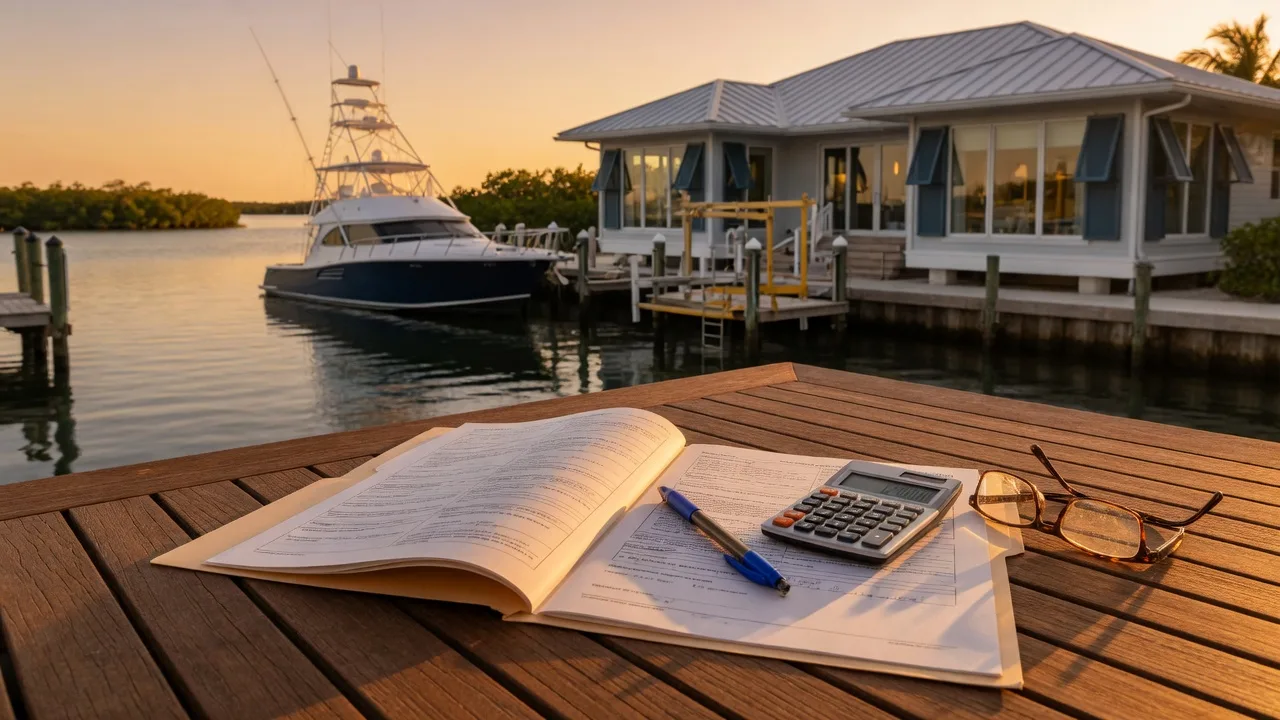
The Carrying Costs of Luxury Waterfront Ownership in the Florida Keys: What High-Net-Worth Buyers Budget Beyond the Price
The purchase price is only the beginning of a Florida Keys waterfront investment. Wind and flood insurance, seawall and dock upkeep, taxes, and hurricane readiness add a real annual line item that every serious buyer should budget for from day one.
Key Takeaways
- Monroe County carries the highest average homeowners insurance premium of any Florida county, and wind coverage is the main driver, so insurance is the largest annual cost for most Keys waterfront owners.
- Standard homeowners policies do not cover flood, and a separate flood policy is required for any federally backed mortgage in a flood zone, which is virtually everywhere in the Keys.
- Seawalls, docks, and boat lifts are durable assets with real upkeep, and as a licensed contractor I factor their condition into every purchase recommendation.
- Property taxes, HOA and ARCO fees, and utilities add a steady layer of annual cost, and a good buyer's guide and market report put them in perspective before you commit.
- Budgeting the full carrying cost, not just the mortgage, is what separates a well-planned luxury waterfront purchase from one that surprises.
The price of a Florida Keys waterfront estate is the number most buyers focus on, but it is not the number that determines whether the investment feels comfortable five years in. The carrying cost, insurance, taxes, marine upkeep, and hurricane readiness, is real, and in the Keys it is higher than almost anywhere else in the country. Understanding that annual number before you buy is what lets a luxury waterfront home stay a source of joy rather than a source of surprises. Here is what high-net-worth buyers should budget beyond the price.
Why Carrying Costs Matter More in the Keys Than Anywhere Else
The Florida Keys are different because the water that makes them beautiful also drives up the cost of protecting a home. Salt air, storm exposure, and flood risk all factor into insurance, and the marine environment taxes seawalls, docks, and metal roofs harder than any mainland neighborhood. According to the Florida Office of Insurance Regulation, Monroe County has the highest average homeowners insurance premium of any Florida county, and wind coverage is the main reason. This is not a surprise to anyone who has owned a Keys waterfront home for a decade, and it should not be a surprise to anyone buying one.
The good news is that these costs are predictable, and a serious buyer can budget for them precisely. The work is to gather the real numbers during due diligence, not after closing. My guide to insurance and flood zone requirements for Keys waterfront buyers walks through the essentials, and the annual figure belongs in every buyer's plan from the first day.
Insurance: The Biggest Line Item
For most luxury waterfront owners in the Keys, insurance is the single largest annual cost after the mortgage, and often larger than the property tax bill. Windstorm coverage drives most of it. The same Office of Insurance Regulation data that ranks Monroe County first for premiums shows that a typical policy without wind coverage is only a fraction of one with it, which is a useful way to see how much of the premium is storm protection. In practical terms, a buyer on a deep-water canal in Key Largo or Islamorada should expect to budget a substantial five-figure annual figure for insurance when the home is worth several million dollars, and the exact number depends on the home's construction, elevation, and claims history.
The market for wind coverage is also different in the Keys. Because private carriers are scarce, a large share of wind policies in Monroe County are written through Florida's insurer of last resort, and buyers should confirm the current insurer, the deductible, and how a claim would work before they commit. This is exactly the kind of detail that belongs in the pre-offer due diligence, and it is why I review the insurance picture alongside the structure itself. Buyers who skip this step discover the real premium at the worst time, after they already own the home.
Flood Insurance: A Separate Policy, A Required One
A standard homeowners policy does not cover flood damage, and in the Keys that is not an optional gap. Any federally backed mortgage on a home in a FEMA Special Flood Hazard Area, which is essentially the entire island chain, requires a separate flood policy through the National Flood Insurance Program or a private carrier. For waterfront coastal properties the premiums run far above the national average, and because the federal program caps coverage at levels below the replacement cost of most luxury estates, many owners layer private excess flood coverage on top.
The practical lesson is that a waterfront home needs two insurance lines, wind and flood, and both must be in the annual budget. Elevation helps here in a real way. A home raised on pilings to the current flood standard, with properly placed flood vents, earns better flood ratings and a lower premium, and Monroe County's community rating discount helps homeowners in unincorporated areas as well. My guide to how elevation drives luxury value in Florida Keys waterfront homes explains why the contractor's view of height matters, and lower carrying costs are part of that value.
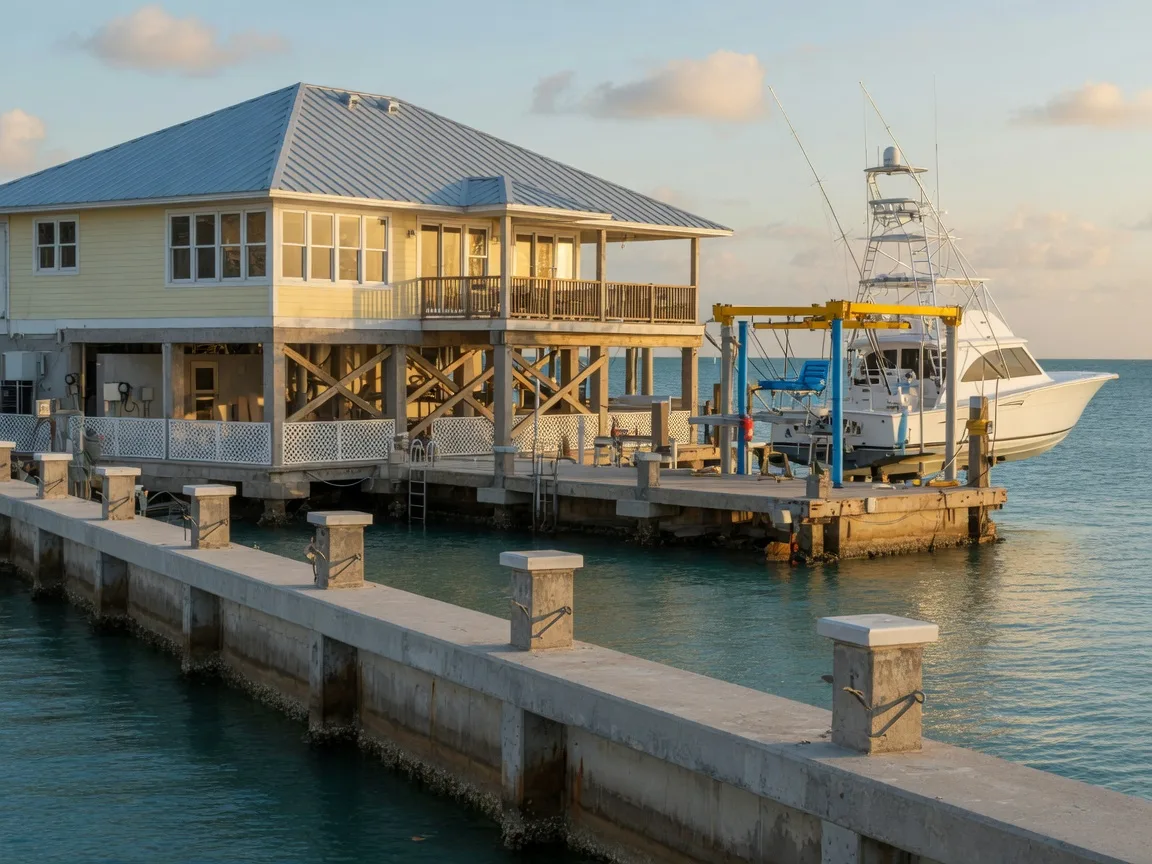
The Marine Infrastructure Budget: Seawalls, Docks, and Boat Lifts
The water is hard on everything it touches, and the structures that touch it need a real maintenance budget. A seawall is a critical asset, not a passive one. Concrete spalls, tie rods rust, and coping stones shift, and a seawall that is failing is one of the most expensive repairs a waterfront owner faces. The same is true for docks, pilings, and boat lifts, which sit in salt water and need periodic inspection and upkeep. As a licensed contractor and home inspector, I look at these systems before a buyer ever makes an offer, because their condition sets the carrying cost for the next decade.
The encouraging part is that well-maintained marine infrastructure is also an asset that protects value. My guide to how seawall infrastructure defines luxury property value and the analysis of how canal depth and dock size drive investment returns both make the same point: a sound seawall and a proper dock are not costs to be avoided, they are the reason the property works as a waterfront home at all. The budget line is real, but it protects the largest asset you will ever own.
Taxes, HOA and ARCO Fees, and Utility Realities
Beyond insurance, a luxury waterfront home carries the usual stack of steady costs. Property taxes in Monroe County are assessed by the county, and the bill on a multi-million dollar estate is a meaningful annual line item. Many gated communities and canal developments add HOA or ARCO fees for common areas, security, canal maintenance, and shared amenities, and those can run from a few thousand to far more each year. Utilities in the Keys also run higher than on the mainland, with electricity delivered at island rates and water and sewer in some communities billed through local providers.
None of this should stop a well-qualified buyer, but all of it belongs in the plan. A thorough buyer's guide will lay out these line items, and the current Florida Keys market report puts them in context with the market. The buyers who handle a Keys purchase well treat the carrying cost as part of the purchase decision, not as an afterthought discovered at the first annual bill.
Hurricane Season and the Annual Readiness Budget
Living in the Keys means living with hurricane season, and the readiness budget is part of responsible ownership. Impact glass, rated shutters, a reinforced roof, and a generator all reduce both risk and insurance cost, but they are also assets that need occasional service. A serious buyer should budget for the seasonal work as well: storm prep, checking shutters and fasteners, securing the dock and the boat lift, and maintaining the systems that keep a home safe through a storm. My guide to storm-resilient construction and luxury value shows how these investments protect both the home and its resale value.
The right mindset is that hurricane readiness is not a fear line item, it is a value line item. A home built to the Keys' rigorous wind standard, with the right elevation, roof, and glass, costs less to insure and holds its value better through the years. That is the intersection of luxury and prudence, and it is exactly where an experienced local agent, one who is also a licensed contractor and inspector, earns his keep.
How Smart Buyers Budget
The cleanest way to approach carrying costs is to build the annual budget before you make an offer. Ask for the current insurance premium and flood policy cost, confirm the tax bill, review the HOA or ARCO fees, and have a marine contractor assess the seawall, dock, and lift during inspection. Add a maintenance reserve for the salt-air reality, and you have a realistic number. My guide to the true cost of buying a waterfront home in the Florida Keys and the first 90 days after closing action plan both help with this, and the complete buyer's guide to Keys waterfront homes ties the whole process together.
A luxury waterfront home in the Keys is an extraordinary asset, but it is also an operating asset. Treat it that way, budget for what it actually costs to own, and it will deliver the lifestyle you came for without financial surprises. The buyers who love their Keys homes for twenty years are almost always the ones who understood the carrying cost on day one.
The Bottom Line
The price of a Florida Keys waterfront estate is the headline, and the carrying cost is the fine print. Insurance leads the way, with Monroe County ranking first in Florida for homeowners premiums and flood coverage adding a separate, required line. Marine upkeep, taxes, fees, and hurricane readiness complete the picture. None of it should stop a discerning buyer, and all of it can be managed with the right numbers, the right construction, and the right local guidance.
If you are weighing a luxury waterfront purchase in the Florida Keys, contact Steve Conley. With three decades of Keys transactions, contractor and inspector credentials, and a full picture of what these homes really cost to own, he can help you budget with confidence and buy with your eyes open.
Owning costs in the Keys, answered.
What is the biggest annual cost of owning a Florida Keys waterfront home?
For most luxury waterfront owners, insurance is the largest annual line item after the mortgage. Monroe County has the highest average homeowners insurance premium of any Florida county, and windstorm coverage is the main driver.
Do I need flood insurance if I buy a waterfront home in the Keys?
Yes. A standard homeowners policy does not cover flood, and any federally backed mortgage on a home in a FEMA Special Flood Hazard Area, which includes virtually all of the Keys, requires a separate flood policy. Many luxury owners add private excess coverage on top of the federal program.
How much does seawall and dock maintenance cost in the Florida Keys?
It varies widely with the age and condition of the structures, but salt water is hard on all of them. A marine inspection during due diligence will identify what needs attention, and a sound seawall and dock are assets that protect the property's value.
What are HOA and ARCO fees in the Keys?
Many gated communities and canal developments charge HOA or ARCO fees for common areas, security, canal maintenance, and shared amenities. They can range from a few thousand to more each year, and the amount is disclosed in the community documents before closing.
Can higher elevation lower my insurance costs in the Keys?
Yes. A home raised to the current flood standard with properly placed flood vents earns better flood ratings and lower premiums, and Monroe County's community rating discount helps homeowners in unincorporated areas. Storm-ready construction also improves wind insurance pricing.
Helpful Resources & Related Guides
Build your Florida Keys ownership budget with the community guides, the insurance and infrastructure resources, and the market context that make a luxury waterfront purchase a sound investment.
Internal Resources
- Islamorada Luxury Waterfront Community Guide
- Insurance and Flood Zone Buying Guide for the Keys
- The True Cost of Buying a Keys Waterfront Home
- The Seawall as an Asset: Waterfront Infrastructure and Value
- Storm-Resilient Construction and Luxury Value in the Keys
- The Current Florida Keys Market Report
- The Complete Buyer's Guide to Keys Waterfront Homes
- Contact Steve Conley About Your Ownership Budget

Steve Conley
Principal, Conley Sales Group at COMPASS, the exclusive Compass office in the Florida Keys. Licensed Sales Associate, Contractor, and Home Inspector with over 30 years and $1.4 billion in career sales serving the island chain.
Full Bio
Thinking About Buying or Selling
in the Florida Keys?
Steve Conley brings 30 years of Keys expertise, $1.4 billion in career sales, and contractor-inspector credentials to every transaction. Let him help you see the full cost of ownership and find a waterfront home that is as sound an investment as it is a lifestyle.
Connect with Steve