
The Seawall as an Asset: Why Waterfront Infrastructure Defines Luxury Property Value in the Florida Keys
For luxury waterfront investors, the seawall is not just a boundary between land and water: it is the single most important infrastructure asset on the property, and its condition directly determines value, insurability, and long-term appreciation.
Key Takeaways
- A seawall in excellent condition can add $200,000 to $500,000 or more to a waterfront property's value, while a failing seawall can reduce value by the full cost of replacement: $500 to $1,000 per linear foot.
- The type of seawall construction (poured concrete, concrete block, sheet pile, or riprap) and its age determine its expected lifespan, maintenance requirements, and resistance to storm surge and tidal forces.
- Dock quality, including the materials used (teak versus pressure-treated lumber, aluminum versus wooden pilings), electrical safety compliance, and permitted dimensions, directly affects both usability and property value.
- Properties with modern seawalls and impact-rated windows command significantly lower insurance premiums, which can save owners $5,000 to $15,000 per year in combined flood and windstorm coverage.
- As a licensed Contractor and Home Inspector, I evaluate seawall and dock infrastructure as a standard part of my luxury property representation, giving buyers a clear picture of a property's true condition and long-term costs.
In the Florida Keys luxury waterfront market, the most valuable asset a property can have is often invisible from the street. It is not the Italian marble in the foyer, the custom kitchen cabinetry, or the infinity pool. It is the seawall. And the dock. And the structural systems that connect the land to the water. As a licensed Sales Associate, Contractor, and Home Inspector who has evaluated hundreds of Keys waterfront properties, I can tell you with confidence that the quality of a property's waterfront infrastructure is the single most important determinant of its true value and long-term investment performance.
Luxury buyers who understand this distinction make more informed decisions and avoid the most expensive mistakes in the Keys market. This guide offers my perspective on why seawalls and docks should be viewed as assets rather than afterthoughts, and what discerning investors should look for when evaluating waterfront properties.
The Seawall: A Property's Most Critical Infrastructure
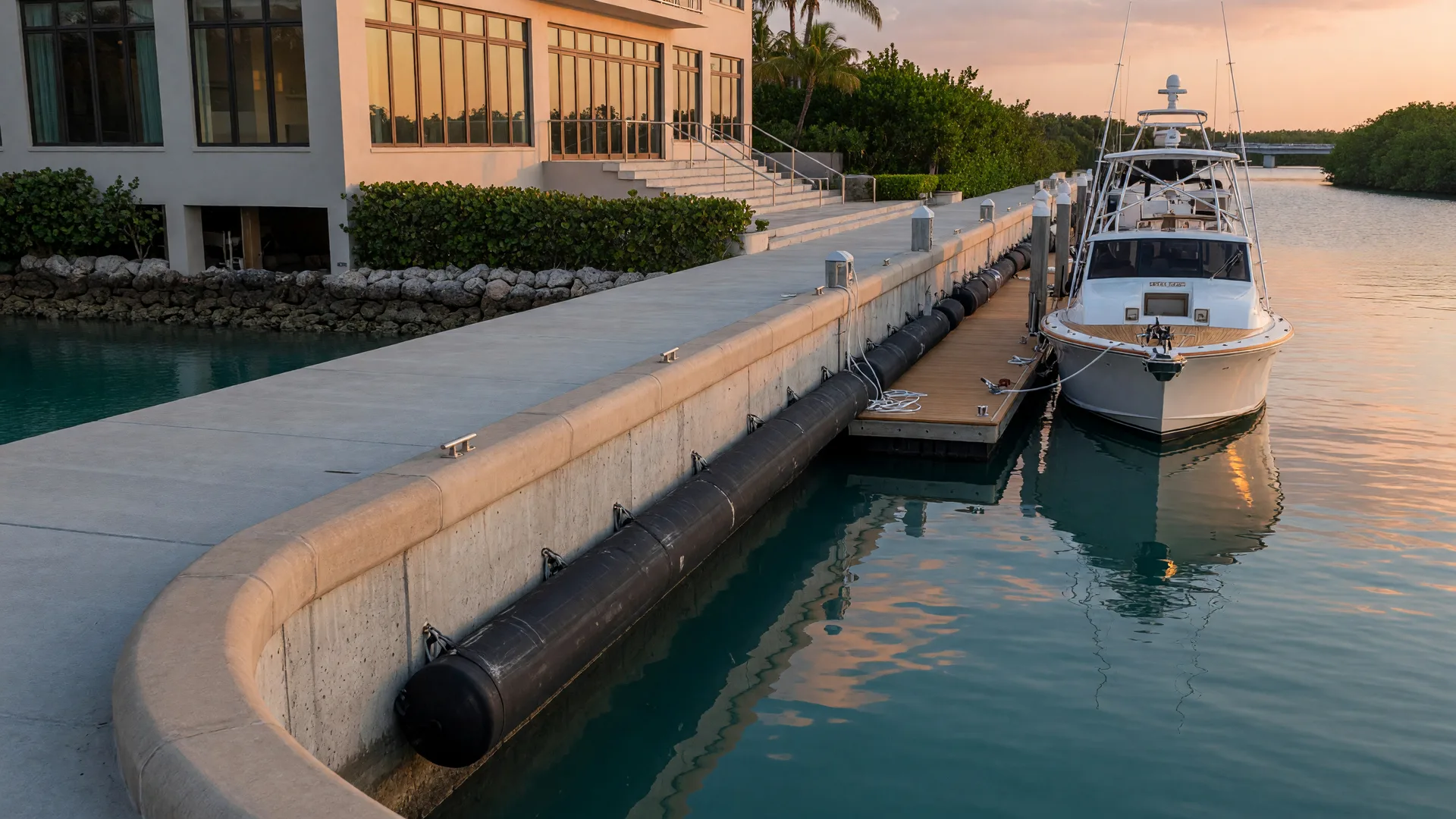
A seawall in the Florida Keys is not a decorative feature. It is a structural system that prevents erosion, supports the property above, provides a foundation for dock installation, and protects against storm surge. In many cases, the seawall is the most expensive single component of a waterfront property, and its condition determines whether the property is insurable at a reasonable rate.
Seawall replacement costs in the Keys typically range from $500 to $1,000 per linear foot, depending on the type of construction, the depth of the canal, and the accessibility of the site. For a typical waterfront lot with 75 to 100 feet of seawall, that translates to a replacement cost of $37,500 to $100,000 or more. For corner lots with seawall on two sides, the cost can exceed $200,000. The value of a property with a seawall in excellent condition includes the avoided cost of replacement, which is a direct financial benefit to the buyer.
More importantly, a failing seawall does more than reduce property value. It can prevent the sale from closing entirely. Most lenders require a structural seawall inspection as a condition of financing, and an inspector's finding of significant deterioration can kill a deal. Insurance companies are increasingly reluctant to write policies for properties with seawalls in poor condition, particularly in high-velocity flood zones. For a deeper dive into what to look for during the inspection, see my seawall and dock inspection guide for Florida Keys waterfront buyers.
Types of Seawall Construction and Their Value Implications
The Florida Keys have several common types of seawall construction, each with different performance characteristics, lifespan expectations, and value implications.
Poured concrete seawalls are the gold standard in the Keys. When properly constructed with reinforced steel and a concrete cap, poured concrete seawalls can last 40 to 60 years or more with minimal maintenance. They resist erosion, handle storm surge effectively, and provide the best foundation for dock installation. Properties with poured concrete seawalls command the highest premiums in the market.
Concrete block seawalls are common in older canal communities. They are generally less expensive to install but more susceptible to deterioration, particularly at the mortar joints. Block seawalls typically have a shorter lifespan of 25 to 40 years and may require repointing or partial reconstruction as they age. The value discount on properties with block seawalls versus poured concrete is typically 5 to 10 percent, reflecting the shorter remaining lifespan and higher maintenance costs.
Sheet pile seawalls made of steel or vinyl are used in some areas where soil conditions make concrete construction difficult. Steel sheet piles are strong but susceptible to corrosion in saltwater environments, typically lasting 20 to 35 years. Vinyl sheet piles are corrosion-resistant but less structurally robust, and they are generally used in lower-energy environments such as protected canals.
Riprap or rock seawalls are the most natural option, consisting of large stones placed along the shoreline. While aesthetically natural, riprap provides the least structural support for docks and is generally considered the lowest-value option for luxury waterfront properties.
When I evaluate a property, I identify the seawall type, estimate its remaining useful life, and factor that into my assessment of the property's overall value. A property with a 10-year-old poured concrete seawall is fundamentally more valuable than an otherwise identical property with a 40-year-old block seawall approaching the end of its service life. This principle applies directly to the luxury investment analysis I share in my Florida Keys luxury waterfront market outlook.
Dock Infrastructure: The Gateway to the Water
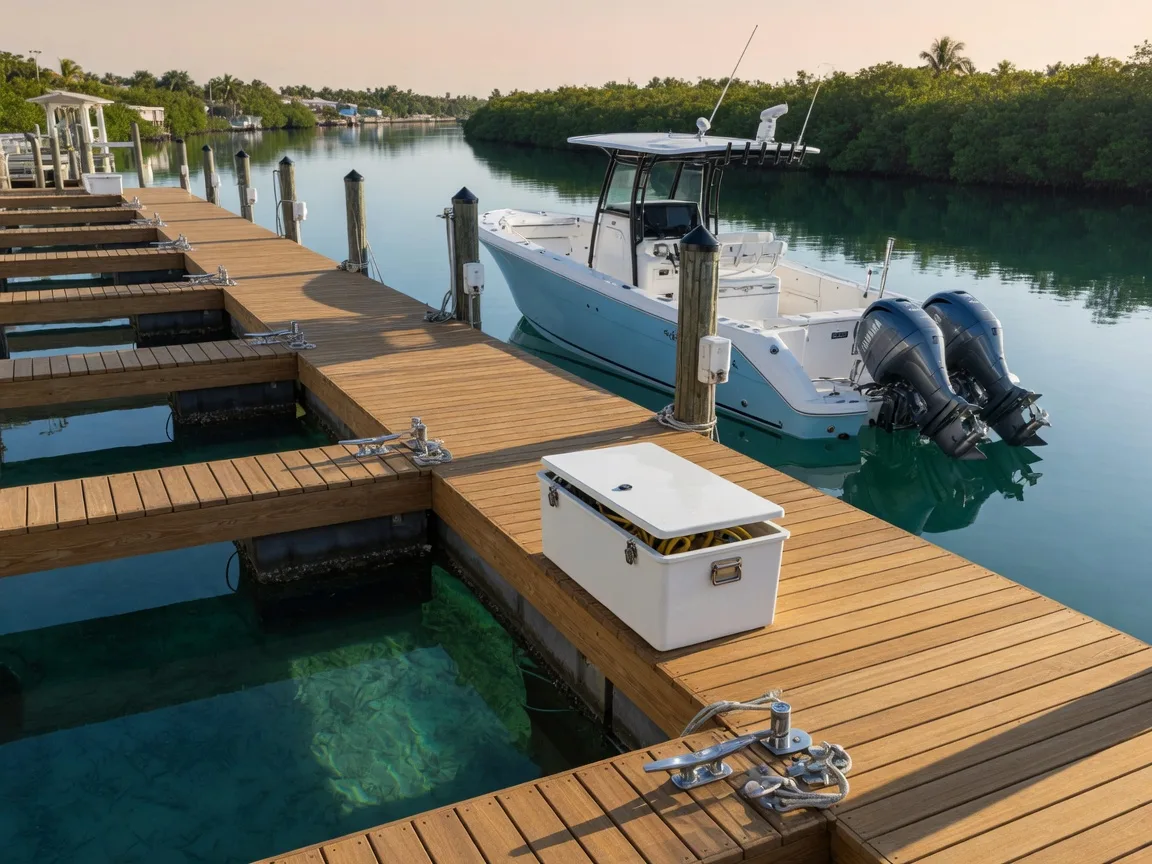
For luxury buyers who intend to use their waterfront property for boating, the dock is as important as the home itself. A well-constructed dock with proper depth access, adequate length, and compliant electrical systems can add significant value. A dock that is too short, too shallow, or structurally compromised can be a liability.
The most valuable docks in the Keys are constructed with teak decking and aluminum or concrete pilings. Teak offers exceptional durability in saltwater environments and a warm, natural appearance that complements luxury waterfront aesthetics. Aluminum pilings are corrosion-resistant and lightweight, while concrete pilings provide maximum structural strength. Pressure-treated lumber docks are common but have a shorter lifespan and generally add less value to a luxury property.
Dock electrical systems are a critical safety concern that I evaluate on every property. A dock that lacks proper ground fault protection, has deteriorated wiring, or uses non-marine-grade electrical components is not just a value issue: it is a safety hazard. Dock electrocution incidents, while rare, are preventable with proper electrical installation and maintenance. I consider dock electrical safety a non-negotiable element of my property evaluations.
The length and depth of the dock also matter enormously. A dock that extends into water deep enough for a sportfishing yacht at mean low water is significantly more valuable than one that only serves smaller boats. For a detailed comparison of how dock access affects property values, see my guide to deep-water canal versus open-water waterfront property.
The Insurance Connection: How Infrastructure Affects Premiums
One of the most important financial implications of seawall and dock quality is its effect on insurance premiums. Florida Keys waterfront properties require both flood insurance (through the National Flood Insurance Program or private insurers) and windstorm coverage (through Citizens Property Insurance Corporation or the private market). The condition of the seawall and the quality of the home's wind mitigation features directly affect the cost of both.
A property with a modern, well-maintained seawall, impact-resistant windows, hip roof construction, and proper elevation certification can save $5,000 to $15,000 per year in combined premiums compared to an otherwise similar property with deferred maintenance. Over a 10-year holding period, that is a difference of $50,000 to $150,000 in total carrying costs. For luxury investors, this is a meaningful factor in the total cost of ownership.
I review elevation certificates and wind mitigation reports as a standard part of my representation, and I help buyers understand how a property's infrastructure condition affects both insurability and long-term costs. For a comprehensive overview of the insurance landscape, see my guide to insurance and flood zone requirements for Florida Keys waterfront buyers.
The Renovation Premium: Upgrading Waterfront Infrastructure
For buyers considering a property with older but structurally sound seawall and dock infrastructure, renovation can create significant value. A property purchased at a discount due to deferred waterfront maintenance can be upgraded to modern standards, and the resulting value increase often exceeds the cost of the improvements.
Seawall renovation typically involves concrete cap replacement, crack repair, and in some cases, the installation of a new facing system over existing block construction. Dock renovation might include new decking, upgraded pilings, and modern electrical systems. These improvements not only enhance the property's value and usability but also improve its insurability and reduce long-term maintenance costs.
The key is understanding what renovations are feasible, what permits are required, and what the return on investment will be. As a licensed Contractor, I provide buyers with realistic cost estimates for waterfront infrastructure improvements, helping them make informed decisions about renovation versus purchase of a turnkey property. My guidance on luxury waterfront renovation and new construction in the Keys offers a deeper look at this topic.
Evaluating Waterfront Infrastructure: A Systematic Approach
When I evaluate a waterfront property for a buyer, I follow a systematic approach to assessing the seawall and dock infrastructure:
- Visual inspection of the seawall above the waterline, looking for cracks, spalling, leaning, or displacement.
- Underwater inspection of the seawall below the waterline, which requires a diver or underwater camera to assess scour, undermining, and marine borer damage.
- Dock structural evaluation including piling condition, deck integrity, and connection hardware.
- Dock electrical inspection by a licensed marine electrician to verify ground fault protection and wiring compliance.
- Depth survey at mean low water to confirm adequate draft for the buyer's planned vessel.
- Permit verification to confirm that all existing dock and seawall structures are properly permitted with Monroe County and the Florida DEP.
This level of evaluation is not standard practice for most real estate agents. It is part of what I provide as a licensed Contractor and Home Inspector who specializes in Keys waterfront property. Buyers who work with me get a comprehensive understanding of the property's infrastructure before they commit, not after.
For buyers who want to understand the full picture, I recommend starting with my complete Florida Keys waterfront property inspection checklist, which covers every element of the evaluation process.
The Investment Perspective
From a pure investment standpoint, properties with excellent waterfront infrastructure in premium canal locations represent the most resilient asset class in the Keys luxury market. The supply of deep-water canal properties is fixed and cannot be increased due to environmental regulations. The demand for properties that can accommodate large yachts continues to grow as the luxury boating market expands globally.
Properties with modern seawalls, deep-water access, and well-maintained docks will appreciate faster and hold their value better during market corrections. They are also easier to insure, easier to finance, and easier to sell when the time comes. For a detailed analysis of the investment landscape, see my guide to why Florida Keys waterfront is the ultimate luxury investment.
The Florida Keys luxury waterfront market offers extraordinary opportunities for discerning investors who understand what they are buying. The difference between a good investment and a great one often comes down to what is below the waterline. As a licensed Contractor and Home Inspector who has spent decades evaluating and improving Keys waterfront properties, I help buyers see the full picture and make decisions that reward them for years to come.

Steve Conley
Principal, Conley Sales Group at COMPASS the exclusive Compass office in the Florida Keys. Licensed Sales Associate, Contractor, and Home Inspector. Over 30 years and $1.4 billion in career sales serving Key Largo to Key West.
Full BioWaterfront infrastructure:
what to know.
How much does it cost to replace a seawall in the Florida Keys?
Seawall replacement in the Florida Keys typically costs $500 to $1,000 per linear foot, depending on the type of construction, canal depth, and site accessibility. For a standard 100-foot waterfront lot, the total cost ranges from $50,000 to $100,000 or more. Corner lots with seawall on two sides can cost over $200,000. The type of seawall (poured concrete, concrete block, sheet pile) also affects both the initial installation cost and the long-term maintenance requirements.
How long does a seawall typically last in the Florida Keys?
The lifespan of a seawall depends on the construction type and maintenance. Poured concrete seawalls with reinforced steel typically last 40 to 60 years or more with minimal maintenance. Concrete block seawalls last 25 to 40 years before requiring significant repairs. Steel sheet pile seawalls last 20 to 35 years in saltwater environments. Regular maintenance including concrete cap repairs and crack sealing can extend the lifespan of any seawall type significantly.
Does the condition of the seawall affect home insurance premiums in the Keys?
Yes, significantly. A seawall in excellent condition combined with impact-resistant windows and proper elevation certification can save $5,000 to $15,000 per year in combined flood and windstorm premiums compared to a property with deferred maintenance. Insurance companies are increasingly requiring seawall inspections before writing new policies, and a failing seawall can result in denial of coverage or significantly higher premiums.
What type of dock adds the most value to a Florida Keys luxury property?
Teak-decked docks with aluminum or concrete pilings add the most value to luxury waterfront properties. Teak offers exceptional durability and a warm, natural appearance. The dock must extend into water deep enough for the owner's planned vessel at mean low water. Modern electrical systems with ground fault protection are essential. A properly constructed dock with deep-water access can add $50,000 to $150,000 or more to a property's value.
Can a failing seawall be repaired, or does it need full replacement?
Many seawalls can be repaired rather than fully replaced. Repairs include concrete cap replacement, crack injection, and in some cases, installation of a new facing system over existing construction. The decision between repair and replacement depends on the seawall's type, the extent of deterioration, and the remaining structural integrity. A professional evaluation by a marine contractor or engineer is necessary to determine the best approach. As a licensed Contractor, I help buyers understand their options and the associated costs.
Helpful Resources & Related Guides
Deepen your understanding of Florida Keys luxury waterfront investment with these related resources.
Internal Resources
- Florida Keys Luxury Real Estate Market Report
- Key Largo Luxury Waterfront Community Guide
- Seawall and Dock Inspection Guide for Florida Keys Waterfront Buyers
- Canal vs. Open-Water Waterfront Property: A Luxury Investment Guide
- Florida Keys Luxury Waterfront Market Outlook and Investment Trends
- Contact Steve Conley for Luxury Waterfront Investment Guidance
Thinking About Buying or Selling
in the Florida Keys?
Steve Conley brings 30 years of Keys expertise, $1.4 billion in career sales, and contractor-inspector credentials to every transaction. Start with a conversation.
Connect with Steve