
Deep Water, High Returns: How Canal Depth, Seawall Quality, and Dock Infrastructure Drive Luxury Waterfront Investment Returns in the Florida Keys
In the Florida Keys luxury waterfront market, the infrastructure beneath the waterline determines the value above it. Here is what every investor needs to evaluate.
Key Takeaways
- Canal depth at mean low water is the single most important factor determining a waterfront property's value: a difference of two feet of depth can translate to a 20 to 30 percent price premium.
- Seawall condition directly affects property value, insurability, and financing. A failing seawall can cost $500 to $1,000 or more per linear foot to replace, representing a significant potential liability for buyers.
- Properties with modern dock infrastructure, adequate depth, and seawalls in good condition command the highest appreciation rates and the strongest resale values in the Keys luxury market.
- Dual-side boating access through natural creeks such as Tavernier Creek and Whale Harbor Channel adds significant investment value by providing protected passage to both the Atlantic and Florida Bay.
- Working with an agent who holds contractor and inspector credentials provides an investment-grade property evaluation that identifies infrastructure risks and opportunities that standard agents miss.
In the Florida Keys luxury waterfront market, two identical homes on the same street can differ in value by 30 percent or more. The difference is not in the finishes, the square footage, or the architecture. It is in what you cannot see from the street: the depth of the water at the dock, the condition of the seawall, and the quality of the waterfront infrastructure that connects the property to the marine environment.
After three decades of evaluating Keys waterfront properties, I have learned that the most important investment decisions are made below the waterline. A property with deep water, a modern concrete seawall, and dock infrastructure in excellent condition will appreciate faster, sell more quickly, and require less unexpected maintenance than a comparable property where any of these elements is compromised. This guide explains what to evaluate and why it matters to your bottom line.
Why Canal Depth Drives Value
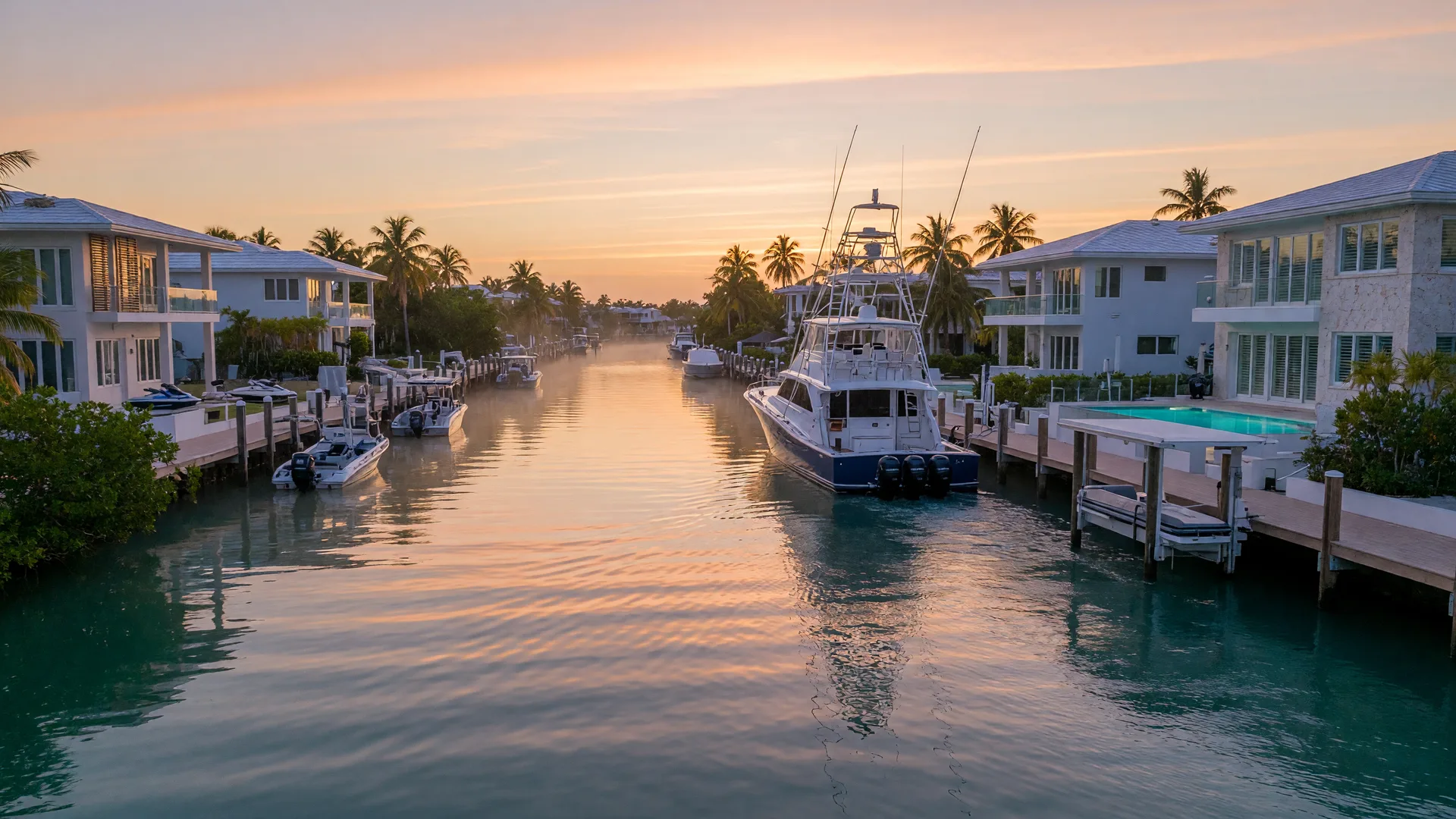
The depth of the water at the dock is the single most significant factor determining a waterfront property's value in the Keys. A canal that offers six feet at mean low water can accommodate a 40-foot sportfishing yacht with a four-foot draft. A canal that offers three feet at mean low water limits the owner to shallow-draft vessels, center-console boats, and small sailboats. The difference in buyer pool is dramatic.
In the Key Largo luxury market, properties on deep-water canals typically command a 20 to 30 percent premium over comparable properties on shallower canals in the same neighborhood. A $5 million estate on six feet of water may be worth $1 million to $1.5 million more than an identical home on three feet of water, simply because the deep-water property can accommodate the vessels that serious boaters and sportfishermen require.
This is not speculation. I have represented buyers who eliminated otherwise excellent properties from consideration because the canal could not accommodate their 50-foot Viking or their 44-foot Hatteras. The buyer pool for deep-water properties is larger, more liquid, and less price-sensitive. When it comes time to sell, the deep-water property will attract more offers and command a higher price. For a deeper look at the Key Largo market, read my analysis of why Key Largo is Florida's most coveted waterfront address.
Key Largo's northern canal systems, particularly those near the Ocean Reef Club, offer the deepest water in the Upper Keys. The canals around Port Largo and the Card Sound area are regularly maintained and can accommodate vessels of 50 feet or more. Central Key Largo's canals vary more widely, which is why a depth survey is essential before making an offer on any canal property. For a detailed analysis of deep-water canal investment dynamics, read Deep-Water Canal Investment in Key Largo.
Seawall Condition: The Foundation of Value
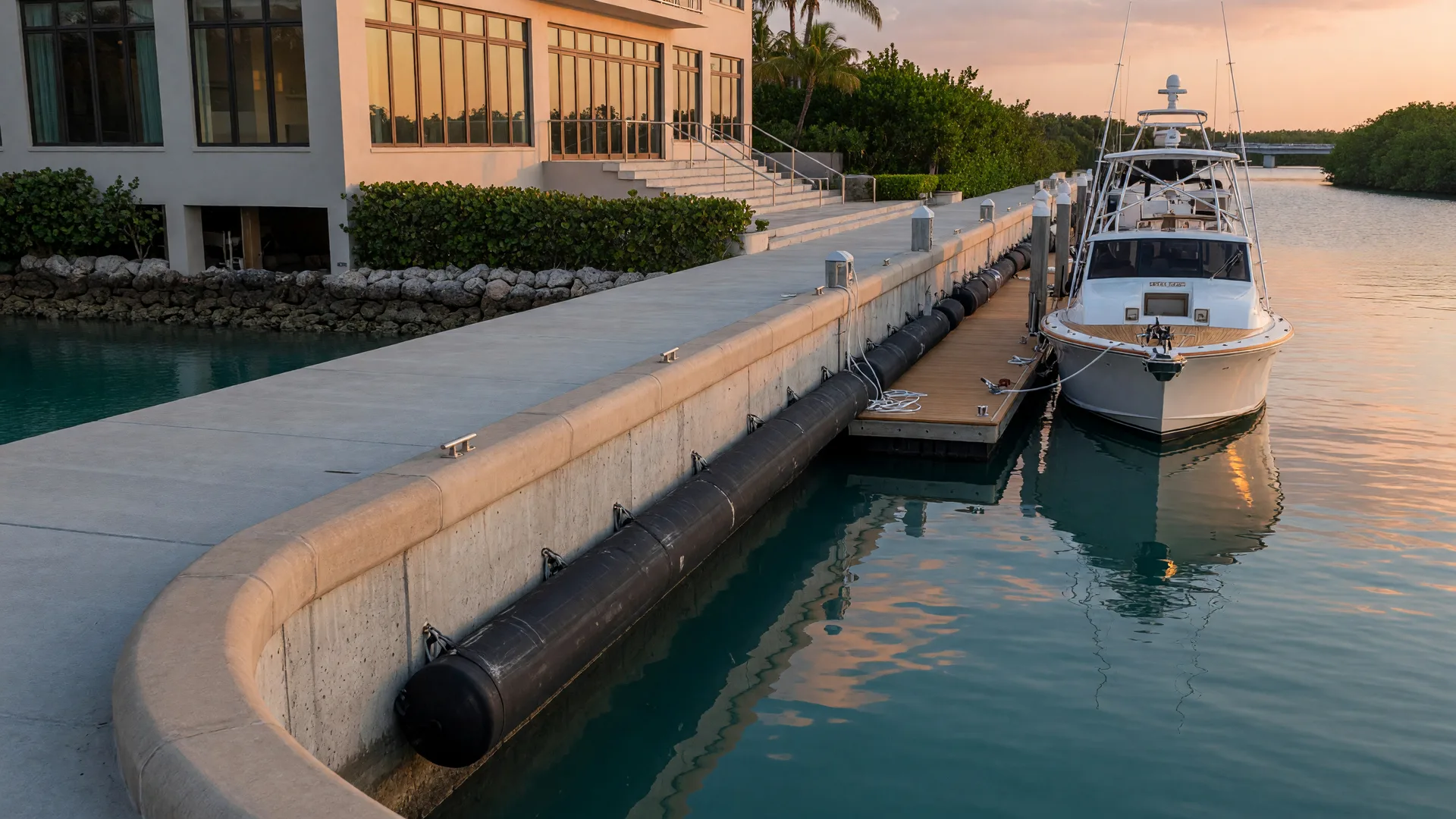
The seawall is the most critical structural element of any waterfront property, and it is the most expensive to repair. A failing seawall can cost $500 to $1,000 or more per linear foot to replace, depending on the construction method, the materials required, and the access conditions. For a typical 80-foot canal lot with a 50-foot seawall, replacement costs can range from $25,000 to $50,000 or more. For larger estates with longer waterfront lines, the cost can run into six figures.
Seawalls in the Keys are typically built in one of three configurations, each with its own lifespan and maintenance profile.
- Concrete seawalls. Modern concrete walls with proper reinforcement and tie-back systems are the gold standard. They have a lifespan of 40 to 60 years with proper maintenance and are the most resistant to corrosion and marine growth. Properties with concrete seawalls command a premium because buyers know the infrastructure is built to last.
- Sheet-pile seawalls. Steel or vinyl sheet-pile walls are common in the Keys, particularly for older properties. Steel piles have a lifespan of 25 to 40 years in saltwater and are susceptible to corrosion at the waterline. Vinyl piles are corrosion-resistant but less structurally robust. Both require periodic inspection and maintenance.
- Rip-rap or rock walls. These are the least desirable seawall type for luxury properties. They offer less structural integrity, are more difficult to maintain, and can create uneven dockage conditions. Properties with rip-rap walls typically trade at a discount to those with concrete or sheet-pile walls.
As a licensed Contractor and Home Inspector, I evaluate seawalls as a standard part of my property assessments. I look for signs of failure including horizontal cracking, bulging, tie-back corrosion, and scouring at the base. For a complete guide to evaluating seawalls and docks, read my Seawall and Dock Inspection Guide and my Complete Waterfront Property Inspection Checklist.
Dock Infrastructure and Value
The dock is the property's primary connection to the water, and its quality directly affects both usability and value. A well-built dock with a proper electrical system, adequate depth at the face, and durable materials is a significant asset. A poorly maintained dock with outdated wiring, insufficient depth, or failing stringers is a liability.
Key factors to evaluate in dock infrastructure include the following.
- Pilings. Concrete or treated-wood pilings should be inspected for rot, marine borer damage, and corrosion at the waterline. Aluminum or composite pilings are increasingly common for new construction and offer excellent durability.
- Stringers and decking. The structural frame of the dock should be solid and free of rot. Decking should be in good condition with no soft spots or trip hazards.
- Electrical system. The dock should have a modern electrical system with GFCI-protected outlets, proper grounding, and a disconnect at the dock head. Faulty dock electrical systems are a safety hazard and a common finding in Keys inspections.
- Depth at the dock face. The water depth at the outside edge of the dock is what determines what size vessel you can tie up. This can differ from the depth in the center of the canal. A depth survey should measure both.
A property with a modern dock system that can accommodate the buyer's vessel will command a premium over a property where the dock needs replacement. In the Keys luxury market, the cost of dock replacement typically ranges from $200 to $400 per linear foot, depending on the construction method and materials. A 40-foot dock replacement represents a $8,000 to $16,000 investment that should be factored into your offer and your budget.
The Premium for Dual-Side Boating Access
One of the most valuable features a waterfront property can offer is dual-side boating access: the ability to reach both the Atlantic Ocean and Florida Bay through protected inland waterways. Properties located near natural creeks such as Tavernier Creek, Whale Harbor Channel, and Snake Creek command a significant premium because they offer boaters the flexibility to fish both sides of the island chain without a long run.
Tavernier Creek, located at the Key Largo-Tavernier line, is one of the most strategically valuable waterways in the Upper Keys. It connects the Atlantic to the Bay at the widest point of the island chain, providing protected passage for vessels of significant size. Properties with docks near Tavernier Creek consistently sell at a premium because buyers value the access it provides. For a detailed look at this community, read Tavernier Luxury Real Estate: Quiet Waterfront Investment Potential and visit the Tavernier community guide.
Whale Harbor Channel in Islamorada offers similar advantages for properties in the southern Upper Keys. Properties with direct access to the channel and the ocean beyond command the highest per-square-foot prices in the Islamorada market. For a detailed analysis, read The Islamorada Luxury Waterfront Market: Why the Sportfishing Capital Commands Premium Pricing.
Open-Water Frontage: The Ultimate Premium
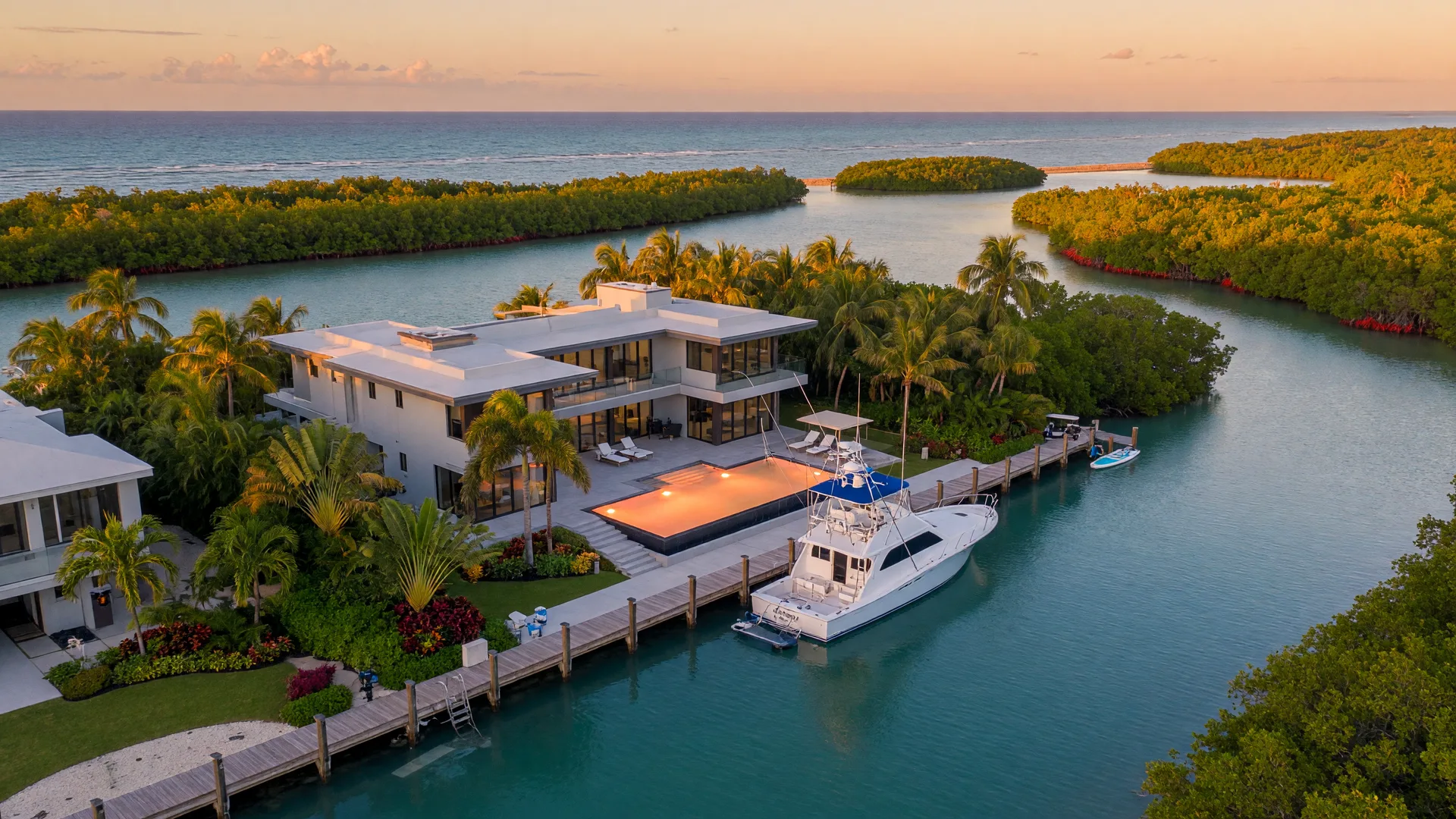
While canal-front properties with deep water and good dock infrastructure represent excellent investments, open-water frontage properties with unobstructed views and immediate ocean access command the highest premiums in every market from Key Largo to Marathon.
Oceanfront and bayfront properties typically trade at a 30 to 50 percent premium over canal-front properties with equivalent homes and finishes. The premium is driven by the view, the direct access to open water, and the scarcity of available inventory. In a market where supply is finite, open-water frontage has historically demonstrated the strongest appreciation rates over time.
However, open-water properties also come with higher insurance costs, greater exposure to storm surge, and more demanding maintenance requirements. The buyer must weigh these costs against the lifestyle benefits and investment potential. For a side-by-side comparison, read Canal vs. Open-Water Waterfront Property in the Florida Keys: A Luxury Investment Guide.
For an overview of the market trends shaping luxury waterfront values across the Keys, read the Florida Keys Luxury Real Estate Market Report and my analysis of Florida Keys Luxury Waterfront Market Outlook: Investment Trends and Portfolio Strategy for 2026-27.
The Due Diligence Advantage
The single greatest advantage a luxury waterfront buyer can have is the expertise to evaluate these factors before making an offer. A buyer who understands the relationship between water depth, seawall condition, dock quality, and property value can make informed decisions that a less experienced buyer cannot.
My background as a contractor and home inspector allows me to provide this evaluation as a standard part of my representation. When I tour a property with a client, I am not just looking at the finishes and the views. I am evaluating the infrastructure that determines the property's true value and long-term investment potential. I help my clients understand not just what a property is worth today, but what it will cost to maintain and how it will appreciate over time.
For a personalized evaluation of the luxury waterfront investment market in the Florida Keys, contact Steve Conley for a confidential consultation. I would be honored to put my expertise to work for you.

Steve Conley
Principal, Conley Sales Group at COMPASS the exclusive Compass office in the Florida Keys. Licensed Sales Associate, Contractor, and Home Inspector. Over 30 years and $1.4 billion in career sales serving Key Largo to Key West.
Full BioWaterfront investment:
what to know.
How much more is a deep-water property worth than a shallow-water property?
In the Keys luxury market, a property with six feet of depth at mean low water typically commands a 20 to 30 percent premium over an otherwise identical property with three feet of depth. The premium is driven by the larger buyer pool: serious boaters and sportfishermen require deep water for their vessels, and they are willing to pay for it. For a $5 million property, that premium represents $1 million to $1.5 million in value.
What is the most expensive waterfront infrastructure repair?
Seawall replacement is the single most expensive waterfront repair a property can require. Replacement costs range from $500 to $1,000 or more per linear foot, depending on the construction method, materials, and access. For a typical canal lot with a 50-foot seawall, replacement costs $25,000 to $50,000 or more. This is why I evaluate seawalls as a standard part of my property assessments my contractor background allows me to identify issues that might not be visible to an untrained eye.
Does dual-side boating access really add value?
Yes. Properties near natural creeks that provide protected passage between the Atlantic and Florida Bay consistently sell at a premium. Tavernier Creek, Whale Harbor Channel, and Snake Creek are among the most valuable waterways in the Upper Keys. The ability to reach both sides of the island chain without navigating open ocean is a significant advantage that serious boaters value highly, and that value is reflected in property prices.
Are canal homes or open-water homes better investments?
Open-water homes typically appreciate faster due to their scarcity and unobstructed views, but they come with higher insurance costs and storm exposure. Canal homes offer protected dockage, lower insurance costs, and generally lower entry prices while still providing excellent boating access. Both can be strong investments when selected with careful evaluation of the waterfront infrastructure. The right choice depends on your budget, risk tolerance, and lifestyle priorities.
How does seawall condition affect financing and insurance?
A failing seawall can affect both the property's insurability and its eligibility for certain types of financing. Lenders may require proof that waterfront infrastructure is sound before approving a loan. Insurance carriers may decline coverage or charge higher premiums for properties with compromised seawalls. A thorough evaluation of seawall condition is essential before making an offer, and having a contractor-inspector agent who can identify these issues is a significant advantage.
Helpful Resources & Related Guides
Deepen your understanding of luxury waterfront investment in the Florida Keys with these related resources.
Internal Resources
- Key Largo Luxury Waterfront Community Guide
- Deep-Water Canal Investment in Key Largo: Why Boating Access Drives Luxury Property Values
- Canal vs. Open-Water Waterfront Property: A Luxury Investment Guide
- Florida Keys Luxury Waterfront Market Outlook: Investment Trends 2026-27
- Florida Keys Luxury Real Estate Market Report
- Contact Steve Conley for Investment Guidance
Thinking About Buying or Selling
in the Florida Keys?
Steve Conley brings 30 years of Keys expertise, $1.4 billion in career sales, and contractor-inspector credentials to every transaction. Start with a conversation.
Connect with Steve