
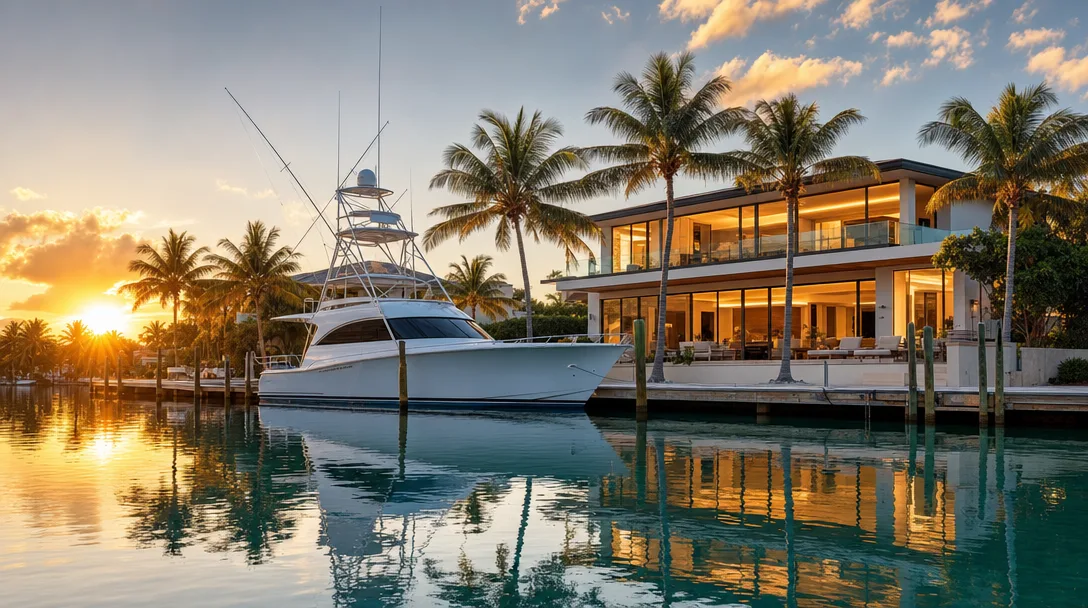
Deep-Water Canal Investment in Key Largo: Why Boating Access Drives Luxury Property Values
For luxury waterfront investors, understanding the mechanics of canal depth, seawall integrity, and boating access is the key to identifying the most resilient and appreciating properties in Key Largo.
Key Takeaways
- Deep-water canal access is the single most important value driver in Key Largo luxury waterfront property, with canal depth directly correlating to price per square foot.
- Seawall condition has an outsized impact on property value, with replacement costs from $500 to $1,000 per linear foot creating a significant spread between well-maintained and deferred-maintenance properties.
- Key Largo's canal inventory is finite and shrinking, as canal maintenance costs rise and regulatory barriers to new dredging increase. This supply constraint supports long-term appreciation for deep-water properties.
- The best investment opportunities are often found in canals that have been recently dredged or that have active homeowners associations managing canal maintenance.
- Properties with upgraded docks, impact windows, and wind mitigation features command a premium and offer lower total ownership costs through reduced insurance premiums.
In the Florida Keys luxury waterfront market, the single most important question a buyer can ask is not about the house. It is about the water. How deep is the canal? What is the condition of the seawall? Can my boat access the ocean at any tide? The answers to these questions do not just determine whether a property suits your lifestyle. They determine its current value, its future appreciation, and your total cost of ownership.
As a licensed Sales Associate, Contractor, and Home Inspector, I have spent over three decades evaluating waterfront infrastructure across the Keys. In that time, I have developed a clear picture of what drives value in the Key Largo canal market. This guide offers my analysis of the key factors that luxury waterfront investors should understand when evaluating canal properties in Key Largo.
The Canals of Key Largo: A Unique Asset Class
Key Largo's canal system is one of the most extensive in the Florida Keys, with hundreds of waterfront properties lining man-made canals on both the Atlantic and Florida Bay sides of the island. These canals were constructed over decades, from the 1950s through the early 2000s, and they represent a finite inventory of waterfront real estate that cannot be replicated.
The reason is straightforward: regulatory barriers to new canal construction are effectively insurmountable. Environmental regulations, permitting requirements through the Army Corps of Engineers and the Florida Department of Environmental Protection, and community opposition make it nearly impossible to build new canals in the Keys today. What exists is what will exist for the foreseeable future, and that supply constraint is a powerful tailwind for property values in well-maintained canal systems.
For a detailed overview of the Key Largo luxury market at the highest price points, read our guide on Key Largo Luxury Waterfront: What $5 Million and Above Really Buys You.
Canal Depth: The Primary Value Driver
Canal depth at mean low water is the single most important factor determining a waterfront property's value. A property with six feet of depth can accommodate a 50-foot sportfishing yacht. A property with three feet of depth may struggle to float a center console. The difference in value between these two scenarios can be a million dollars or more on otherwise comparable properties.
The correlation between depth and value is not linear. There is a threshold effect at around four to five feet, where the canal becomes usable for serious boating. Above that threshold, each additional foot of depth adds significant value. Below it, the property's utility is limited to small boats and personal watercraft, which restricts the buyer pool and suppresses price.
Canal depth is not static. It depends on natural silting patterns, the frequency of maintenance dredging, and the condition of the canal cut to open water. Canals that are well-maintained by active homeowners associations tend to hold their depth better than those without organized maintenance programs. When evaluating a canal property, I always request the most recent depth survey and verify that the canal has a maintenance plan in place.
Seawall Condition: The Hidden Value Driver
If canal depth determines what you can do with a property, seawall condition determines what it will cost to keep doing it. A failing seawall is the most expensive repair a waterfront property can require, and the cost is almost always borne by the property owner.
Seawalls in the Florida Keys are typically constructed of concrete, sheet pile, or rip rap. Concrete walls are the most common in newer construction, but they require proper reinforcement and drainage to resist the corrosive effects of saltwater. Sheet pile walls, made of steel or vinyl, offer good performance in certain soil conditions but have their own maintenance requirements.
The signs of a failing seawall include horizontal cracking, forward tilting, separation at joints, corrosion of tie-back rods, and scour at the base. A wall that shows any of these signs requires professional evaluation by a marine engineer or qualified contractor. I provide this evaluation as a standard part of my representation, drawing on my contractor and inspector licenses to give buyers a clear picture of the seawall's condition and expected remaining life.
For a complete guide to evaluating seawalls and docks, read my Seawall and Dock Inspection Guide.
Dock Infrastructure and Electrical Safety
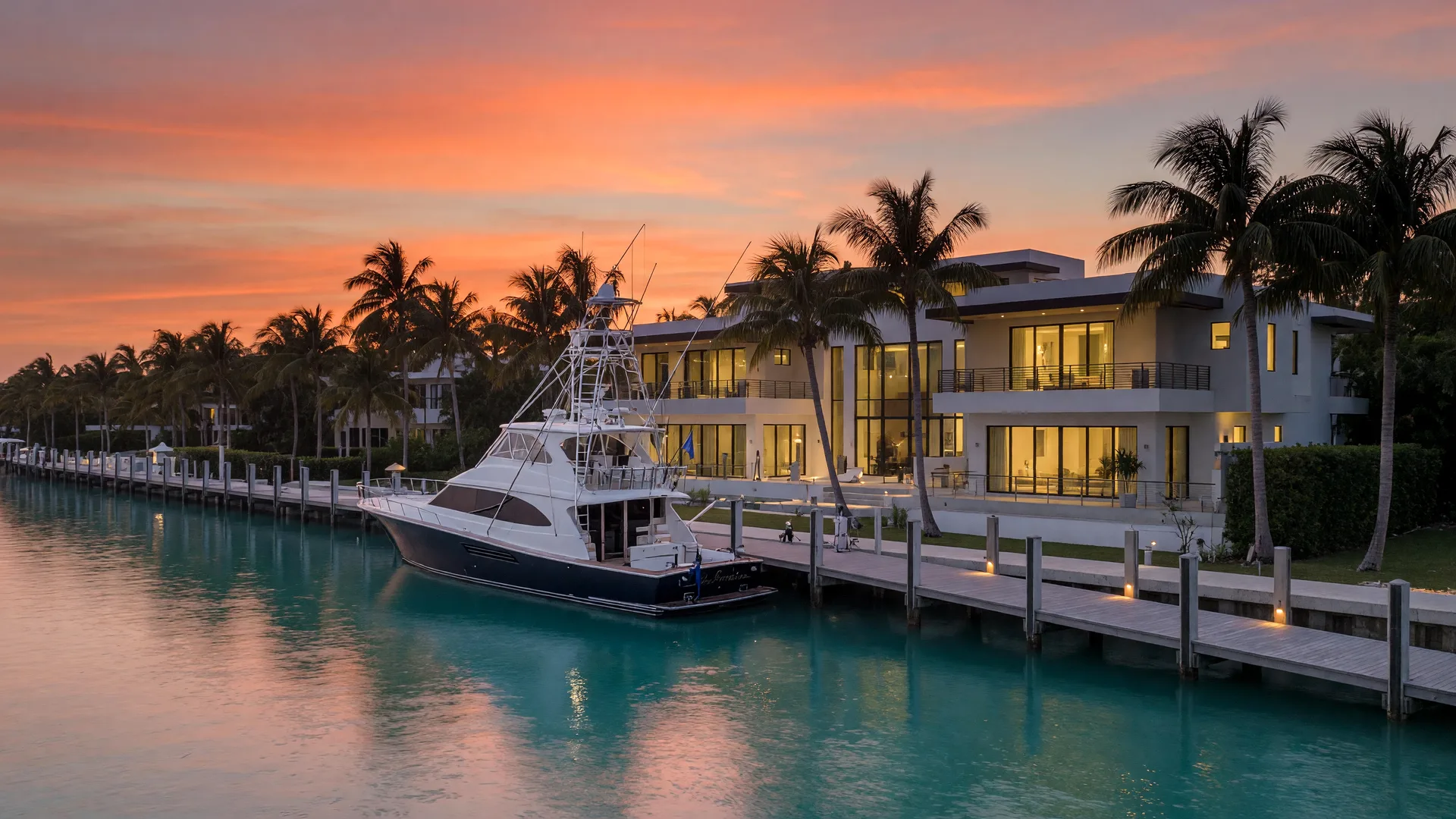
The dock is your connection to the water, and its condition directly affects the safety and usability of the property. A well-constructed dock with proper electrical service, adequate load capacity, and good access to deep water adds significant value. A dock that is structurally compromised or has outdated electrical systems is a liability.
Electrical safety at the dock is a particular concern in saltwater environments. Corrosion accelerates the degradation of electrical components, and faulty wiring can create serious hazards. National Electrical Code requirements for dock electrical systems have become more stringent in recent years, and docks that do not meet current code may need significant upgrades.
The dock's structural components should be evaluated for rot, corrosion, and insect damage. Pressure-treated timber docks typically last 15 to 25 years in saltwater, depending on maintenance and exposure. Composite decking and concrete dock systems can last significantly longer but require higher initial investment.
Wind Mitigation and Insurance Costs
For luxury waterfront investors, the cost of insurance is a significant factor in total ownership cost. Properties with strong wind mitigation features impact windows, hip roof geometry, secondary water resistance, and proper shutter systems can achieve substantial discounts on windstorm insurance, often 30 to 50 percent below properties without these features.
I evaluate wind mitigation features on every property I represent and help clients understand how these features affect both the purchase decision and the long-term carrying cost. A property with a well-documented wind mitigation report is worth more than an otherwise identical property without one, and the savings on insurance can amount to thousands of dollars per year.
For a complete analysis of the due diligence required when evaluating any Keys waterfront property, read my Complete Waterfront Property Inspection Checklist.
Investment Outlook for Key Largo Canal Properties
The investment case for Key Largo canal properties rests on three pillars: finite supply, persistent demand, and improving infrastructure. The number of deep-water canal properties in Key Largo is fixed and cannot be expanded. Demand from high-net-worth buyers continues to grow as the Florida Keys luxury market attracts increasing attention from domestic and international buyers. And canal maintenance programs, while costly, are keeping the best canals in excellent condition.
The key to successful investment in this market is selectivity. Not all canals are created equal. The best investments are in canals with active homeowners associations that maintain depth through regular dredging, have recently upgraded seawalls, and are located in neighborhoods with strong appreciation history. Canals without organized maintenance programs may offer lower entry points, but they carry the risk of declining depth and increasing maintenance costs that will eventually be borne by the property owner.
For a comprehensive market analysis, visit our Florida Keys Luxury Real Estate Market Report and read our comparison of canal versus open-water frontage investment dynamics.
Evaluating Canal Investment Opportunities
When I work with investors evaluating Key Largo canal properties, I follow a structured approach that covers every factor affecting value.
- Canal depth survey. Verify the depth at mean low water at the dock and at the canal entrance. Request a recent survey from the seller or canal association.
- Seawall evaluation. Inspect the seawall for signs of deterioration, including cracking, tilting, corrosion, and scour. Estimate the remaining useful life and the cost of any needed repairs.
- Dock inspection. Evaluate the structural condition of the dock, the electrical system, and the depth at the dock face. Verify that the dock can accommodate the intended vessel.
- Wind mitigation review. Request the wind mitigation report and verify that the improvements documented in the report actually exist on the property.
- Insurance cost analysis. Get quotes for both flood and windstorm coverage. Model the total carrying cost including insurance, HOA dues, and maintenance.
- Comparable sales analysis. Review recent sales of canal properties in the same neighborhood. Compare price per square foot across properties with similar depth and dock infrastructure.
This structured approach has helped my clients make informed investment decisions in the Key Largo canal market for over three decades. I bring the perspective of a contractor, inspector, and agent to every evaluation, ensuring that no detail is overlooked.
For personalized investment guidance tailored to your goals and preferences, contact Steve Conley for a confidential consultation. I would be honored to help you evaluate the Key Largo canal market and find the property that matches your investment objectives.

Steve Conley
Principal, Conley Sales Group at COMPASS the exclusive Compass office in the Florida Keys. Licensed Sales Associate, Contractor, and Home Inspector. Over 30 years and $1.4 billion in career sales serving Key Largo to Key West.
Full BioCanal investment:
what to know.
What is the most important factor affecting canal property value in Key Largo?
Canal depth at mean low water is the single most important factor. Properties with consistent depth of five feet or more command a significant premium over shallower canals, because they can accommodate serious sportfishing yachts and larger cruising vessels. The difference between a 4-foot canal and a 6-foot canal can be a million dollars or more on otherwise comparable properties. The second most important factor is seawall condition, because a failing seawall represents the most expensive repair a waterfront property can require.
How does canal maintenance affect property values?
Canal maintenance has an enormous impact on property values. Canals maintained by active homeowners associations that fund regular dredging, seawall repairs, and canal cut maintenance tend to hold their depth and support higher property values. Canals without organized maintenance programs are at risk of silting in, which reduces depth and diminishes property utility. Buyers should always ask about the canal's maintenance history, the HOA's current reserves for canal work, and any pending maintenance assessments before purchasing.
Is a canal property a better investment than open-water frontage?
Both canal and open-water properties have their advantages. Canal properties typically offer more protected moorage, larger lots for the price, and greater privacy. Open-water properties provide unobstructed views and direct access without navigating a canal cut. From an investment perspective, well-located deep-water canal properties have shown strong appreciation because the inventory is finite and demand is persistent. For a detailed comparison of the two, read our guide on canal versus open-water frontage.
What should I look for in a canal homeowners association?
A strong canal HOA should have a dedicated canal maintenance plan, adequate reserve funds for dredging and seawall repairs, and a history of regular maintenance. Review the HOA's financial statements, reserve study, and recent maintenance records before purchasing. Ask about the canal's dredging schedule, the condition of common seawalls, and any pending special assessments. A well-managed HOA is a significant advantage for canal property owners, as it spreads the cost of maintenance across the community and ensures consistent depth and access for all residents.
Can I negotiate on price if the seawall needs repairs?
Absolutely. A seawall that needs repair or replacement is a legitimate basis for price negotiation, and the cost can be substantial. Replacement costs range from $500 to $1,000 or more per linear foot, so a typical residential seawall of 80 to 120 linear feet could cost $40,000 to $120,000 to replace. I always include seawall evaluation in my standard property assessments and help my clients factor any needed repairs into their offer strategy. A property with a recently replaced seawall and good depth is worth a significant premium over one with deferred maintenance, and that difference should be reflected in the purchase price.
Helpful Resources & Related Guides
Deepen your understanding of Florida Keys canal investment and luxury waterfront real estate with these related resources.
Internal Resources
- Key Largo Luxury Waterfront Community Guide
- Canal vs. Open-Water Waterfront Property in the Florida Keys: A Luxury Investment Guide
- Key Largo Luxury Waterfront: What $5 Million and Above Really Buys You
- Florida Keys Luxury Real Estate Market Report
- Seawall and Dock Inspection Guide for Florida Keys Waterfront Buyers
- Contact Steve Conley for Personalized Investment Guidance
Thinking About Buying or Selling
in the Florida Keys?
Steve Conley brings 30 years of Keys expertise, $1.4 billion in career sales, and contractor-inspector credentials to every conversation. Let him guide you to the right property at the right price.
Connect with Steve