
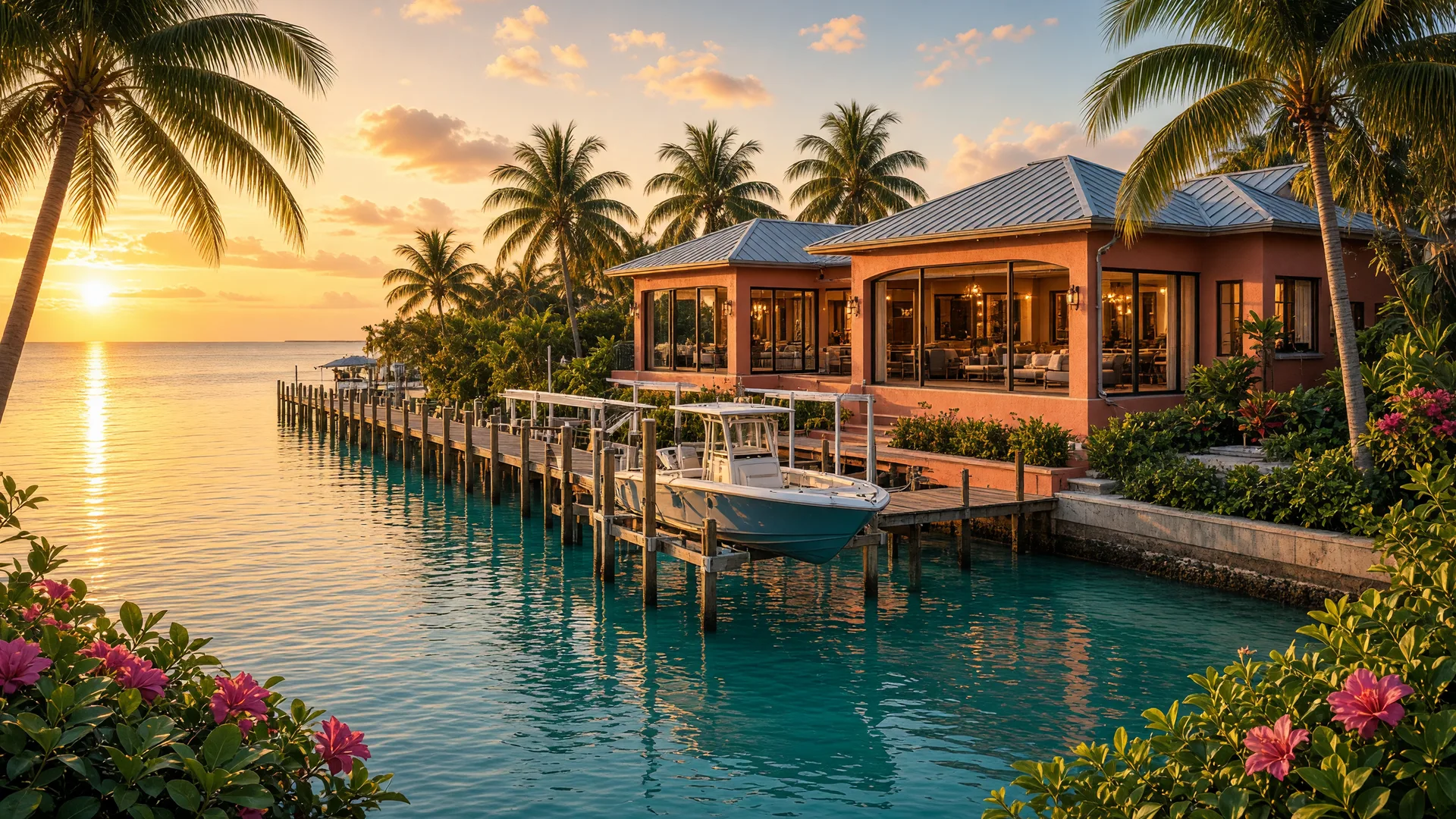
Dock Rights and Submerged Land Leases When Buying a Florida Keys Waterfront Home: What You Actually Own
In the Keys, the dock can be the most valuable and the least understood part of the deal. Whether the water under it is yours or the state's decides what you can do, what you must maintain, and whether the dock is even legal, so verify it before you offer.
Key Takeaways
- Whether a dock needs state authorization and how it is titled comes down to one question: does the seabed under it belong to the State of Florida or to the private upland owner?
- A dock that extends over state-owned sovereign submerged lands generally needs a Department of Environmental Protection authorization, either a letter of consent for a small single-family dock or a submerged land lease for larger or multi-slip structures.
- Docks in man-made private canals often need no state bottom lease when the canal bottom is carried in the title, but many Keys canals touch state waters or were cut into state-owned bottom, so the canal still must be verified case by case.
- An existing dock is not a guarantee: authorizations can be expired, lapsed, or non-transferable, and the lease or consent may not automatically pass to the new owner at closing.
- Dock due diligence belongs on your pre-offer list: an accurate survey of the mean high water line, copies of permits and any lease, and confirmation that the authorization transfers, all reviewed before you commit.
When a buyer falls for a Florida Keys waterfront home, it is usually the dock that does it. The boat lift, the deep-water basin, the morning run to the reef. Yet the dock is also the part of the property most buyers understand the least. In the Keys, the water under the dock, and the permission to use it, is rarely a simple matter of what the deed says. This guide explains how dock rights and submerged land leases work, why an existing dock is not a guarantee, and exactly what to verify before you make an offer.
The Question That Decides Everything: Who Owns the Bottom?
Every dock in the Florida Keys sits over some kind of seabed. The legal treatment of that dock depends on a single question: is the seabed under it owned by the State of Florida or by the private owner of the upland parcel? Florida holds title to essentially all so-called sovereign submerged lands, the bottoms of its bays, reefs, and navigable waters below the mean high water line. When a dock extends out over that public bottom, the State is the landlord, and using that bottom generally requires state authorization.
When the seabed is privately owned, which is the case for many man-made canal bottoms that were cut out of the owner's upland and carried in the plat and chain of title, the dock is handled differently, usually through a Monroe County building permit and, where relevant, an environmental resource permit. The first job in due diligence is deciding which bucket your property falls into. That is not always obvious from the listing, and a survey and the title report are what answer it. This is exactly the kind of waterfront detail my guide to seawall and dock inspection in Florida Keys waterfront homes treats as a core part of the pre-offer process.
Bottom Leases, Letters of Consent, and What They Mean
When a dock crosses state-owned sovereign submerged lands, the Florida Department of Environmental Protection, or DEP, is the agency that manages that bottom. A small, single-family private dock that occupies no more than about ten square feet of sovereign bottom for every linear foot of shoreline can qualify for a Letter of Consent, a lighter authorization rather than a full lease. Larger structures, multi-slip docks, and docks tied to revenue-generating uses generally require a standard submerged land lease, often a ten-year renewable term.
Those authorizations are real, recorded documents, and they come with conditions, renewal obligations, and sometimes annual fees. A lease is not the same as owning the bottom. You are renting the use of the water, and the terms matter. Buyers who assume the dock just comes with the house can find themselves facing a lapsed authorization, unpaid fees, or a lease that does not transfer. If deep-water dock access is the whole reason you want the property, this is the section of the deal you cannot skip.
Why Canal Docks Can Be Different
Here is where the archetypal Keys deep-water canal, the kind you find threading through Key Largo's waterfront neighborhoods, operates differently from an open-water dock. If the canal was dredged out of privately owned uplift and its bottom is carried in the plat and chain of title, the canal bottom is private. Your dock then sits on your own land, and no state bottom lease is needed. You still need your building permit and any required environmental permit, but the ownership question is settled in your favor.
The catch is that not every canal works that way. Some Keys canals were cut into state-owned bottoms or connect directly to state waters, and in those cases a bottom lease or letter of consent may still be required. The distinction is a title question, not a visual one. Two identical waterfront homes on similar canals can have different dock rights. This variation is a major reason the deep-water cul-de-sac canals of a place like Port Largo command the premiums they do, because the ownership and the depth are unusually clean.
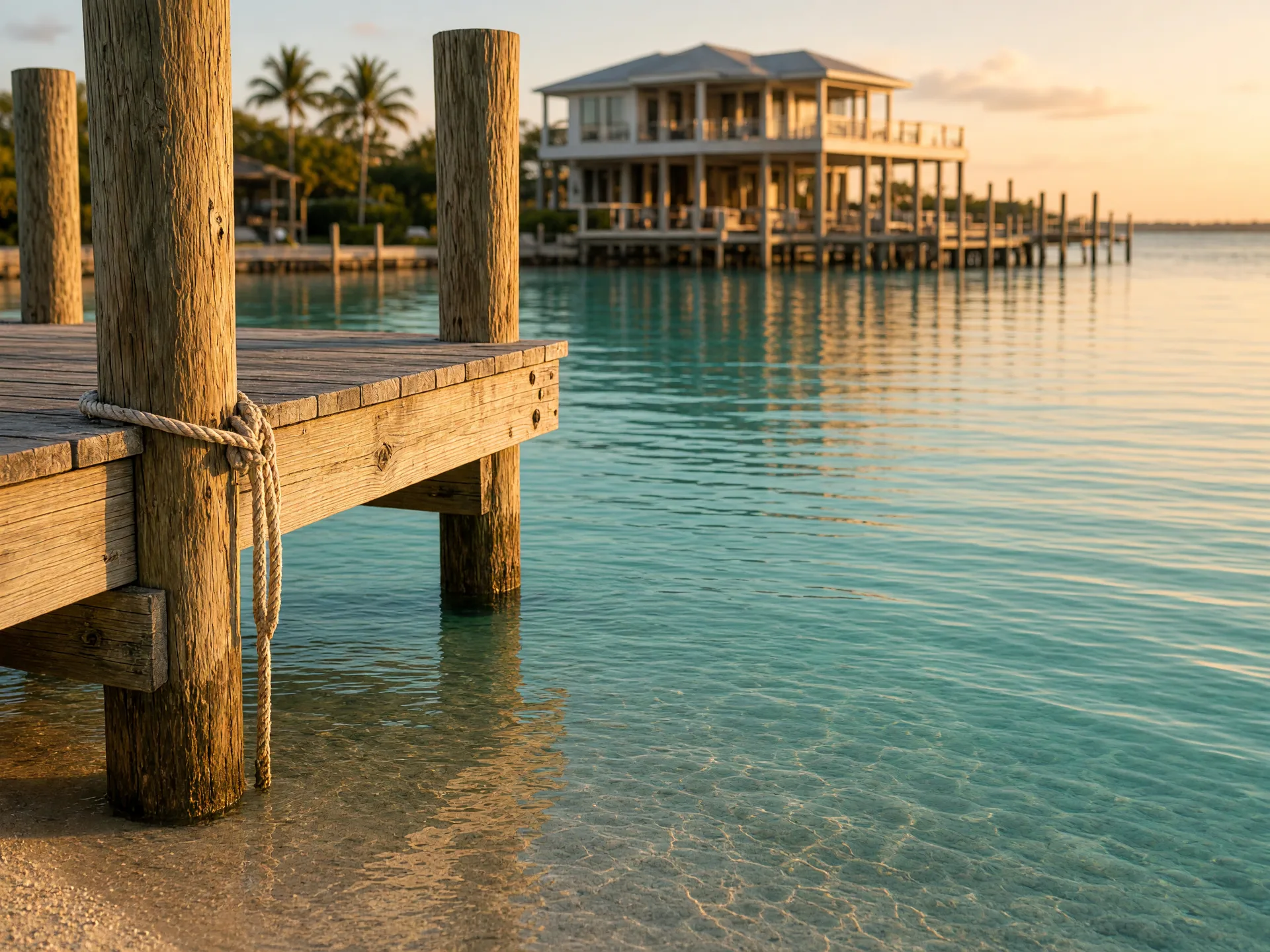
An Existing Dock Is Not a Guarantee
Many buyers treat an existing dock as proof that everything is permitted. It is not. A dock can be decades old, un-permitted, or built under an authorization that has expired. Authorizations can lapse if they go unused, and renewal obligations are real. The mere fact that a dock stands offshore today says nothing about whether you can keep it, repair it, replace it, or legally tie your boat to it tomorrow.
This is one of the quiet traps in the Keys waterfront market. A buyer who pays a premium for dock access, then discovers the dock cannot be legally used or transferred, has bought a view instead of a boating lifestyle. Discovering this before closing is the whole point of the due diligence period. For buyers choosing between communities, my guide to matching Keys communities to your waterfront goals is a useful companion, because dock reliability varies island to island and canal to canal.
How Dock Rights Transfer When You Buy
A dock that sits on private canal bottom generally transfers with the land, because the land itself transfers. A dock that sits over sovereign submerged lands can be a different story. A submerged land lease or letter of consent does not always pass automatically to a new owner. Some authorizations require a change-of-ownership filing with the State, and some must be re-issued or re-assigned. An authorization that was issued to the seller may not name you, and using it without the transfer recorded can put you in violation.
The correct sequence is simple in principle: get the survey, read the title, review the actual permits and any lease, and confirm the transfer path with your attorney before you write the offer. My guide to the pre-offer paper trail for Keys waterfront buyers lists exactly these documents, and dock authorizations belong near the top. Treat a lapsed or untransferred lease as an item to resolve in the contract, never as an afterthought.
When You Want a Dock That Is Not There Yet
If the lot you love has no dock, or the dock that exists is too small or poorly placed, you need to know whether a new one can actually be built. Dock feasibility is highly site-specific in the Keys. Depth, bottom type, shoreline setback, seagrass, and state or county rules all come into play, and the answer can change from one canal to the next. A lot from one listing might build a slip in months, while an identical-looking neighbor lot might face a far longer road.
This is why build-to-suit and rebuild scenarios matter as much as finished homes. A vacant deep-water lot with clean privately owned canal bottom is a different asset from a lot where a new dock would cross sovereign bottom, because the new dock would need its own authorization. When a dated canal cottage is really an opportunity to rebuild, the condition and legality of the existing dock, and whether you can replace it, are as important as the condition of the house. Pair this thought with your planning inside the Keys waterfront due diligence period, and you leave nothing to chance before going under contract.
Your Dock Due Diligence Checklist
Walk every waterfront purchase through this list before you commit:
- Get a current boundary survey that shows the mean high water line and where the dock, lift, seawall, and any walkway actually sit.
- Determine whether the dock crosses state-owned sovereign submerged lands or a privately owned canal bottom, and whether that canal bottom is carried in the title.
- Obtain copies of the dock's actual permits and any authorization, and confirm they are current, not expired or lapsed.
- If a submerged land lease or letter of consent exists, confirm its term, its fees, and whether it names you or can be transferred to you at closing.
- Have your agent and attorney confirm the whole story in county and state records before you make an offer.
If you are buying the home as much for the boating as for the house, weight dock rights heavily. The difference between a turn-key deep-water slip and a dock that must be navigated through the permitting process can be worth six figures. For buyers weighing the value of clean private access, my look at private dockage and deep-water access as an investment explains why the market prices this so highly.
The Value of a Clean Dock Story
When the survey is clean, the title is clear, and the authorizations are current and transferable, the dock becomes a genuine asset rather than a question mark. Buyers pay a premium for that certainty, because it means the boating lifestyle they are actually paying for exists and will not evaporate at closing. A documented deep-water slip is worth measurably more than the same water with a dock nobody can confirm.
This is often the single largest factor that separates two otherwise similar waterfront homes on the same canal. Before you decide, review how the market is pricing waterfront access across the chain in the Keys luxury waterfront market report, then apply those numbers to the specific dock story of the home you are considering. Clean water rights, verified the right way, are the quiet advantage that holds value for decades.
The Bottom Line
The dock is often the crown jewel of a Florida Keys waterfront home, and it deserves the same scrutiny you give the roof. The water under it is either entirely yours or partially the State's, that fact determines what you can do with the dock, and the truth is written in the survey, the title, and the authorization records, never in the pretty photograph in the listing. Buyers who verify dock rights before they offer get the boating lifestyle they paid for. Buyers who skip it find out at the wrong moment.
As a licensed contractor who has evaluated waterfront structure and shoreline access across the Keys for decades, I read dock authorizations, canal plats, and title records the way other agents read paint color, because that is where boating value actually lives. If a waterfront property is on your short list, contact Steve Conley before you commit, and start with the complete Keys waterfront buyer's guide so every structural and title question surfaces before you fall in love with the wrong dock.
Dock rights and submerged land, explained.
Do I own the dock and the water under it when I buy a Florida Keys waterfront home?
It depends on who owns the seabed. Docks in private man-made canals whose bottoms are carried in the title sit on your own land. Docks that extend over state-owned sovereign submerged lands require a state authorization, so you are leasing the water, not owning the bottom. A survey and the title report reveal which situation your dock is in.
Do docks in the Keys have to be on a state bottom lease?
Not always. A small single-family dock over sovereign bottom can often qualify for a letter of consent from the Department of Environmental Protection, while larger or multi-slip structures usually need a submerged land lease. Docks on privately owned canal bottom generally need no bottom lease at all, only the appropriate building and environmental permits.
Why doesn't an existing dock guarantee I can keep using it?
Because an existing dock may be un-permitted, decades old, or built under an authorization that has expired or lapsed. Authorizations can also be non-transferable, or they may not automatically pass to a new owner. You must verify the permits and any lease are current and transferable before you close.
How does a submerged land lease transfer when I buy the home?
Many authorizations do not transfer automatically. A submerged land lease or letter of consent may require a change-of-ownership filing with the State, or it may need to be re-issued to you. Confirm the transfer path with your attorney and have it addressed in the contract before you offer.
What should I verify about a dock before making an offer in the Keys?
Get a current survey showing the mean high water line, confirm whether the dock crosses sovereign or privately owned bottom, review copies of all permits and any lease, and confirm the authorization is current and can be transferred to you. An experienced Keys agent and attorney should confirm the story in county and state records.
Helpful Resources & Related Guides
Complete your Florida Keys buying journey with the deep-water community guides, the dock and due diligence resources, and the buyer's tools that help you verify water access, structure, and value before you make an offer.
Internal Resources
- Key Largo Deep-Water Canal Community Guide
- The Seawall and Dock Inspection Guide for Keys Buyers
- Private Dockage and Deep-Water Access as an Investment
- The Pre-Offer Paper Trail for Keys Waterfront Buyers
- The Complete Buyer's Guide to Keys Waterfront Homes
- Contact Steve Conley About Your Keys Purchase

Steve Conley
Principal, Conley Sales Group at COMPASS, the exclusive Compass office in the Florida Keys. Licensed Sales Associate, Contractor, and Home Inspector with over 30 years and $1.4 billion in career sales serving the island chain.
Full Bio
Thinking About Buying or Selling
in the Florida Keys?
Steve Conley brings 30 years of Keys expertise, $1.4 billion in career sales, and contractor-inspector credentials to every transaction. Let him verify the dock rights, the water access, and the structural story of the property before you commit.
Connect with Steve