
Landscaped for Paradise: How Tropical Grounds and Outdoor Estate Design Build Luxury Value in the Florida Keys
The first thing a buyer sees is not the interior. It is the grounds, and on a luxury Florida Keys waterfront estate, mature tropical landscaping is both an amenity and an investment: privacy now, curb appeal every day, and value that compounds for decades.
Key Takeaways
- On luxury Florida Keys waterfront estates, the grounds are part of the asset: mature native canopy, layered planting, and designed outdoor rooms shape first impressions and resale premiums.
- Salt-tolerant natives such as coconut palms, sea grape, buttonwood, and gumbo limbo thrive in the Keys marine environment with far less water, fertilizer, and care than imported ornamentals.
- Layered landscaping creates the privacy that luxury buyers pay a premium for, screening neighbors and the street while framing water views rather than blocking them.
- Hurricane readiness is a landscaping discipline: properly pruned trees survive storms, while unmaintained canopy creates debris and the exact damage the insurance market punishes.
- Buyers should read the grounds as a maintenance signal, and sellers can treat designed landscaping as one of the highest-return pre-sale upgrades on a Keys estate.
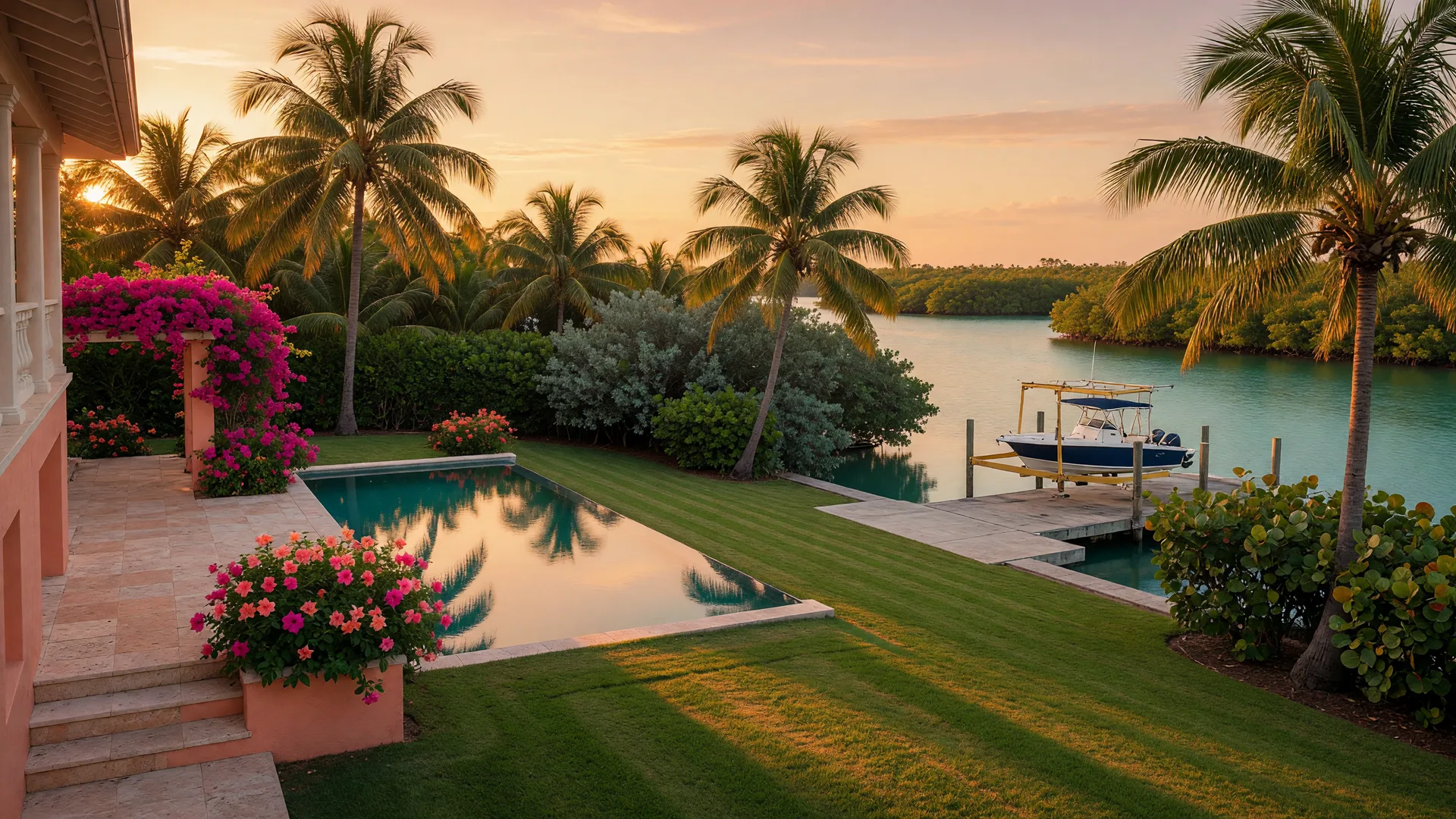
When a discerning buyer first arrives at a Florida Keys estate, the driveway is still moving when the judgment starts. Mature palms framing the entrance. Sea grape hedging softening the seawall. Bougainvillea catching the afternoon light. Long before anyone opens the front door, the landscape has already said what kind of property this is. On luxury waterfront homes, grounds are not a garnish on the investment; they are part of the asset itself, with the power to add privacy, curb appeal, and long-term value that shows up in the resale number.
The Grounds as Part of the Estate
Luxury buyers in the Keys are not shopping for a house in a landscape. They are shopping for a complete place: the home, the dock, the water, and the setting that holds them together. A spectacular elevated residence on a deep-water canal in Islamorada or Key Largo can be undone by a bare, unkempt yard the same way a modest home can be elevated by grounds that feel like a private garden. The landscape is the frame, and in luxury real estate the frame matters as much as the painting.
I see the effect in the market consistently. Two comparable waterfront homes, similar square footage and water access, and the one with mature, designed grounds consistently commands the stronger price and, just as important, sells faster. Buyers feel the difference even when they cannot name it, which is exactly why the best estates treat landscaping as a capital investment rather than a maintenance line item.
Why Native and Salt-Tolerant Planting Wins in the Keys
The Florida Keys are a marine environment, and the plants that thrive here are the ones that evolved for it. Coconuts, sea grape, buttonwood, and gumbo limbo carry the authentic island character and stand up to salt spray, drying winds, and sandy soil far better than most imported ornamentals. A native-driven landscape needs less water, less fertilizer, and less constant replacement, which is not just better for the environment; it is better for the owner's budget and for resale, because a landscape that survives is a landscape that matures, and maturity is where the value is.
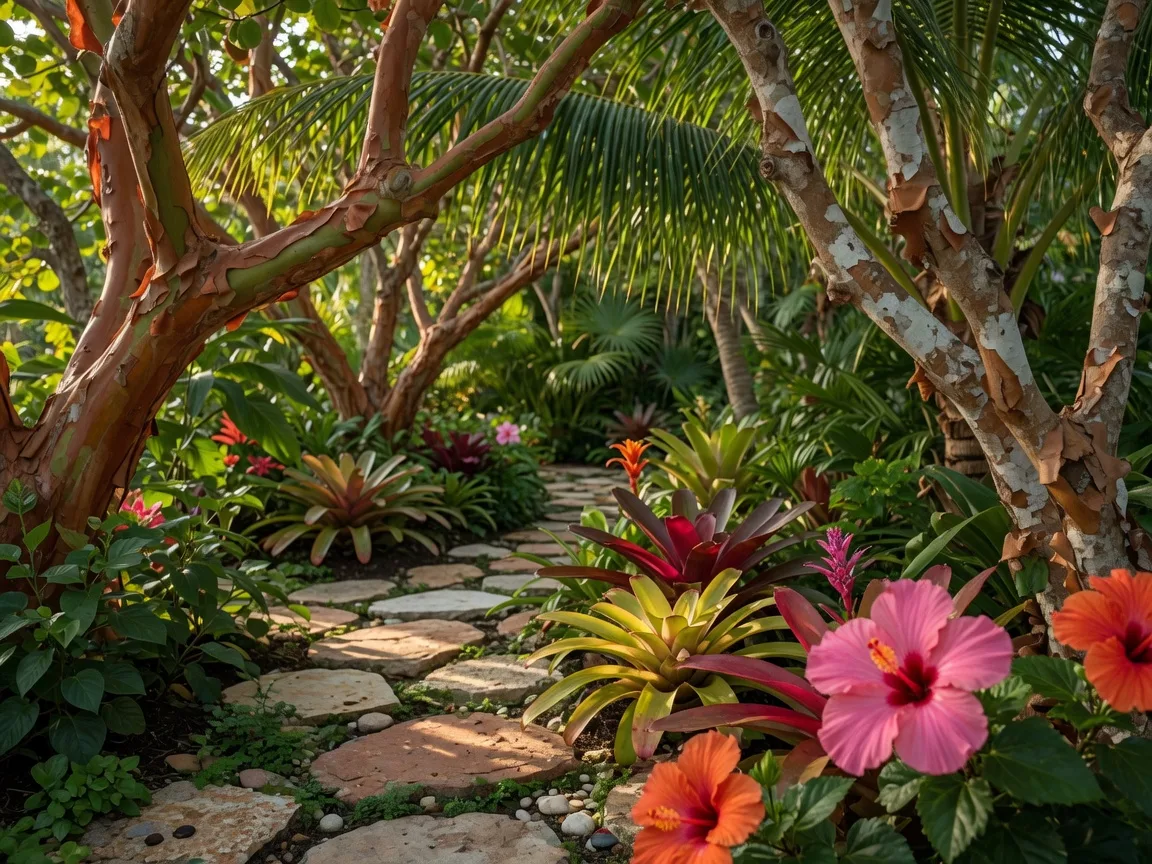
The palette of a great Keys estate is layered: canopy palms overhead, mid-story natives with interesting bark and leaf, and low planting that softens edges without demanding constant attention. The result reads effortless, which is the point of good design. The effort was spent years ago, when the trees went in, and the payoff compounds every season after.
Privacy: The Quiet Luxury That Compounds
A recurring theme in the highest tier of the Keys market is privacy, and landscaping is the tool that buys it. Dense native hedging along property lines, canopy that screens a neighboring roofline, and planting that frames the water view rather than blocking it turn an exposed canal lot into a secluded retreat. Buyers pay a measurable premium for that seclusion, and my guide to privacy and seclusion in Florida Keys waterfront homes digs into why it commands such a premium.
The craft is in the orientation. Screen the street and the neighbors, but open the sight lines to the water. Keep the pools and terraces sunlit while the edges stay shaded. Done well, the landscape gives the owner the feeling of a private island inside the community, which is precisely the experience high-net-worth buyers describe when they fall for a property.
Outdoor Rooms and the Extended Living Area
The grounds are also where the estate's living space continues. Pools, lanais, and outdoor kitchens are the hardscape, and the planting is what turns them into rooms: a hedge that encloses the dining terrace, palms that shade the lounges, bromeliads that soften the pool edge. In the Keys, where outdoor living is the point of ownership, a property with designed outdoor rooms effectively has more usable square footage than its floor plan suggests. My feature on the luxury of waterfront outdoor living covers the hardscape side; this is the living plant side of the same story.
From an investment standpoint, that extended living area changes the comparison. A one-acre waterfront parcel with half an acre of designed, usable grounds competes with larger parcels in the same price band, and often wins, because the buyer experiences a finished place rather than a project. Landscaping is the fastest way to make grounds feel finished.
Hurricane Readiness Is a Landscaping Discipline
Nothing in the Keys resets priorities like a storm season, and landscaping is squarely in the middle of hurricane readiness. A properly pruned mature canopy is far more wind-resistant than an overgrown one, and healthy natives recover quickly, while a neglected yard produces exactly what a storm turns into projectiles and debris. Trimmed palms and sound trees are part of the same risk posture as impact glass and a fortified roof, and my guide to storm-resilient construction and luxury value explains how the whole package reads in the market.
Insurance is the other lens. Carriers and inspectors look at the property as a system, and a landscape management plan, pruning records, and a clean, well-spaced canopy support the story that the estate is a low-maintenance, low-risk asset. In a market where wind and flood insurance shape carrying costs, a defensible landscape is a financial feature, not a cosmetic one.
What the Grounds Tell a Buyer (and a Seller)
As a contractor and inspector, I read the landscape before I read the roof. Overgrown vegetation touching the structure is a routine inspection finding because it traps moisture against siding and roofs. Dead or leaning canopy near the home is a wind risk. But the reverse is also true: an estate with disciplined grounds signals an owner who maintained everything, because nobody who ignores the yard maintains the seawall. Landscaping is a proxy for the whole property, and savvy buyers use it that way.
For sellers, designed landscaping is one of the highest-return pre-sale investments on a Keys estate. Strategic palms, mature hedging, and a refreshed entry read in the first five seconds of the first showing, and they photograph beautifully, which matters in a market where out-of-state buyers make decisions from a screen. Before you repaint the interior, consider what the arrival sequence says about the property.
Reading Value in the Whole Estate
When I walk a property with buyers, we take the same route a future guest would: the entry, the grounds, the dock, and then the house. That sequence is the buyer's experience, and the market prices it. A complete Keys estate is architecture, marine infrastructure, and landscape working as one, which is why my guide to the architecture of luxury in the Florida Keys and the current Keys luxury market report both treat the setting as part of the story.
The bottom line for buyers: judge the landscape with the same rigor you judge the seawall. For sellers: treat the grounds as an appreciating asset, because a landscape that matures for a decade is a different property from the one that was sold. Paradise is not just the water. It is the ground that leads to it.
The Bottom Line
Tropical grounds and outdoor estate design are not decoration on a Florida Keys luxury waterfront home. They are durable, appreciating assets that deliver curb appeal every day, privacy from the moment the planting matures, and hurricane-ready discipline that supports both insurance and resale. The estates that hold their value through market cycles are complete places, and the landscape is a third of that completeness.
If you are evaluating a Keys estate or preparing one for sale, contact Steve Conley. With contractor and inspector credentials and thirty years on the island chain, he reads the whole property: the home, the water, and the grounds that connect them.
Landscaping and estate value, answered.
Does landscaping really move the needle on a luxury Keys waterfront sale?
Yes, and it moves two needles: price and time on market. Comparable waterfront homes with mature, designed grounds consistently sell for more and sell faster, because buyers feel the difference in the first seconds of a showing and see it in every photograph.
Which plants hold up best in Florida Keys salt air?
Salt-tolerant natives lead the list: coconut palms, sea grape, buttonwood, and gumbo limbo. They thrive in the marine environment with less water and fertilizer than imported ornamentals, which means a landscape that survives and matures instead of one that has to be replaced.
What landscaping mistakes hurt resale value on a Keys estate?
Vegetation touching the structure (which traps moisture and shows up in inspections), canopy that blocks the water views the property is priced for, and bare, unkempt grounds that signal deferred maintenance. Overgrowth near the house also reads as a wind risk in the storm season.
How should estate grounds be prepared before hurricane season?
Prune the canopy properly so mature trees shed wind, remove dead or leaning growth near the structure, clear debris that becomes projectiles, and keep the landscape under control so it supports the property's insurance posture rather than working against it.
Is investing in landscaping worth it before selling a Keys waterfront home?
For most estates, yes. Strategic palms, mature hedging, and a refreshed entry make the strongest first impression of the entire listing, photograph beautifully for out-of-state buyers, and are typically among the highest-return pre-sale upgrades available.
Helpful Resources & Related Guides
Understand how the complete Keys estate works: the community guides, the value drivers, the outdoor living features, and the market report that put landscaping in context.
Internal Resources
- Islamorada Luxury Waterfront Community Guide
- The Luxury of Waterfront Outdoor Living in the Keys
- Privacy and Seclusion as Hidden Luxury Value
- Storm-Resilient Construction and Luxury Value
- The Six Drivers That Set Luxury Waterfront Prices
- The Florida Keys Luxury Market Report
- Contact Steve Conley About Keys Luxury Estates

Steve Conley
Principal, Conley Sales Group at COMPASS, the exclusive Compass office in the Florida Keys. Licensed Sales Associate, Contractor, and Home Inspector with over 30 years and $1.4 billion in career sales serving the island chain.
Full Bio
Thinking About Buying or Selling
in the Florida Keys?
Steve Conley evaluates the complete estate: the architecture, the marine infrastructure, and the grounds. Thirty years in the Keys, $1.4 billion in career sales, and contractor-inspector credentials on every showing.
Connect with Steve