
The Architecture of Luxury in the Florida Keys: From Old Island Vernacular to Modern Waterfront Estates
The homes of the Florida Keys are more than beautiful. Their architecture carries the story of the islands, and the right design is one of the strongest drivers of waterfront value.
Key Takeaways
- Old Island Vernacular, or Conch-style, homes are the signature architecture of the Florida Keys: wood-frame, raised, with steep metal roofs, verandas, louvered shutters, and gingerbread trim.
- Hurricane Andrew in 1992 transformed Keys building standards, and today's elevated stilt homes and modern estates are engineered for high-velocity wind and storm surge.
- Architecture is a value driver: elevation, impact glazing, metal roofs, and build quality translate directly into durability, insurance cost, and resale appeal.
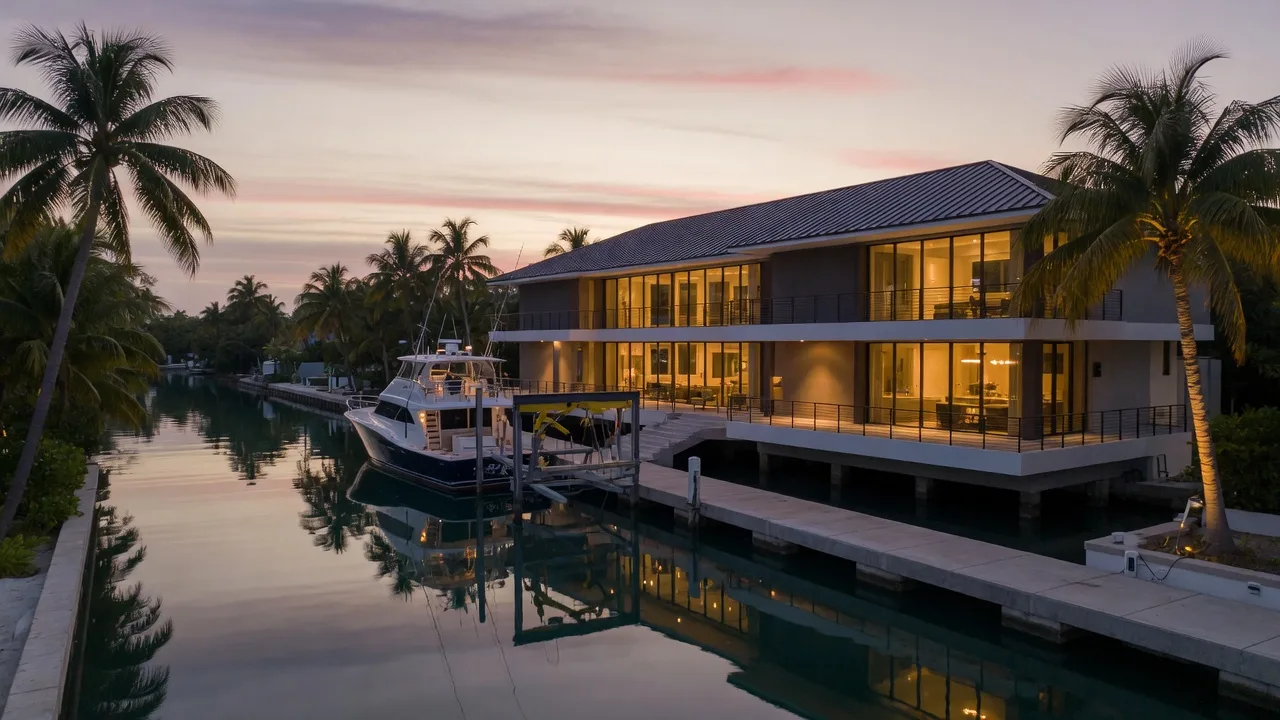
- Modern coastal estates reinterpret the vernacular with metal roofs, deep shade porches, and raised living levels, blending island tradition with contemporary luxury.
- Before you buy, verify the elevation certificate and building records: the architecture that looks beautiful should also be built to the current standard.
There is no architecture quite like the architecture of the Florida Keys. The island homes rise above the water on pilings, wear metal roofs that catch the afternoon light, and open their shaded porches to the sea breeze. For luxury buyers, that design is not just aesthetic. The way a Keys home is built determines how it survives the climate, how much it costs to insure, and how much it will be worth in twenty years. Here is what makes the architecture of the Keys so distinctive, and why it matters so much to value.
Old Island Vernacular: The Signature Style of the Keys
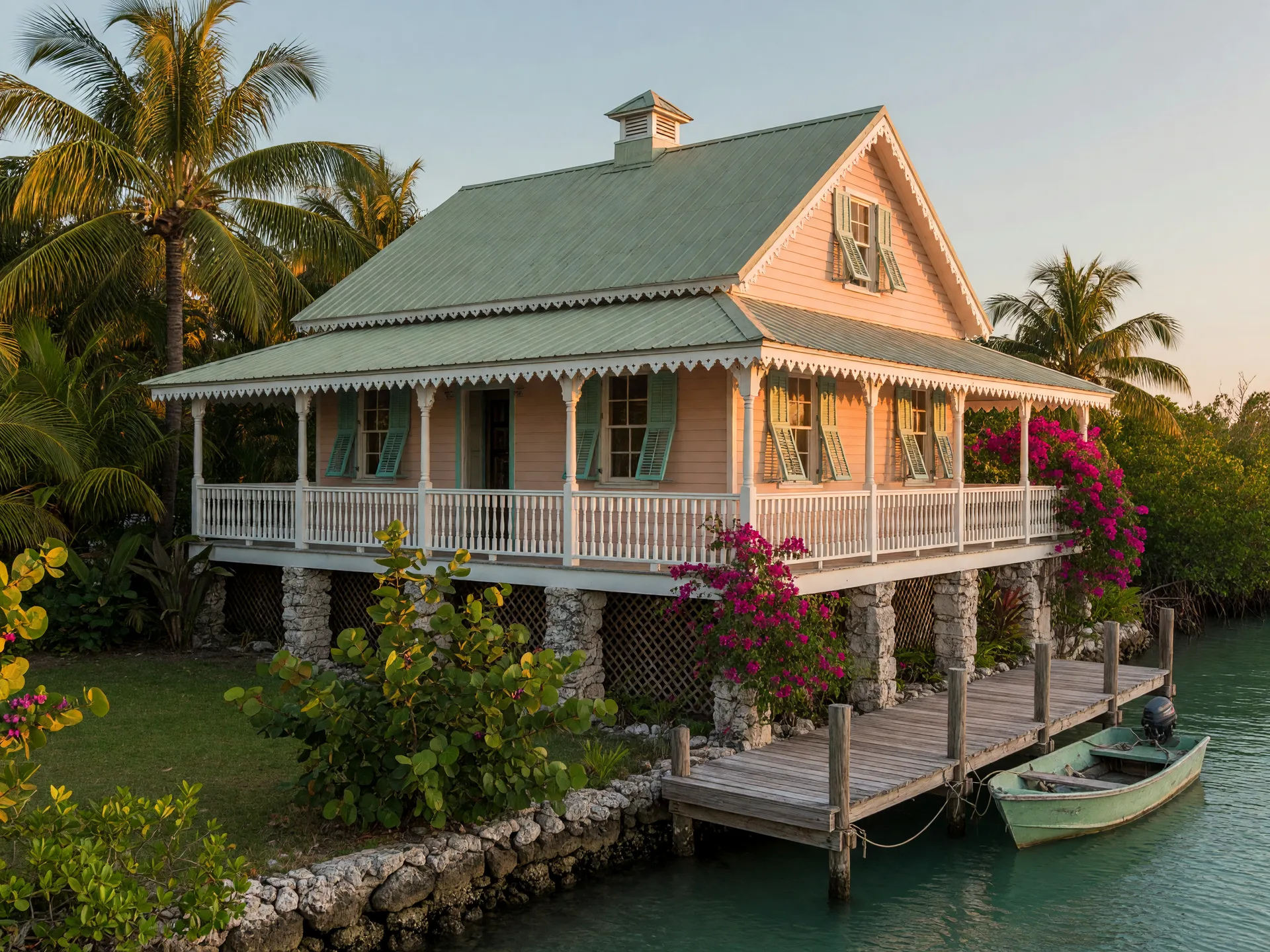
The most iconic architecture of the Florida Keys is the Old Island Vernacular, often called the Conch house. Brought by Bahamian shipbuilders and woodworkers, it is a wood-frame style defined by its relationship to a hot, salty, storm-prone climate. A classic Conch home is raised on posts or stone piers so air and water can move beneath it, wrapped in a full-width veranda or wraparound porch for shade, and topped with a steep metal, or tin, roof that sheds rain and heat. Louvered wooden shutters, tall doors, and decorative gingerbread trim complete the picture. Traditional homes were often framed in Dade County pine, a dense, rot-resistant wood prized by the craftsmen who built them.
The genius of the style is that every detail does real work. The raised floor keeps floodwaters below the living space. The porch shades the walls and catches the breeze. The metal roof reflects the sun and lasts for decades in the salt air. When you see a beautifully restored Conch-style home on a canal in the Upper Keys, you are looking at centuries of practical wisdom rendered as beauty. Those homes carry real market value for exactly that reason, and they are increasingly rare.
How Hurricane Andrew Changed the Way the Keys Build
If the Conch house is the island's heritage, Hurricane Andrew in 1992 is the turning point in its modern building story. The storm destroyed thousands of homes across South Florida and exposed the weakness of the local building codes that had been in place. The result was a transformation: first the high-velocity hurricane zone standards for South Florida, and later the statewide Florida Building Code in 2002, which unified the rules and required hurricane-force wind resistance, shutters or impact glazing, and stronger connections throughout the structure.
The Florida Keys are among the most demanding building environments in the country, and Monroe County enforces some of the strictest standards, driven by the island chain's extreme exposure and limited evacuation routes. Modern waterfront homes in the Keys are typically elevated on pilings or concrete columns so storm surge passes beneath the living floor, and every opening must be protected with impact-resistant glazing or approved shutters. In practice, this means the elevated stilt home, once a necessity, has become the canvas for some of the most striking luxury architecture in the country. My analysis of storm-resilient construction and luxury value explains how build quality becomes an investment decision.
The Modern Coastal Estate: Vernacular Ideas, Contemporary Luxury
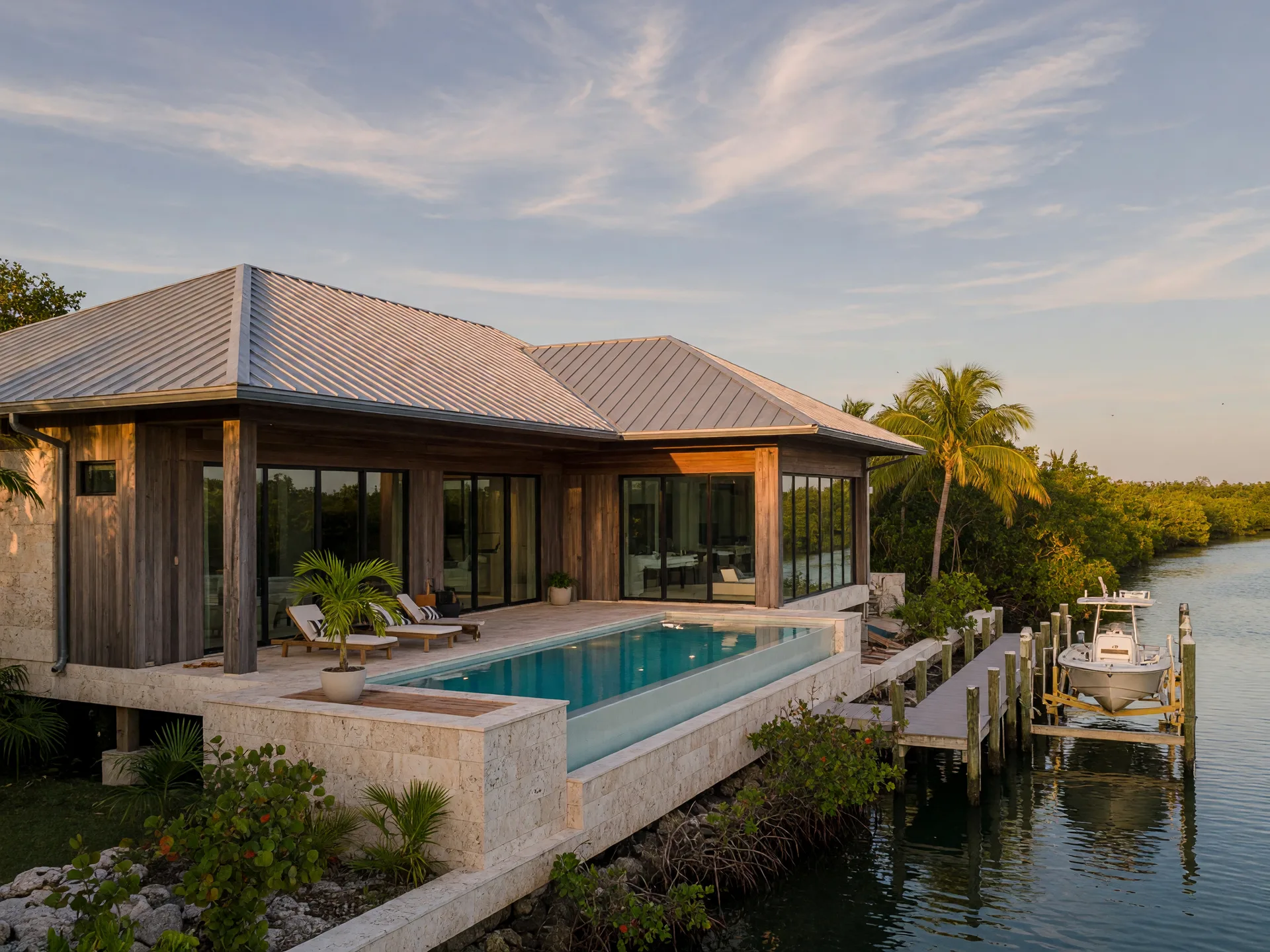
Today's luxury waterfront estates in the Keys take the old island lessons and render them in a contemporary language. The best modern homes keep the metal roof and the deep shade porch, the raised living level and the connection to the water, then add floor-to-ceiling impact glass, natural stone and cypress, resort-style pools, and outdoor kitchens. The result is a home that feels both timeless and unmistakably current, and it commands some of the highest prices in the market.
These homes are prized not only for their looks but for what their construction represents. A well-built modern estate carries a lower risk profile, which shows up in insurance, maintenance, and resale. Buyers who understand construction can read the difference between a home that merely looks elevated and one that is engineered, detailed, and documented. That is where a licensed contractor and home inspector who is also your agent changes the conversation, which I describe in my guide to how elevation drives luxury value in Keys waterfront homes.
Why Architecture Is a Value Driver
In the Florida Keys, architecture is not decoration; it is infrastructure. Elevation determines flood insurance and storm safety. Impact glazing and shutters determine wind resilience. A metal roof and properly detailed openings determine how a home performs through decades of salt air and sun. Buyers who pay attention to these details are buying durability, and durable homes hold their value through market cycles. This is part of what separates a trophy waterfront property from a merely pretty one.
The clearest expression of this is the elevation certificate, the document that records how your lowest floor sits relative to base flood elevation, and the building records that show when and how the home was constructed. A home built to the current standard, with the paperwork to prove it, is a stronger asset than an older structure of equal beauty. When you are comparing estates, the architecture you admire from the dock should also be the architecture you can verify from the records.
What Luxury Buyers Should Look For
When you tour a luxury Keys waterfront home, look at the architecture with both eyes open. Ask about the construction date and the code it was built under. Check the elevation certificate against the flood zone. Confirm that every opening has impact protection, and that the roof is a material suited to the marine environment. Walk the underside of the structure and look at the pilings, the connections, and the corrosion. My complete Florida Keys market report gives you the price context, and the buyer's guide walks through evaluation from dock to roofline.
The good news is that the market rewards the homes that get this right. Whether you are drawn to the warmth of a restored Conch-style home or the clean lines of a modern coastal estate, the architecture of the Florida Keys offers a richness few places can match. It is heritage, engineering, and luxury all built on the same ground, and it is one of the reasons waterfront living here is so coveted.
Old and New, Side by Side
One of the most appealing things about the Keys is that both worlds sit side by side along the same canals. On a single street in the Upper Keys you can find a lovingly restored Conch-style cottage, a mid-century stilt home, and a brand-new coastal estate, and each one has its own character and its own buyer. The choice is not about which is better; it is about which matches your life. Some owners want the warmth and history of the vernacular, while others want the open plan and modern systems of a new build.
What they share is the discipline the climate demands. Every serious Keys home, whatever its style, is elevated, protected, and built to shed sun, salt, and wind. That common language is exactly what makes the architecture here so confident. It is not decorative excess; it is purpose made beautiful, and that combination is rare in the luxury market. When you find it, you are not just buying a house, you are buying a piece of the islands' story.
The Bottom Line
The architecture of the Florida Keys is a story told in wood, metal, and glass, from the Bahamian-influenced Conch house to the elevated modern estate. It is also a financial story, because the way a home is designed and built drives how it endures, how it insures, and how it appreciates. For luxury buyers, understanding that story is the difference between buying a beautiful house and buying a lasting asset.
If you are considering a luxury waterfront property in the Keys and want an agent who reads architecture the way a contractor does, contact Steve Conley at (305) 393-5859. As the Principal of the Conley Sales Group at COMPASS, with contractor and inspector licenses and three decades of Keys transactions, he can help you find an estate built to last.
Keys architecture, answered.
What is an Old Island Vernacular home?
Old Island Vernacular, or Conch-style, is the signature architecture of the Florida Keys: a wood-frame home raised on posts or piers with a steep metal roof, wraparound veranda, louvered shutters, and gingerbread trim, brought by Bahamian shipbuilders and craftsmen.
Why are Florida Keys homes elevated on pilings?
Elevation keeps the living floor above storm surge and floodwaters, which is the deadliest hazard in the Keys. Modern codes require homes to be elevated and openings to be protected, so the raised design is both tradition and engineering.
How did Hurricane Andrew change Keys building codes?
Andrew in 1992 exposed the weakness of local codes and led to stronger South Florida standards, followed by the statewide Florida Building Code in 2002, which unified rules and required hurricane-force wind resistance and impact protection for openings.
Does architecture affect the value of a Keys waterfront home?
Yes. Elevation, impact glazing, metal roofs, and build quality drive durability, insurance cost, and resale appeal. A home built and documented to the current standard is a stronger long-term asset.
What documents should I review before buying a Keys waterfront estate?
Review the elevation certificate, the flood zone designation, construction date and building records, impact-window documentation, and the condition of the pilings, roof, and marine infrastructure before you commit.
Helpful Resources & Related Guides
Build your Florida Keys luxury library with the community guides, the construction and evaluation resources, and the market data that help you read an estate the way an expert does.
Internal Resources

Steve Conley
Principal, Conley Sales Group at COMPASS, the exclusive Compass office in the Florida Keys. Licensed Sales Associate, Contractor, and Home Inspector with over 30 years and $1.4 billion in career sales serving the island chain.
Full Bio
Thinking About Buying or Selling
in the Florida Keys?
Steve Conley brings 30 years of Keys expertise, $1.4 billion in career sales, and contractor-inspector credentials to every estate evaluation. Let him help you find architecture built to last.
Connect with Steve