
Understanding ROGO and Building Allocations Before You Buy in the Florida Keys: A Buyer's Guide to Monroe County's Development Caps
Before you fall in love with a vacant waterfront lot or a dated canal cottage, you need to understand ROGO. The Rate of Growth Ordinance controls what can be built, where, and when across the Florida Keys, and it quietly drives value in ways most buyers never expect.
Key Takeaways
- ROGO, the Rate of Growth Ordinance, caps how many new residential building permits Monroe County can issue, because hurricane evacuation capacity on the Overseas Highway limits how many homes the Keys can hold.
- A vacant waterfront lot must compete for a building allocation, while a lot with an existing legally permitted structure is ROGO-exempt, which is exactly why dated, small canal homes carry so much of their value in the land and the permit rights.
- Allocation status is a due diligence item: used, reserved, retired, or recorded with conditions all mean different things, and the county and title records must be verified before you make an offer.
- ROGO scarcity is a value driver: limited new supply, deep-water waterfront access, and buildable land are why the Keys waterfront market holds its value, but the rules differ by community, including Marathon's separate allocation system.
- An experienced Keys agent verifies the ROGO story before you commit, because a misunderstanding about buildability can change a dream lot into a costly lesson.
ROGO stands for the Rate of Growth Ordinance, and it is the single most important land-use rule in the Florida Keys. It limits how many new residential building permits Monroe County can issue each year, which shapes the value of every waterfront parcel from Key Largo to Big Pine Key. For buyers, the practical question is simple: does the property you are considering already carry the right to build, or does it need to compete for one? This guide explains how ROGO works, why it exists, and exactly what to verify before you make an offer on a Keys waterfront property.
What ROGO Is and Why It Exists
The Florida Keys is designated an Area of Critical State Concern, a status that recognizes how fragile the island chain is. ROGO, adopted by Monroe County in 1992, is the county's way of managing that fragility. Because US-1 is the only road out of the Keys, hurricane evacuation capacity sets a ceiling on how many people the islands can safely hold. New development must respect that ceiling, so the county allocates a fixed number of new residential building permits each year rather than letting anyone build anywhere at any time.
The result is a system that feels foreign to buyers from the mainland. In most of Florida, if you own a buildable lot, you pull a permit and build. In the Keys, a vacant lot is only the beginning. You also need a building allocation, and allocations are scarce, competitive, and distributed on a schedule with a points-based ranking. This is not paperwork noise. It is the mechanism that keeps 120 miles of islands from becoming one long strip of rooftops, and it is the reason the Keys still feel like the Keys.
How Building Allocations Work
Each year the state and county agree on how many new dwelling-unit allocations will be issued, and a share is reserved for affordable housing while the rest is available to the open market. Applicants do not simply apply for a permit. They apply for an allocation and are ranked by points, with the highest-ranked projects awarded on a recurring basis through the year.
The points system rewards land that is already served by infrastructure and penalizes sensitive land. A buildable lot on a developed canal scores differently from a lot that would require new services or sits in a fragile area. There are subareas within the framework, and some communities have their own layers on top of it. Marathon, for example, runs its own building permit allocation system where transferable building rights can be bought and sold, while a place like Key Colony Beach has every lot already carrying its allocation. When you work across the whole Keys, the variation from community to community is real, and your agent needs to know which set of rules applies to the property you are considering.
Why ROGO Matters More to Waterfront Buyers
Waterfront buyers feel ROGO most acutely because waterfront land is where the scarcity bites hardest. The number of deep-water canal lots, open-water parcels, and bayside estates is fixed, and ROGO guarantees that the supply cannot grow quickly. A canal-front lot that already has the right to build is a fundamentally different asset from one that is still waiting in the allocation queue, and the market prices that difference.
This is one of the quietest reasons the Keys waterfront market holds value across economic cycles. New construction cannot flood the market the way it can on the mainland, because new supply is capped by statute. That structural argument plays out in every community, from the deep-water canals of Key Largo and Islamorada to the protected basins of the Lower Keys. For a buyer, it is part of why the asset class endures. It also means timing matters: the same deep-water lot can be a patient investment or a years-long wait, depending entirely on its ROGO status.
The Critical Distinction: Homes With an Existing Structure
Here is the rule that surprises most out-of-state buyers. A parcel with an existing, legally permitted residential structure is ROGO-exempt. The dwelling unit is already counted, and its allocation rights transfer with ownership. That means you can buy a small, dated 1960s canal cottage, tear it down, and rebuild a modern elevated waterfront home without entering the ROGO competition, because the unit itself carries the allocation.
This single rule explains a lot about the Keys market, including why older canal homes sell for what they do. When you pay for a dated home, a meaningful share of the price is the land, the water access, and the permit rights attached to it. My guide to buildable waterfront land and the ROGO permit system looks at the investment side of this dynamic, and it is one of the reasons scarce land is so prized here.
Vacant Waterfront Lots: The Allocation Question
If the property you love is vacant, the allocation question moves to the center of the deal. Does the lot hold an allocation today? If not, it must compete in the county's allocation process, and that process is not a formality. It takes time, it is competitive, and it is not guaranteed. A buyer who assumes a vacant waterfront lot is buildable tomorrow is making one of the most expensive mistakes in the Keys market.
The right move is to verify before you offer. Ask whether the lot carries an allocation, what its status is, and how the allocation would transfer. Ask whether the parcel has ever been permitted and whether any previous permits expired, because an expired permit can mean the allocation must be re-earned. Then have your agent and attorney confirm the story in county and title records.
Allocations, Deeds, and Due Diligence
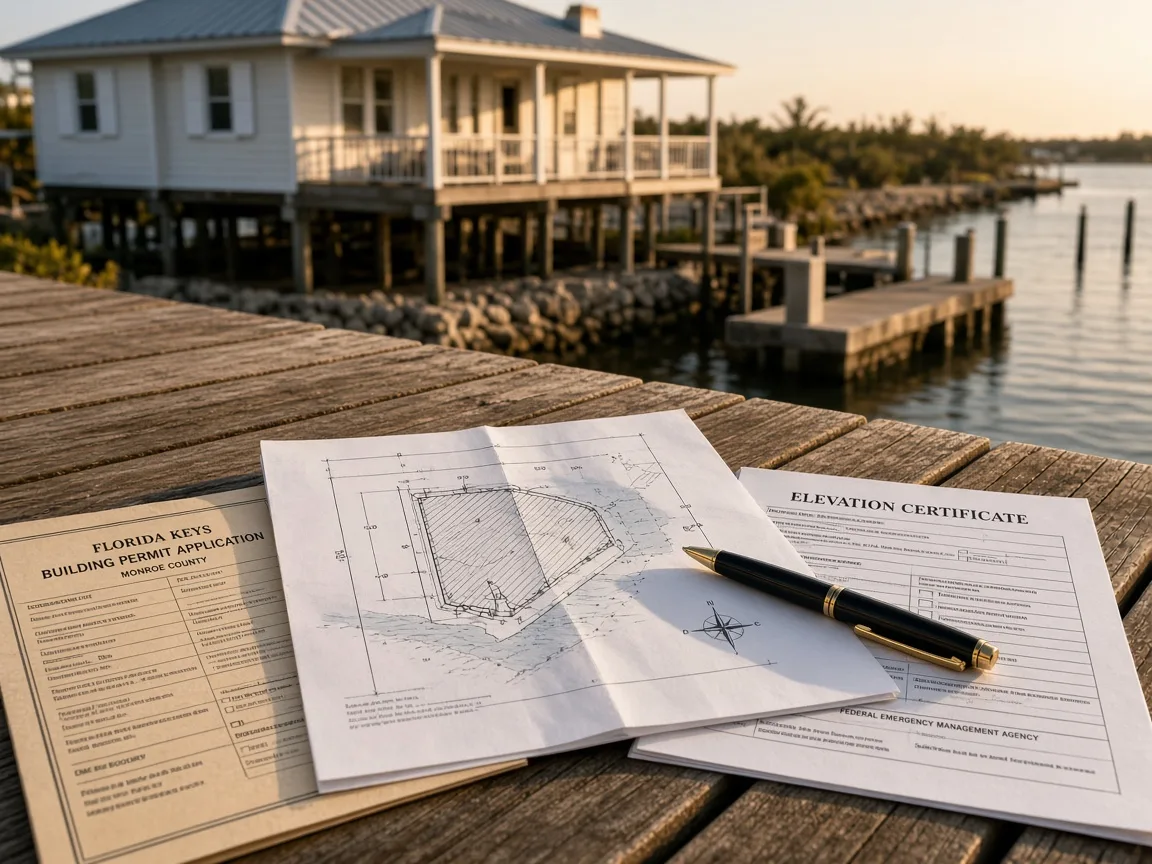
Allocation status follows the land, which means it is a title question as much as a zoning question. Some allocations are recorded against the deed, some are reserved, some have been retired, and some carry conditions attached to prior permits. The details live in county records that are publicly available, but they require someone who knows how to read them.
Your pre-offer work should include exactly this kind of digging. My guide to the pre-offer paper trail for Florida Keys waterfront buyers walks through the documents to gather before you write an offer, and the ROGO status of the parcel belongs on that list in bold. A seller's listing may describe a lot as buildable, but buildable is only true if the allocation exists and can transfer.
How ROGO Shapes Value and Timing
Scarcity is a value driver, and ROGO is manufactured scarcity in the best sense: deliberate, legal, and durable. Supply is capped, demand for waterfront keeps arriving, and the price floor for the right property stays firm. Buyers who understand this can use it. A property with a clean, transferable allocation and deep-water access is worth more per square foot of land than almost anything else in the Keys, and it will not be joined by much new competition.
Timing is the other half of the equation. If you are buying to hold or to build within a defined window, the allocation status decides whether that window is realistic. Buyers comparing communities across the chain can explore the current market context in the Keys luxury waterfront market report, which tracks inventory and pricing at the community level. Pair that data with the ROGO facts for each specific lot, and you have a clear, honest picture of what you can build and when.
Questions to Ask Before You Offer
When a ROGO-sensitive property crosses your desk, walk through these questions with your agent:
- Does this parcel carry a building allocation today, and what is its recorded status?
- If the lot is vacant, how long does the allocation process realistically take, and how competitive is it?
- If there is an existing structure, is it legally permitted, and does the allocation transfer cleanly with the deed?
- Have any prior permits expired, and would the allocation be lost or need to be re-earned?
- Which community's rules apply, and are there local layers such as Marathon's transferable building rights or a Key Colony Beach allocation on the lot?
- Does the property raise any flood, elevation, or coastal construction line questions that would complicate a new build?
The Bottom Line
ROGO is not a footnote to the Keys buying process. It is the spine of it. The difference between a lot that can be built on next year and one that waits in a queue for years is often the difference between a good investment and a long lesson, and the difference is discoverable before you offer. The buyers who do best in the Keys treat allocation status as a core feature of the property, right alongside dock depth and seawall condition.
As a licensed contractor and inspector who has worked the Keys for decades, I read permits and allocation records the way other agents read floor plans. If you are looking at a waterfront lot or a dated canal home with rebuild potential, contact Steve Conley before you commit, and start with the complete Keys waterfront buyer's guide to see how every piece of the process fits together. The right property, verified the right way, is out there waiting.
ROGO and building allocations, explained.
What does ROGO mean for Florida Keys home buyers?
ROGO, the Rate of Growth Ordinance, caps how many new residential building permits Monroe County can issue, which means a vacant lot is not automatically buildable. Buyers must verify whether a parcel already carries a building allocation or will have to compete for one in the county's allocation process.
Can I tear down an old Florida Keys canal home and rebuild?
Usually, yes. A lot with an existing legally permitted structure is ROGO-exempt, because the unit already exists and its allocation rights transfer with ownership. That is why dated, small canal homes often sell at a premium: you are buying the land, the water access, and the right to rebuild without entering the allocation queue.
Is every Florida Keys community subject to the same ROGO rules?
No. The county framework applies broadly, but communities add their own layers. Marathon runs its own allocation system with transferable building rights, Key Colony Beach lots generally carry their allocations already, and subareas within the county rank applicants differently, so local rules must be checked for each property.
How do I verify a lot's building allocation before making an offer?
Work with an agent and attorney who know the Keys. Allocation status is recorded in county and title records, and it can read as used, reserved, retired, or recorded with conditions. Prior permits that have expired can affect the allocation, so the records review needs to cover permits, not just the deed.
Why do vacant waterfront lots still sell at high prices in the Keys?
Because waterfront land itself is scarce and ROGO guarantees supply cannot grow quickly. A deep-water lot with a clean transferable allocation is among the rarest assets in the Keys, and buyers pay for that scarcity, whether they build now, rebuild later, or simply hold the parcel.
Helpful Resources & Related Guides
Complete your Florida Keys buying journey with the community guides, the due diligence resources, and the buyer's tools that help you verify buildability, water access, and value before you make an offer.
Internal Resources

Steve Conley
Principal, Conley Sales Group at COMPASS, the exclusive Compass office in the Florida Keys. Licensed Sales Associate, Contractor, and Home Inspector with over 30 years and $1.4 billion in career sales serving the island chain.
Full Bio
Thinking About Buying or Selling
in the Florida Keys?
Steve Conley brings 30 years of Keys expertise, $1.4 billion in career sales, and contractor-inspector credentials to every transaction. Let him verify the ROGO story, the water access, and the buildability of the property before you commit.
Connect with Steve