
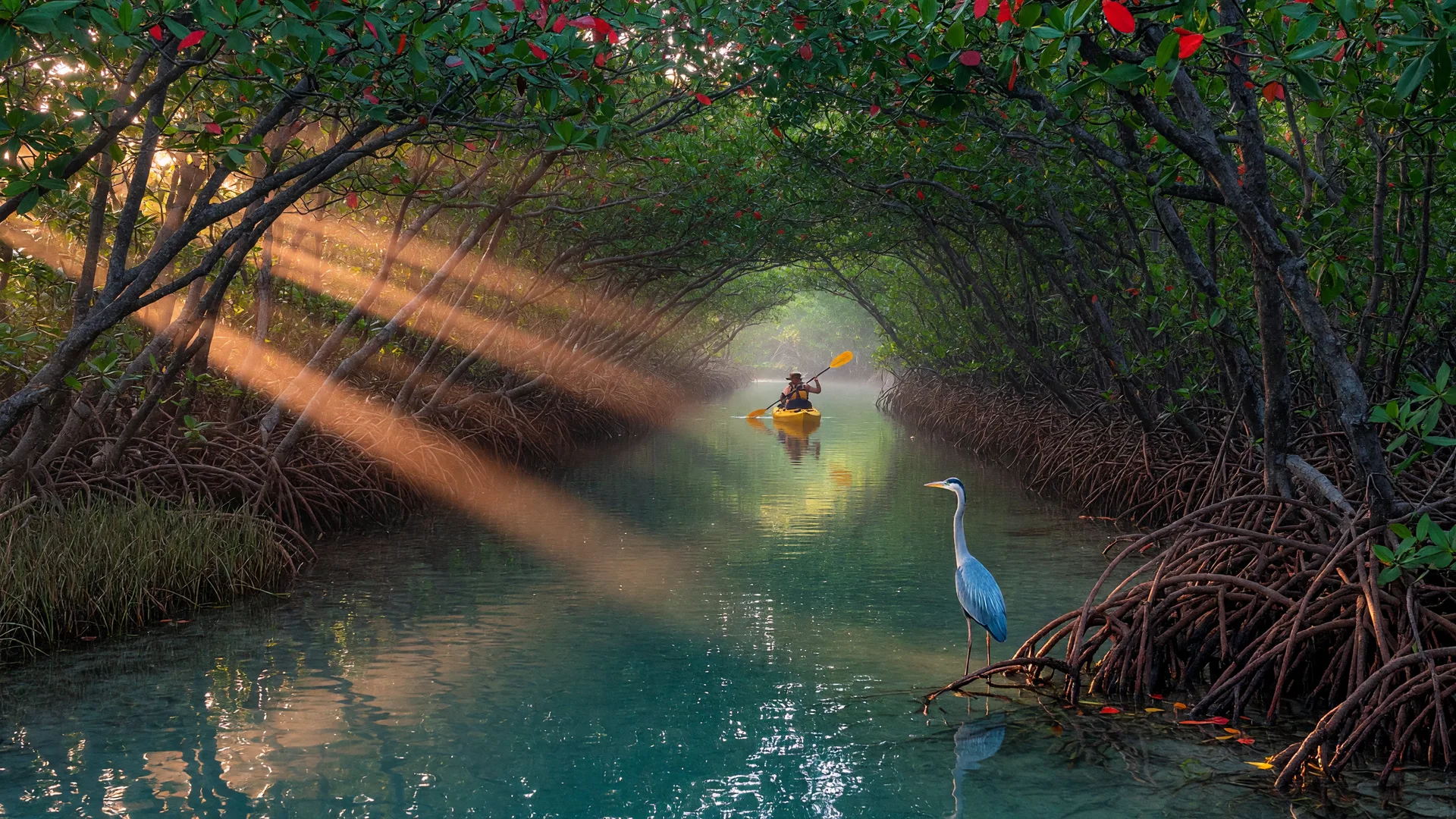
Kayaking and Paddling the Upper Florida Keys: A Local's Guide to Quiet Water and Island Days in Key Largo and Islamorada
The Upper Keys hide a whole world of quiet water: mangrove tunnels, glassy backcountry flats, and wildlife that you can only reach by paddle. Here is how locals and residents get out on the water.
Key Takeaways
- John Pennekamp Coral Reef State Park in Key Largo, the first undersea park in the country, offers calm protected water, mangrove tunnels, and a marked paddling trail of roughly 2.5 miles.
- Islamorada paddlers launch from Green Turtle Hammock Nature Preserve and Library Beach Park to explore the Little Basin mangroves and paddle out toward historic Indian Key.
- The wildlife is the draw: manatees, sea turtles, tarpon, nurse sharks, stingrays, and wading birds all share the backcountry, and the best sightings come early and on the right tide.
- A waterfront home with canal access turns paddling into an everyday amenity: you can launch from your own dock and be in the mangroves within minutes.
- Paddling is one of the most honest ways to understand a Keys neighborhood before you buy, because it shows you the water, the shoreline, and the wildlife that define daily life.
The Florida Keys are famous for boats, but the most intimate way to experience the water is from a kayak or paddleboard. In the Upper Keys, the same mangrove shorelines that make the fishing world-class also shelter a network of tunnels, flats, and backcountry pockets where the pace slows to the speed of your paddle. This is a guide to the best paddling in Key Largo and Islamorada, and to how the quiet-water lifestyle fits into living here.
I have spent more than three decades on and around Keys water, and I still believe a morning paddle is the fastest way to fall in love with an island. It is also, quietly, one of the most useful tools a buyer has: paddling a neighborhood shows you the water's character, the shoreline's health, and the wildlife you will wake up to. Consider it part of due diligence, with a better view than any spreadsheet.
Why the Upper Keys Is a Paddler's Paradise
The Upper Keys sit behind the reef, which means the water on the bayside and along the backcountry is protected from open-ocean swells. That protection creates the glassy, shallow flats and mangrove-lined channels where paddling is at its best. Add the seagrass meadows that anchor the entire ecosystem, and you have a quiet-water network that stretches from Key Largo through Tavernier and into Islamorada.
The same water supports the boating and fishing culture of the Upper Keys, and our boating and fishing lifestyle guide explains why this part of the chain is so central to the Keys identity. Paddling is simply the human-powered version of that same life, and it needs no dock reservation, no fuel, and no engine noise.
John Pennekamp Coral Reef State Park: Key Largo's Quiet-Water Classic
Pennekamp is the first undersea park in the United States, and its roughly 70 square nautical miles of protected waters make it the anchor of the Keys paddling map. Most visitors know it for the reef trips, but the park's bayside waters hold some of the most beautiful mangrove paddling in the chain. There is a marked paddling trail of about 2.5 miles, and the calm currents and clear water make it a genuinely forgiving place for first-timers and families.
Kayaks, paddleboards, and canoes are available at the park through the on-site concession, and the mangrove tunnels off the main channels are the highlight. Paddle slowly, let the tide carry you, and keep your eyes on the shallows: juvenile tarpon, rays, and small turtles all hold along the mangrove edges. The park is part of what makes Key Largo the gateway to the Keys lifestyle, and it is a ten-minute drive from many of the island's waterfront neighborhoods.
Islamorada: Little Basins, Big Wildlife
A few miles down the road, Islamorada's paddling centers on its preserved green spaces. Green Turtle Hammock Nature Preserve offers a canoe and kayak launch into the Little Basin, where the mangroves close in and the water turns to polished glass. Library Beach Park provides another convenient launch point, and from either one you can paddle the protected margins of the island chain and, on a calm day, make the trip out toward historic Indian Key.
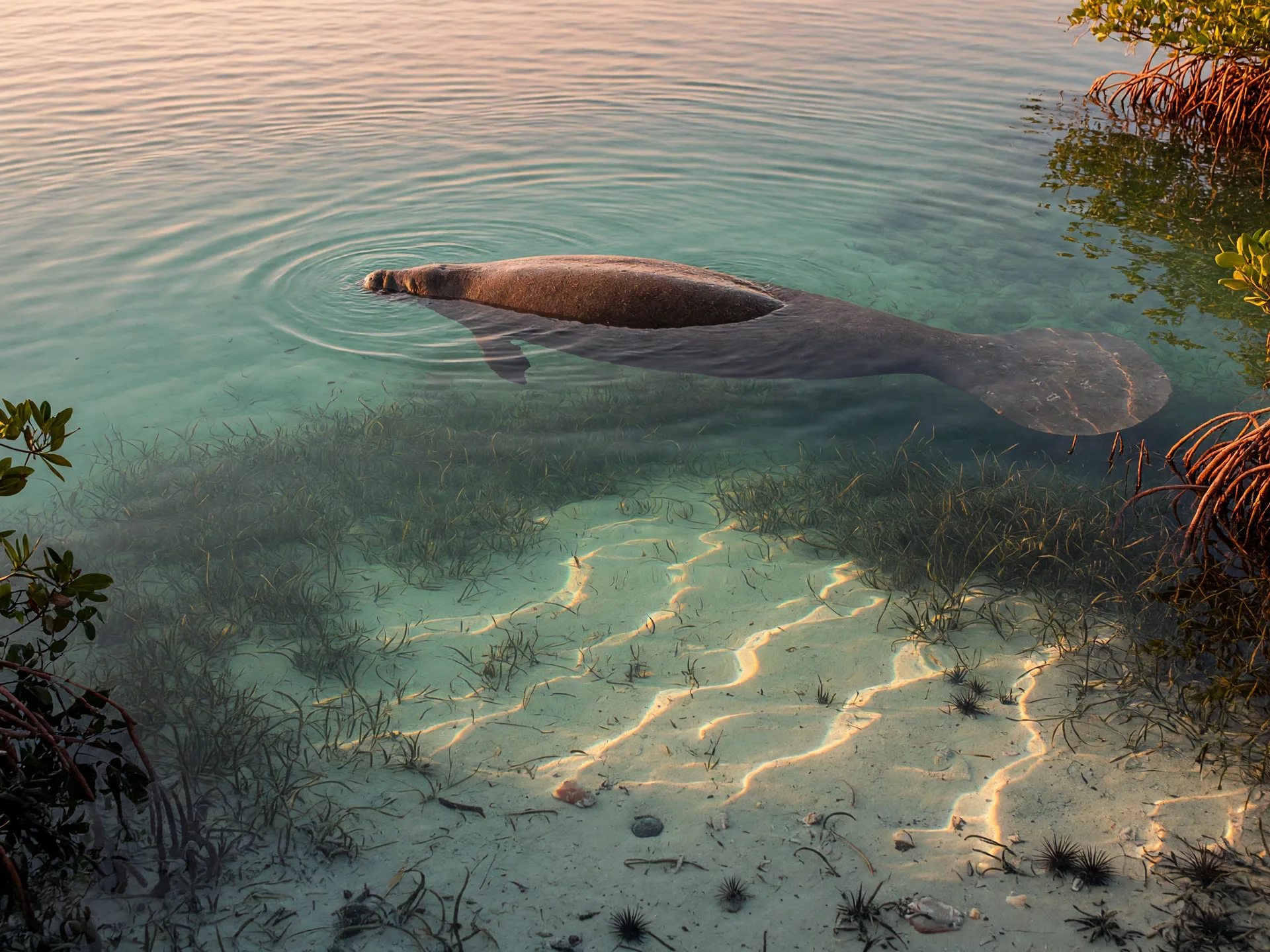
Islamorada paddlers share the water with the island's famous residents. Tarpon roll at the surface, manatees glide through the basins, and ospreys patrol overhead. For a closer look at tarpon without leaving civilization, the docks at Robbie's of Islamorada have hand-fed the big silver kings for decades, and it is a genuine spectacle. Our Islamorada community guide goes deeper into the island's character, and the related feature on living the Florida Keys lifestyle in Islamorada shows what day-to-day life around this water feels like.
What You Will See: The Wildlife of the Backcountry
The Upper Keys backcountry is one of the richest shallow-water environments in the country. Paddlers routinely encounter manatees, sea turtles, nurse sharks resting on sandy patches, stingrays ghosting across the flats, and an ever-present cast of wading birds: herons, egrets, ibis, and the occasional roseate spoonbill. In spring and summer, the seagrass beds fill with juvenile fish, and the whole system hums with life.
The etiquette is simple and it protects the experience. Paddle through seagrass gently or pole over it, keep your distance from manatees and turtles, and never feed wildlife. Sunrise and early evening are the best windows, and a rising tide pushes fish and rays into the mangroves where the wildlife viewing is best.
Paddling from Your Own Dock: The Waterfront Home Advantage
One of the quiet pleasures of owning waterfront in the Upper Keys is that paddling becomes a doorstep activity. A home on a protected canal means you can keep a kayak on your own dock or lift, launch in two minutes, and slip into the mangroves before the day warms up. That is a different rhythm from trailering to a ramp, and it is one of the reasons canal homes carry such lasting appeal. Our guide to canal living in Key Largo digs into the dockside culture that makes the daily water routine so special.
Residents also build real community around the water. On any given morning, the canals and basins of Tavernier and Plantation Key have a steady trickle of paddlers, neighbors exchanging waves with neighbors, and the occasional coffee-and-paddle ritual. If you are considering a move, renting a kayak for a long weekend in the neighborhoods you are eyeing is one of the most local ways to test the lifestyle. And when you are ready to compare communities, our complete relocation guide walks through choosing the island that fits your life.
For buyers weighing a specific home, the paddling test is even more direct. Launch from the neighborhood, paddle the canal, and look at the shoreline the way you would from the water: how is the seawall, where does the current run, and how much mangrove buffer protects the property? A home that looks good from the street can reveal its true character from a kayak, and the view from the water is a form of due diligence no inspection checklist fully replaces. The complete Keys buyer's guide covers the shoreline and water-side questions in depth, and it pairs perfectly with a low-tide paddle through the neighborhood.
Getting Started: Rentals, Guides, and Outfitters
You do not need to own equipment to paddle the Upper Keys. Pennekamp rents on-site, and a handful of respected outfitters serve the corridor. Paddle the Florida Keys, based in Tavernier, is a well-reviewed outfitter with a 4.9-star average across more than 1,500 Google reviews, and it runs guided mangrove and manatee tours with delivery to resorts from the Keys mile-marker 80s through 100s. Their Mangroves and Manatees eco tour is a great introduction to the backcountry. Whatever you choose, a half-day guided trip is the fastest way to learn the water and the wildlife.
For safety, the same rules apply on a paddleboard as on a boat: wear a life jacket, check the weather and tides, carry water and sun protection, and let someone know your route. The Florida Fish and Wildlife Conservation Commission publishes paddling and boating safety guidance, and a quick review before your first trip is time well spent. Then the water does the rest.
A Paddler's Year in the Upper Keys
Every season brings a different water. Winter mornings are crisp and glassy, with the clearest water of the year and the best manatee viewing in the canals. Spring warms the flats early and brings tarpon into the basins. Summer trades midday heat for dramatic afternoon showers that clear as fast as they arrive, and the wildlife is at its most active. Fall is the quiet season, when the crowds thin, the fishermen leave, and residents get the water mostly to themselves. Our guide to the quiet season in the Florida Keys captures what that slower rhythm feels like for the community.
The practical takeaway for paddlers and buyers alike: the Upper Keys are a year-round water destination, and the differences between seasons are part of the charm. A waterfront home that catches perfect light in March, shade at noon in July, and shelter from the afternoon squall line in August is a home designed for full-time life, and that is exactly what the best canal properties deliver. Paddle the same stretch of water in January and July, and you will understand the lifestyle in a way no listing photo ever shows.

Steve Conley
Principal, Conley Sales Group at COMPASS, the exclusive Compass office in the Florida Keys. Licensed Sales Associate, Contractor, and Home Inspector with over 30 years in the Keys market.
Full BioPaddling the Upper Keys,
what to know.
Where is the best kayaking in the Florida Keys?
The Upper Keys are the standout: John Pennekamp Coral Reef State Park in Key Largo has a marked paddling trail through mangrove tunnels, and Islamorada's Green Turtle Hammock Nature Preserve and Library Beach Park open onto the Little Basin and Indian Key paddles.
Do I need experience to paddle in the Keys?
No. Pennekamp's bayside waters are calm and forgiving, rentals and guided tours are easy to find, and the shallow seagrass flats are ideal for beginners. Guided trips from outfitters like Paddle the Florida Keys in Tavernier are a great first step.
What wildlife will I see while paddling?
Manatees, sea turtles, tarpon, nurse sharks, stingrays, and a wide range of wading birds are common. Sightings are best early in the morning and on a rising tide, and paddling gently protects the seagrass and the wildlife.
Can I launch a kayak from a waterfront home in the Keys?
Yes. Many canal-front homes on protected water allow you to keep kayaks on a dock or lift and launch from your own shoreline. It is one of the great daily advantages of owning waterfront in the Upper Keys.
What should I bring on a Keys paddling trip?
A life jacket, sun protection, water, and a charged phone are the essentials. Check tides and weather before you go, and on longer trips let someone know your route. The water is warm, but the sun and wind demand respect.
Helpful Resources & Related Guides
Discover more about the Upper Keys waterfront lifestyle and the communities built around the water.
Internal Resources
Thinking About Buying or Selling
in the Florida Keys?
Steve Conley brings 30 years of Keys expertise, $1.4 billion in career sales, and contractor-inspector credentials to every transaction. Start with a conversation.
Connect with Steve