
Shore Fishing in the Upper Florida Keys: A Local's Guide to Bridges, Piers, and Bank Fishing Spots
No boat required. Just a rod, a parking spot, and the moving tide under some of the best fishing water in the country, from Key Largo to Islamorada.
Key Takeaways
- The Upper Keys are ringed by fishable water with no boat required: highway bridges, public parks, canal mouths, and bank access from Key Largo to Islamorada.
- The classic bridge spots run south along US 1: Adams Cut near mile marker 104, the Tavernier Creek Bridge at MM 91, Snake Creek at MM 86, Whale Harbor at MM 84, the Tea Table bridges near MM 79, Channel Two at MM 73, Channel Five at MM 71, and Long Key at MM 65.
- Mangrove snapper, tarpon, permit, snook, jacks, and ladyfish are the everyday casts, and the changing tide at first and last light is the best window under the spans.
- Anyone 16 or older needs an FWC saltwater license unless exempt: Florida residents fishing from land or a structure attached to shore can use the no-cost Resident Saltwater Shoreline License, while non-residents use a paid short-term or annual license.
- For buyers, the shore-fishing map is part of the property map: the bridges, parks, and creeks near a home shape how the waterfront lifestyle actually gets lived, with or without a boat.
Shore fishing is one of the defining habits of the Florida Keys. You do not need a boat, a slip, or a trailer to fish these islands. From the canal mouths of Key Largo to the long bridges of Islamorada, locals and second-home owners park, walk to the railing, and cast into some of the best inshore water in the country. This guide maps the shore spots of the Upper Keys, what you will catch, the license rules that apply, and why this everyday ritual is woven into community life.
Why the Upper Keys Is Built for Shore Fishing
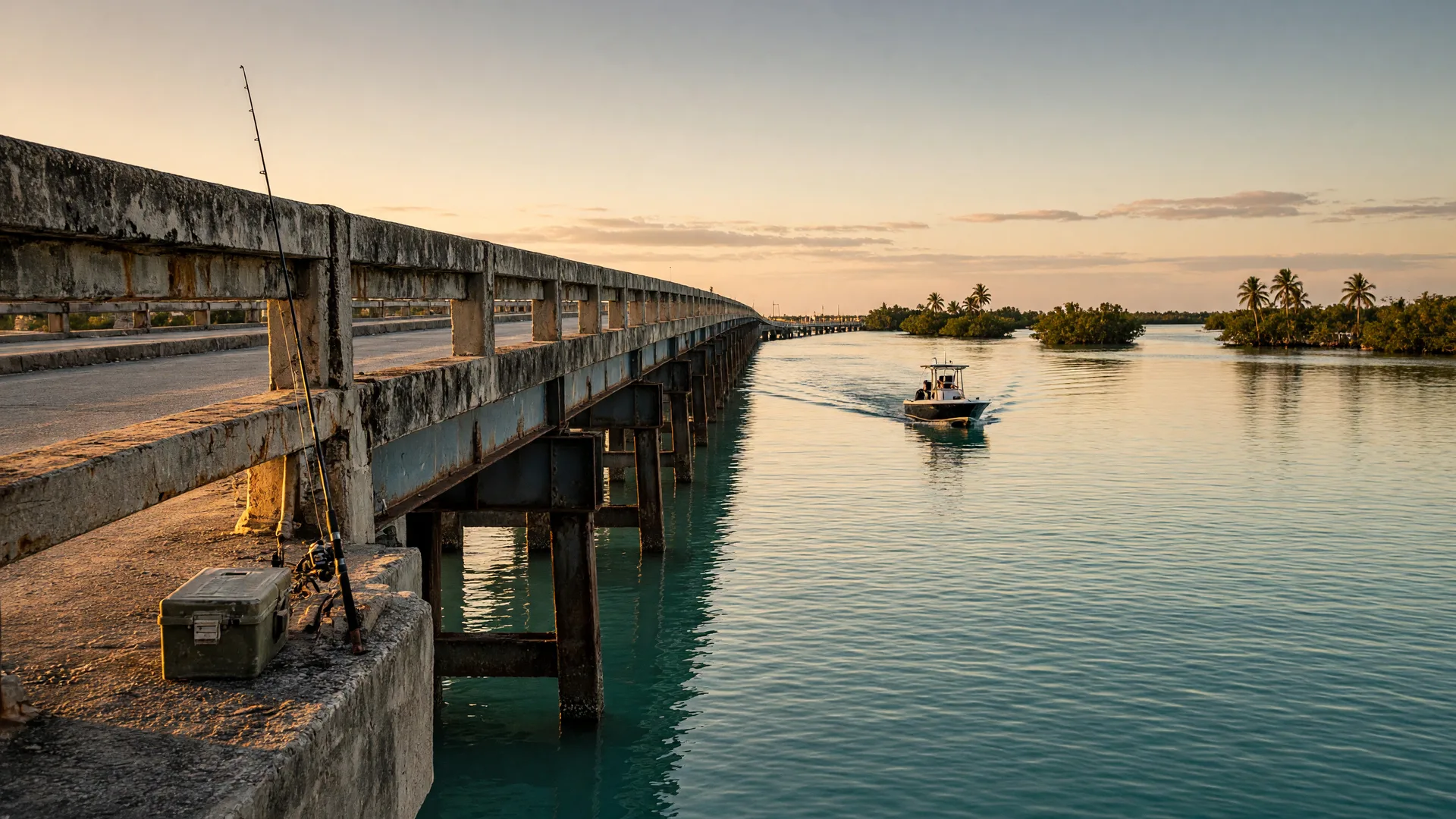
The Overseas Highway is more than a road. South of Key Largo it runs for miles on elevated bridges and fills, and every one of those crossings puts you over structure: pilings, cuts, and current that hold baitfish and the predators that chase them. Where the road crosses water, you can almost always fish it, and that simple fact turns a commute into a fishing trip.
The geography helps even more. Florida Bay's quiet flats sit on one side, the Atlantic reef side on the other, and a network of natural cuts and dredged canals strings between them. The result is more public shoreline per mile than anywhere else in the state, anchored by parks, jetties, and bridge walkways that the community uses daily. If you have not read the guide to the parks, beaches, and piers of the Upper Florida Keys, it pairs well with this one: the parks tell you where the families gather, and this guide tells you where the fishermen go.
The Best Bridges and Banks, Key Largo to Islamorada
Working south along the highway, these are the spots locals return to. Mile markers make them easy to find, and nearly all of them have room to pull over safely. Start early and you will have the water to yourself on most weekdays.
Key Largo: Adams Cut and Pennekamp
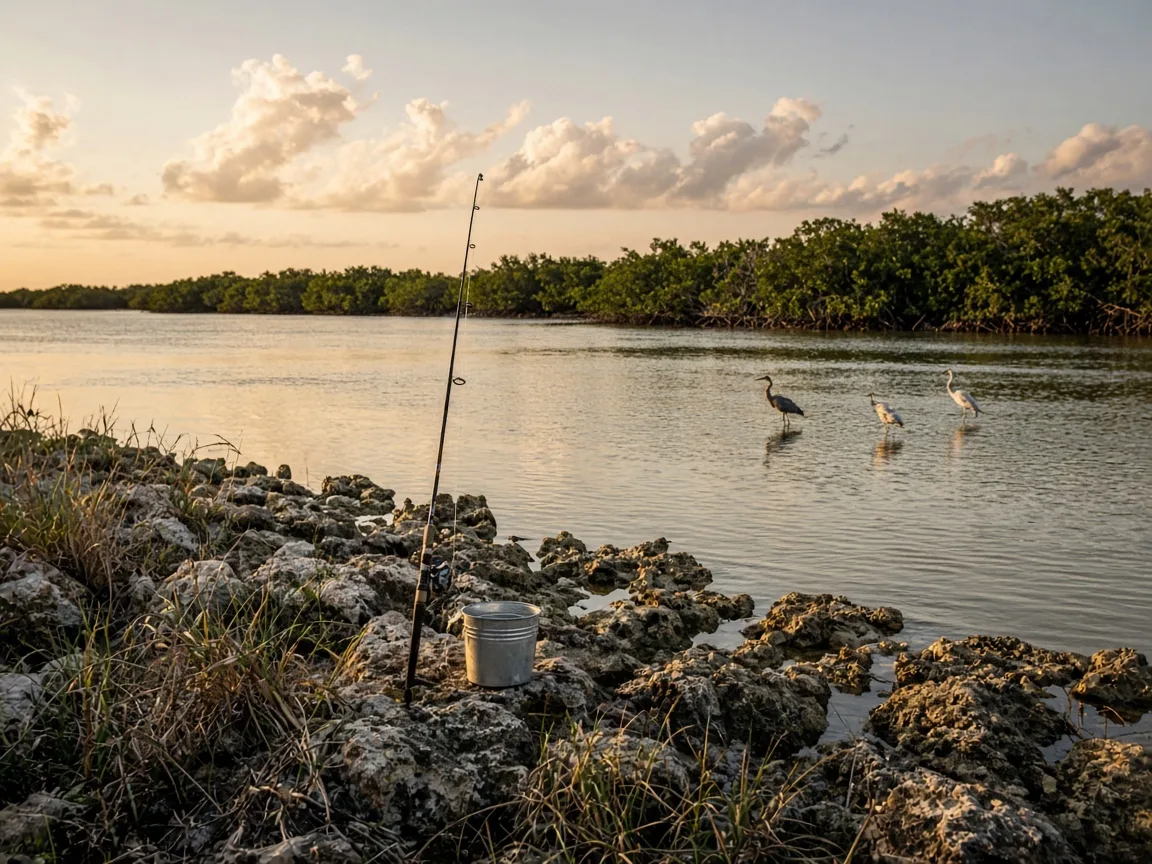
At the top of the island chain, the Marvin D. Adams Waterway cut near mile marker 104 is a fall- and winter favorite for snapper, snook, and tarpon working the edges of the current. Just south, John Pennekamp Coral Reef State Park near MM 102.5 keeps designated shore-fishing areas inside the park, which makes it one of the most family-friendly places to introduce kids to the water. Farther into the island, the bayside canals and canal mouths hold snook and jacks most of the year.
The Upper Keys Crossings: Tavernier Creek to Whale Harbor
The Tavernier Creek Bridge at mile marker 91 is a true intersection of water. The creek connects the Atlantic to Florida Bay, so the tide runs hard and the fish stack up on both sides. You can fish from land under the span or from the shoulders, and the current here is exactly why the creek is such an asset for the waterfront homes around it. My guide to living with the tides in the Florida Keys explains that rhythm in detail, because every plan on the water starts with the tide table.
Continue south and the Snake Creek Bridge at MM 86 and the Whale Harbor Bridge at MM 84 offer quick, reliable stops with good parking and steady action around the pilings. Both are the kind of spot where you can fish for an hour on the way home from the grocery store, and that kind of accessibility is a big part of the appeal.
The Tea Table Bridges
Around mile marker 79, the Tea Table Relief Bridge and the Tea Table Channel Bridge sit at the pass into Florida Bay where the water flattens into classic backcountry. These are flats-style shore spots: sight fishing for bonefish and permit is possible from the railing when the light is right, and tarpon roll through on the moving tide. It is quiet water, so the fishing rewards patience and a good cast.
Channel Two, Channel Five, and Long Key
The Channel Two Bridge at mile marker 73 is one of the most popular bridge-fishing spots in the Keys, with walking platforms and parking on both sides of the span. It sits at the southern edge of Islamorada, and the village bills itself as the Sportfishing Capital of the World for good reason: the Islamorada luxury waterfront community guide explains how that fishing culture shapes the whole island chain. A few miles south, the Channel Five Bridge at MM 71 has parking at the south end and a loyal crowd of regulars, while the Long Key Bridge at MM 65 is the classic of classics, a long island crossing that has taught generations of Keys anglers how to fish a moving tide.
What You Will Catch, and When
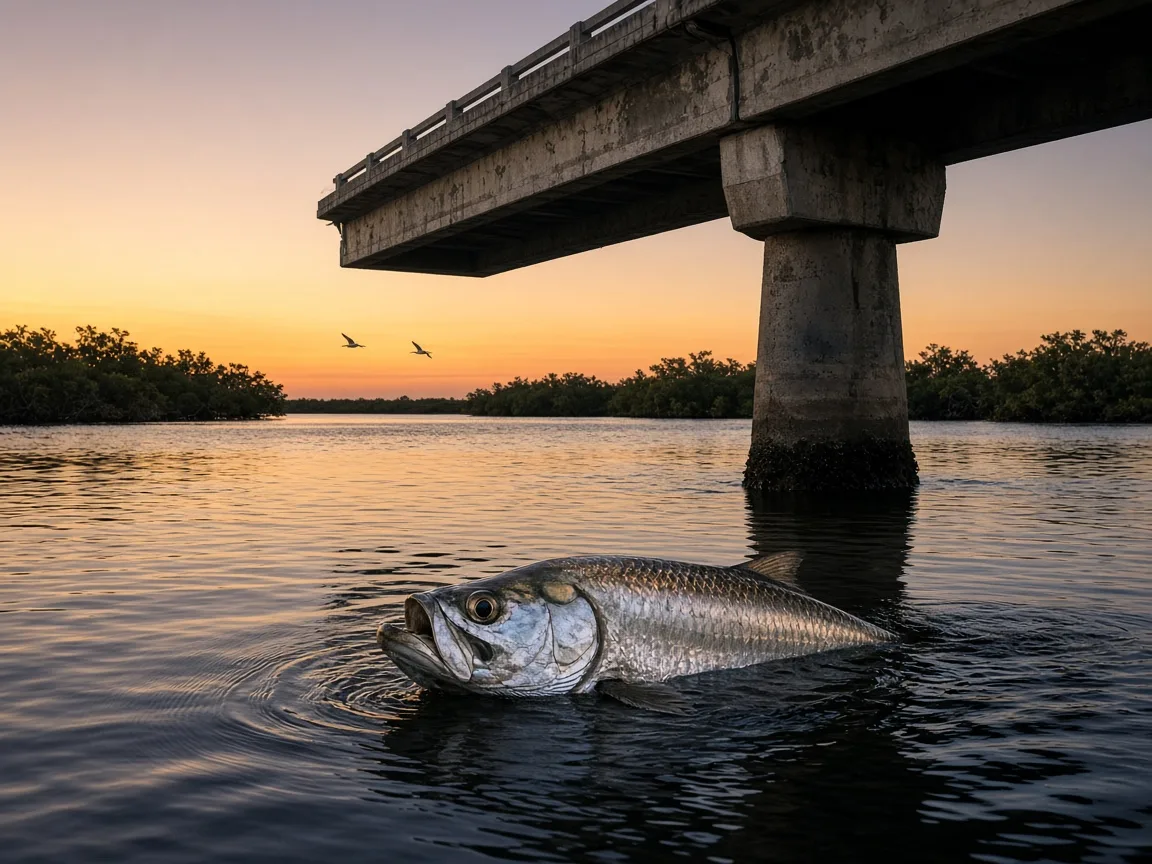
Mangrove snapper are the reliable everyday catch at nearly every bridge and bank in the Upper Keys, and they bite year-round. Tarpon are the show: they run the bridges through spring and summer, best at first light, last light, and through the night under bridge lights. Permit, snook, jacks, and ladyfish fill in the rest of the calendar, and a spinning rod with a jig or a live bait is all you need for most of it. Tarpon are a protected game fish in Florida, so the habit is to fight them, admire them, and release them.
Season matters here more than it does almost anywhere else. My guide to what's in season in the Florida Keys walks the full calendar, from stone crab and spiny lobster seasons to the spring tarpon migration. The short version for shore anglers: spring and early summer are tarpon time, the fall is full of snapper and jacks, and winter mornings on the cuts can hand you a snook on a well-placed cast.
Do You Need a Fishing License to Shore Fish in the Keys?
Yes, and the rule is pretty simple. Under Florida Fish and Wildlife rules, anyone 16 or older fishing in salt water needs a license unless they qualify for an exemption, and casting a line for catch and release counts as fishing. Florida residents who fish only from land or from a structure attached to land, such as a beach, seawall, dock, bridge, jetty, or pier, can get the no-cost Resident Saltwater Shoreline License. That free license is not valid from a vessel, or from a shoreline you can only reach by boat, which matters in the Keys where many of the best spots are boat access only.
Non-residents are not eligible for the free shore license. They choose between 3-day, 7-day, or annual non-resident saltwater licenses, unless they are covered by a licensed charter or by a pier that holds its own saltwater pier license. Kids under 16, Florida residents 65 and older, and anglers fishing from a properly licensed for-hire vessel are among the standard exemptions. The official details and the current rules live on the FWC saltwater shoreline fishing page, and it is worth checking them before you go, because the fines cost more than the license.
Bridge Etiquette, Safety, and Keeping the Spots Open
Bridge fishing survives on good manners. Park only where parking exists, never on the travel lanes, and use the walkway platforms where they are provided. Keep your gear within the railing so lines and rods do not become traffic hazards, and pack out every piece of line and leader you bring. A discarded line tangles a prop, catches a bird, and gives the county a reason to post a no-fishing sign.
The moving tide is your friend: plan around the change of tide, be patient on the slow water, and be extra careful on the ledges and riprap where the footing is slick. The same tidal lesson applies whether you are casting from a bridge or reading a canal lot, and it is one of the reasons the water knowledge in the tides guide pays off for anyone who lives near the water.
What Shore Fishing Means for Buyers
When you are shopping for a home in the Keys, the shore-fishing map is part of the property map. Ask where the nearest bridges, parks, and creek access are, then drive them at the hour you would actually fish. That ten-minute ride to the bridge may matter more to your quality of life than the style of the kitchen, and it is one of the questions my Florida Keys buying guide helps buyers answer before they ever write an offer.
Shore fishing is also the great equalizer for second-home owners. If you spend four weeks a year in the Keys, you do not want to spend half of it maintaining a boat. You want a rod that lives in the trunk and a bridge that is two minutes away, which is exactly the life described in the guide to living the Florida Keys waterfront lifestyle without owning a boat. The same neighbors you will meet at dawn on the bridge are the neighbors who will welcome you to the island, and there is no faster way into a community than sharing a good tide with it.
The Bottom Line
The Upper Keys may be famous for sportfishing fleets and marlin tournaments, but the everyday heart of the fishing culture is closer to the road. A bridge railing, a rising tide, and a cooler in the back of the truck: that is the version of island life most residents actually live, and it requires no dock and no boat payment.
When you are ready to turn that life into an address, contact Steve Conley to talk about waterfront and near-water homes from Key Largo to Islamorada. Island knowledge like this is what lets me point you not just to a house, but to the bridge, the park, and the community that come with it.
Shore fishing in the Keys, explained.
Where are the best places to fish from shore in the Upper Florida Keys?
The classic runs along US 1: Adams Cut near mile marker 104 and Pennekamp's shore areas in Key Largo, the Tavernier Creek Bridge at MM 91, Snake Creek at MM 86, Whale Harbor at MM 84, the Tea Table bridges near MM 79, Channel Two at MM 73, Channel Five at MM 71, and the Long Key Bridge at MM 65.
Do I need a fishing license to fish from a bridge in the Florida Keys?
Yes, if you are 16 or older. Florida residents fishing from land or a structure attached to land can use the no-cost Resident Saltwater Shoreline License. Non-residents buy a 3-day, 7-day, or annual saltwater license unless covered by a licensed pier or charter. Kids under 16 and Florida residents 65 and older are generally exempt.
What is the best time to fish the Upper Keys bridges?
The changing tide is the anchor: the hour around tide change concentrates bait and predators under the spans. Tarpon run best at first light, last light, and through the night under bridge lights in spring and summer, and mangrove snapper bite steady all year.
Can you enjoy the Keys fishing lifestyle without owning a boat?
Absolutely. Bridge fishing, public parks, canal mouths, jetties, and kayak launches put you on the water without a slip or trailer, and the local culture of dawn bridge regulars, tournaments viewed from the railing, and charters booked by the trip makes the boat optional rather than essential.
Helpful Resources & Related Guides
Go deeper on the shore-fishing life in the Keys, from the tidal rhythms that set the best bite to the communities where the waterfront lifestyle starts at the end of a parking lot.
Internal Resources
- Islamorada Luxury Waterfront Community Guide
- Boatless in the Florida Keys: Living the Waterfront Lifestyle
- What's in Season in the Florida Keys: The Fishing Calendar
- Living With the Tides in the Florida Keys
- Parks, Beaches, and Piers of the Upper Florida Keys
- Contact Steve Conley About Upper Keys Waterfront

Steve Conley
Principal, Conley Sales Group at COMPASS, the exclusive Compass office in the Florida Keys. Licensed Sales Associate, Contractor, and Home Inspector with over 30 years and $1.4 billion in career sales serving the island chain.
Full Bio
Thinking About Buying or Selling
in the Florida Keys?
Steve Conley brings 30 years of Keys expertise, $1.4 billion in career sales, and contractor-inspector credentials to every transaction. Let him match you to the island and the waterfront that fit the life you want.
Connect with Steve