
Living With the Tides: How the Water Shapes Daily Life in the Florida Keys
The tide table is the closest thing the Keys have to a daily planner. Here is how the water's rhythm shapes life on the islands.
Key Takeaways
- Keys tides are modest, often a foot or two, but wind and weather move the water as much as the moon does, so the water level you see is rarely the tide table alone.
- Boaters and anglers plan around moving water: the push of the tide carries fish, clears the flats, and sets the window for crossing shallow sandbars.
- For waterfront owners, low tide is the honest hour: it shows the real depth at your dock, the condition of your seawall, and how your boat lift really sits.
- Community life follows the water too, from sandbar weekends to tide-timed gatherings, and the calendar fills around the moon.
- Buyers who understand the tides evaluate canals, docks, and seawalls at the right time of day, and they ask the depth question at mean low water, not at high tide.
The tide table is the closest thing the Florida Keys have to a daily planner. Every islander who owns a boat, fishes the flats, or simply lives on the water learns to read it, because the water's daily rhythm decides when you can cross a sandbar, when the tarpon will push through a channel, and when your dock will show you exactly what it is made of. Living with the tides is not a skill you learn here; it is a habit you grow into, and it quietly shapes everything from your Saturday plans to the way you evaluate a waterfront home.
The Keys' Tides Are Small, But They Matter
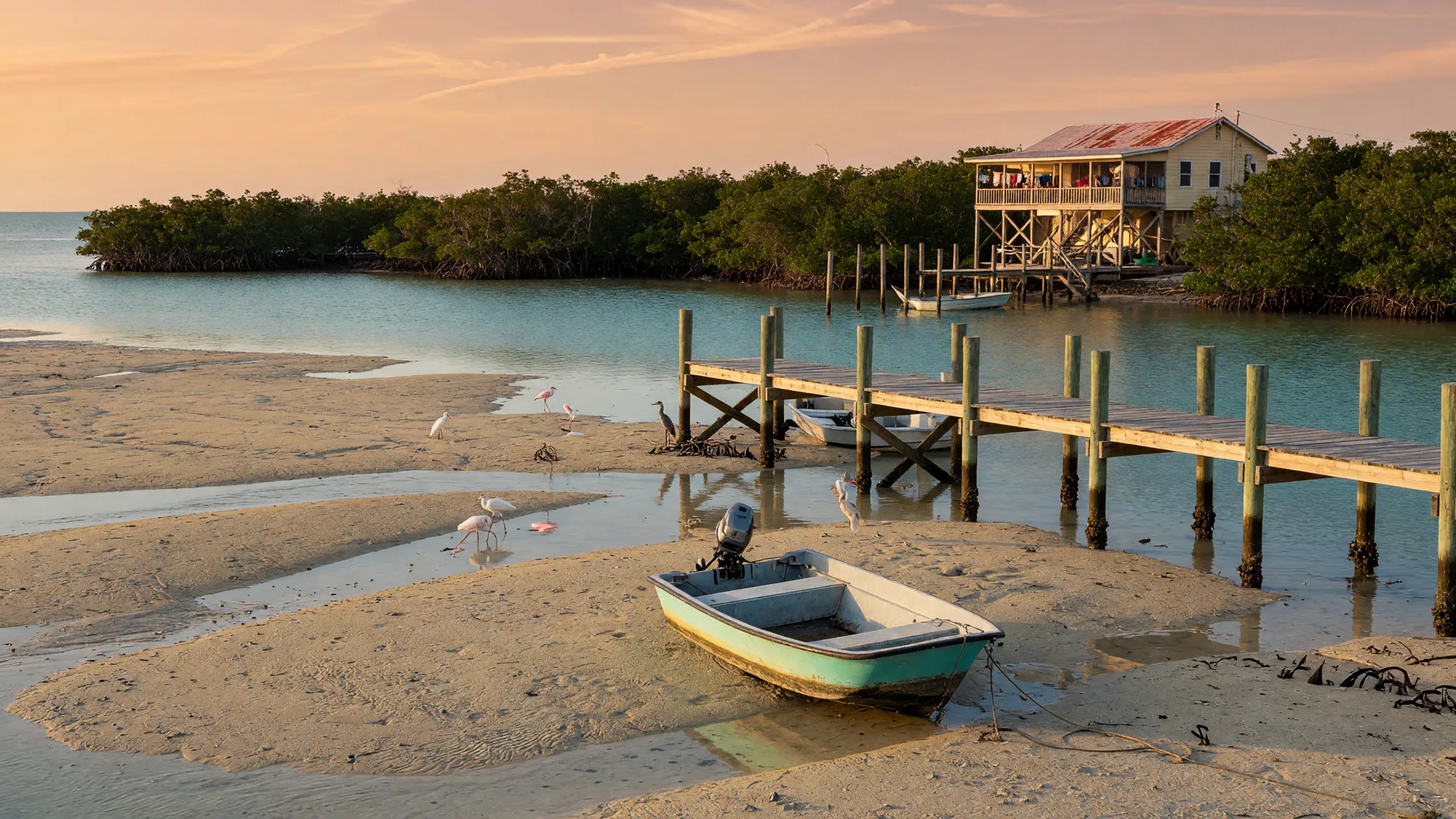
Compared with most of the Atlantic coast, the Keys have modest tides: typically a foot or two of daily swing, with two highs and two lows each day. What makes the water here so changeable is that wind and weather move it as much as the moon does. A strong easterly wind piles water up against the island chain, a hard north wind behind a cold front pushes it out, and king tides ride on top of all of it.
The practical result is that the water level you see on any given afternoon is rarely the tide table alone. It is the tide plus the wind plus the season, and locals read all three together. That is why the same canal can look deep and welcoming on a calm winter morning and shallow and exposed after a week of north wind. Understanding that difference is the first step to living well on the water, and it is the first thing I point out to buyers who are new to the islands.
The Boater's Day Starts With a Tide Table
For anyone with a boat, the day starts with a question: how much water is under the keel right now, and where is it going? The Upper Keys are full of shallow flats, sandbars, and cuts that are only passable at the right stage of the tide. A flats skiff can glide across a bank at high water and sit on the sand two hours later, so the window for a run to a favorite spot is measured in hours, not in a schedule.
This rhythm is part of the culture. Marinas, fuel docks, and boat ramps all hum with tide talk, and the marina culture of the Upper Florida Keys is built around it. New residents quickly learn that the question "what is the tide doing?" is not small talk; it is the practical answer to whether the day's plan works. My guide to the boating and fishing lifestyle of the Upper Florida Keys covers how deeply this culture runs through Key Largo, Tavernier, and Islamorada.
Fishing the Moving Water
Anglers will tell you that the tide is the fish's schedule. The push of moving water carries bait, and the bait carries the game fish. Tarpon stack up in channels when the tide floods, bonefish work the flats on the first of the incoming water, and snook wait at creek mouths for the current to bring dinner. The best fishing windows in the Keys are tide windows, and the locals plan their mornings around them.
The backcountry, the flats, and the reef all answer to the same clock. On the flats, falling water pushes fish off the shallow banks and concentrates them on the edges, which is exactly where a patient angler wants to be. On the reef, the tide moves the current that brings the pelagics through. For an island community whose social life, economy, and identity all revolve around fishing, the tide table is not background noise; it is the calendar. The Boating & Fishing Lifestyle section of this site goes deeper into how the water defines the Keys way of life.
Docks, Lifts, and the Low-Tide Check
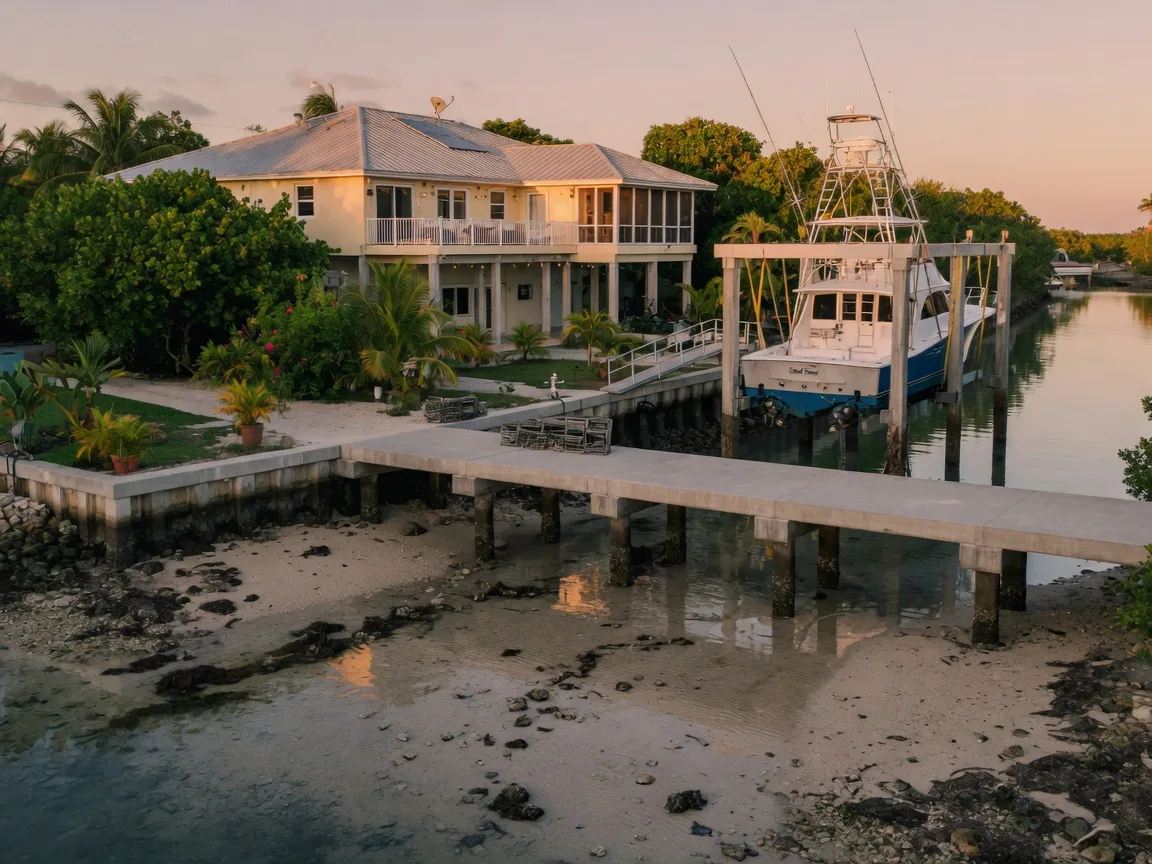
For waterfront owners, low tide is the honest hour. It is the moment your dock, your seawall, and your boat lift show you what they are really made of. A concrete dock that looks fine at high water can reveal cracked pilings, scoured fill, or a lift that sits too low at the bottom of the tide. The owners who have lived on the water for years do their dock checks at low tide, and they schedule marine work the same way.
This is also the moment that matters most to buyers. When I evaluate a waterfront property in Islamorada or anywhere in the Upper Keys, I want to see the canal at low water, not at the high-tide moment when it looks its deepest. Canal depth is quoted at mean low water for a reason: that is the number your boat will live with, and it is the number that decides whether the property truly fits your vessel. My complete buyer's guide walks through the full dock and seawall evaluation, and it starts with the same low-tide habit.
The Tide-Dependent Social Calendar
Community life in the Keys follows the water too. Sandbar weekends are timed to the tide, because the sandbar needs enough water for boats to anchor and enough exposed sand for people to stand on. Dock parties, raft-ups, and sunset gatherings all bend around the same considerations, and the full-moon tides bring their own traditions, from nighttime flats fishing to beach bonfires that only work when the water is low enough to leave room.
The social calendar is one more reason the Keys feel like a place apart. Neighbors coordinate around the water the way other towns coordinate around a sports schedule, and the shared knowledge creates a genuine sense of community. My guide to island hopping the Upper Florida Keys describes the day-trip culture that depends on tides, sandbars, and good timing, and it is a great introduction to the rhythm newcomers adopt.
What Tide Awareness Means for Waterfront Buyers
If you are buying a waterfront home in the Keys, tide awareness is not a lifestyle detail; it is due diligence. Ask for the canal depth at mean low water, not the depth on the day you toured. Visit the property at different stages of the tide, especially the bottom of a big moon tide. Check how the seawall sits at low water, how the lift clears the bottom, and whether the dock has ever been a problem for the current owner.
The same awareness applies to the neighborhood. A canal community that looks serene at high tide can feel very different when the water drops, and the character of the waterway, whether it drains well, holds its depth, or goes shallow at the mouth, is part of the property's real value. Buyers who understand the tides make better offers, and they rarely get surprised after closing. That is the quiet advantage of working with a local specialist who has watched these canals at every stage of the moon.
The Bottom Line
Living with the tides is the most honest introduction to the Florida Keys. It teaches you the water, the fish, the boats, and the neighbors all at once, and it rewards the people who pay attention. Once you learn to read the tide table, you will never see the islands the same way again, and you will understand why the people who live here plan their lives around a rhythm most visitors never notice.
If you are ready to find a waterfront home that fits the water's rhythm, contact Steve Conley at (305) 393-5859. As the Principal of the Conley Sales Group at COMPASS, he has spent three decades reading Keys tides, canals, and docks, and he will make sure the property you buy works at low tide, not just at first sight.
Tides and island life,
answered.
Do the tides really matter in the Florida Keys?
Yes, more than the numbers suggest. The Keys' daily tidal swing is often only a foot or two, but wind and weather move the water as much as the moon does, so water levels change constantly. That movement shapes boating, fishing, dock life, and community gatherings.
How do tides affect boating in the Keys?
Shallow flats, sandbars, and cuts are only passable at the right stage of the tide. Boaters plan crossings and anchorages around the water level, and marinas and boat ramps are full of tide talk because the answer changes every day's plan.
What should waterfront buyers know about tides and docks?
Visit the property at low tide, especially at the bottom of a big moon tide. Ask for canal depth at mean low water, check how the seawall and boat lift sit when the water drops, and confirm the waterway holds its depth at the mouth.
When is the best time of day to be on the water in the Keys?
It depends on what you are doing. Anglers target the moving water of the incoming and outgoing tides, sandbar crowds gather when the tide leaves room to stand, and sunset cruises work whenever the wind is calm. The tide table is the starting point for all of them.
Helpful Resources & Related Guides
Build your Florida Keys lifestyle library with the community guides, the boating culture, and the local resources that help you live well on the water.
Internal Resources

Steve Conley
Principal, Conley Sales Group at COMPASS, the exclusive Compass office in the Florida Keys. Licensed Sales Associate, Contractor, and Home Inspector with over 30 years and $1.4 billion in career sales serving the island chain.
Full Bio
Thinking About Buying or Selling
in the Florida Keys?
Steve Conley brings 30 years of Keys expertise, $1.4 billion in career sales, and contractor-inspector credentials to every transaction. Let him help you find a home that works at every stage of the tide.
Connect with Steve