
Getting Around the Upper Florida Keys: Boats, Bridges, and Everyday Island Life
One road, a handful of bridges, and a thousand boats. This is what moving between Key Largo, Tavernier, and Islamorada really feels like, and why access shapes the waterfront lifestyle here more than almost anything else.
Key Takeaways
- US 1, the Overseas Highway, is the spine of the Upper Keys: one road through Key Largo, Tavernier, and Islamorada, and island life is timed around it.
- Card Sound Road is a real second entrance to North Key Largo, a toll road that skips part of US 1 and has moved islanders for nearly a century.
- Bridges set the pace for boaters and drivers alike: drawbridges open for tall boats, and fixed spans like the 65-foot Channel Five crossing limit where masted boats can go.
- Living between islands means planning: school runs, airport trips, and mainland errands all fit the rhythm of tides, traffic, and bridge schedules.
- For waterfront buyers, access is an amenity: canal depth, bridge clearance, and proximity to boat ramps and marinas decide how easily your new life connects to the water.
Getting around the Upper Florida Keys is a small daily adjustment for newcomers and second nature for locals. There is one highway, a few bridges, and water on both sides of everything, so movement here is part of the lifestyle, not just a commute. This guide walks you through the roads, the bridges, and the boats that connect Key Largo, Tavernier, and Islamorada, and what access means when you are choosing where to live.
One Road, Forty Miles of Islands
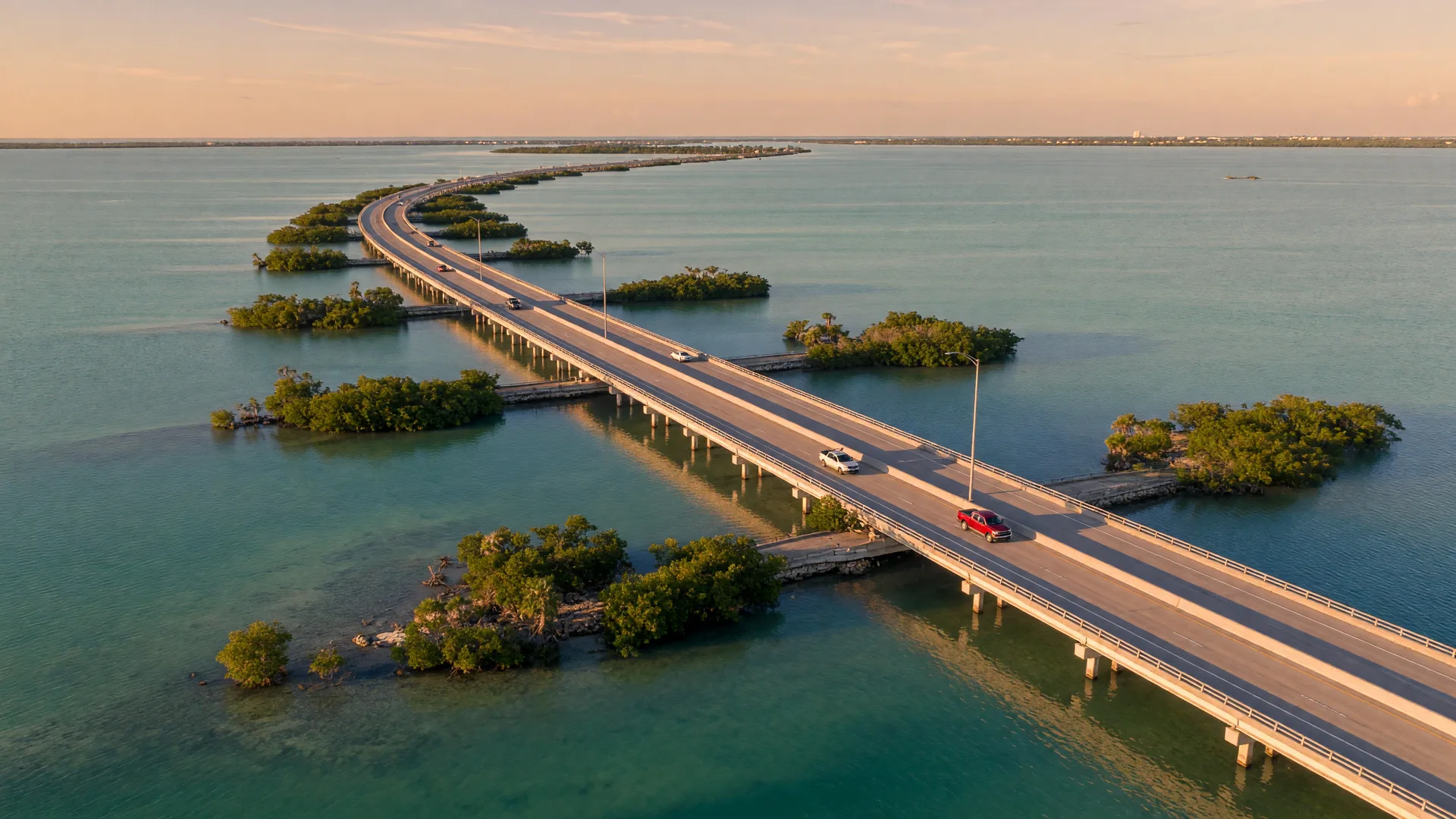
US 1, the Overseas Highway, runs the length of the Keys and is the only road that connects the islands end to end. The Upper Keys are the first stretch you meet coming from the mainland: the road crosses into Key Largo, winds past Tavernier, and follows the coconut palms into Plantation Key and the island villages that make up Islamorada. From the gateway at Florida City, Key Largo is about 29 miles of causeway and open water, a drive of roughly 35 minutes on a clear morning, and the run from Key Largo's center down to Islamorada is about 17 more miles, usually 20 to 25 minutes when the road is easy.
For anyone who grew up with beltways and interstates, the single road takes getting used to. There is no parallel route through the islands, so everyone moves on the same ribbon of asphalt: school buses, dive boats on trailers, commuters, and visitors. That is part of the charm and part of the adjustment. Locals plan around it, and the rhythms of the road, quiet before sunrise, busier with fishing traffic at first light, calm again by mid-afternoon, become a kind of island clock. It is one of the first things buyers feel before they ever open a waterfront listing, and it is exactly what my guide to island hopping the Upper Florida Keys celebrates: a place where the journey between islands is part of the day, not a detour from it.
Two Ways In: US 1 and Card Sound Road
Most visitors arrive on US 1 through the Jewfish Creek crossing near the top of Key Largo, where the highway swings across the creek and Lake Surprise on its way into town. But an older, quieter route still serves the island chain: Card Sound Road, a toll road that leaves the mainland near Florida City and crosses Card Sound Bridge into North Key Largo. It was the original car route to the Upper Keys before the main highway segment was finished, and islanders still use it to skip traffic at the top of the road, especially on weekends and at the start of a holiday weekend.
This matters more than it sounds for daily life. The two entrances give residents a genuine choice: take the main highway through the heart of Key Largo, or take the back way and arrive at the island's quieter northern end. Travelers who keep a boat and a trailer come to know both routes, because the choice between them can cost or save half an hour on a busy Friday afternoon. For shoppers considering the islands, this is the practical texture of living here, and I lay out more of it in my guide to the boating and fishing lifestyle that anchors the Upper Keys way of life.
The Bridges That Set the Pace
Head south from Key Largo and every island you cross is joined by its own bridge, and each one has a personality. The Tavernier Creek crossing carries the road up and over the tidal cut that splits the town, a busy channel with bait boats and local skiffs working the current below. Farther down, the Snake Creek drawbridge opens for tall boats and marks the edge of the Lower Matecumbe country beyond. Bridge schedules become local knowledge, the way mainlanders learn which lanes to avoid at rush hour.
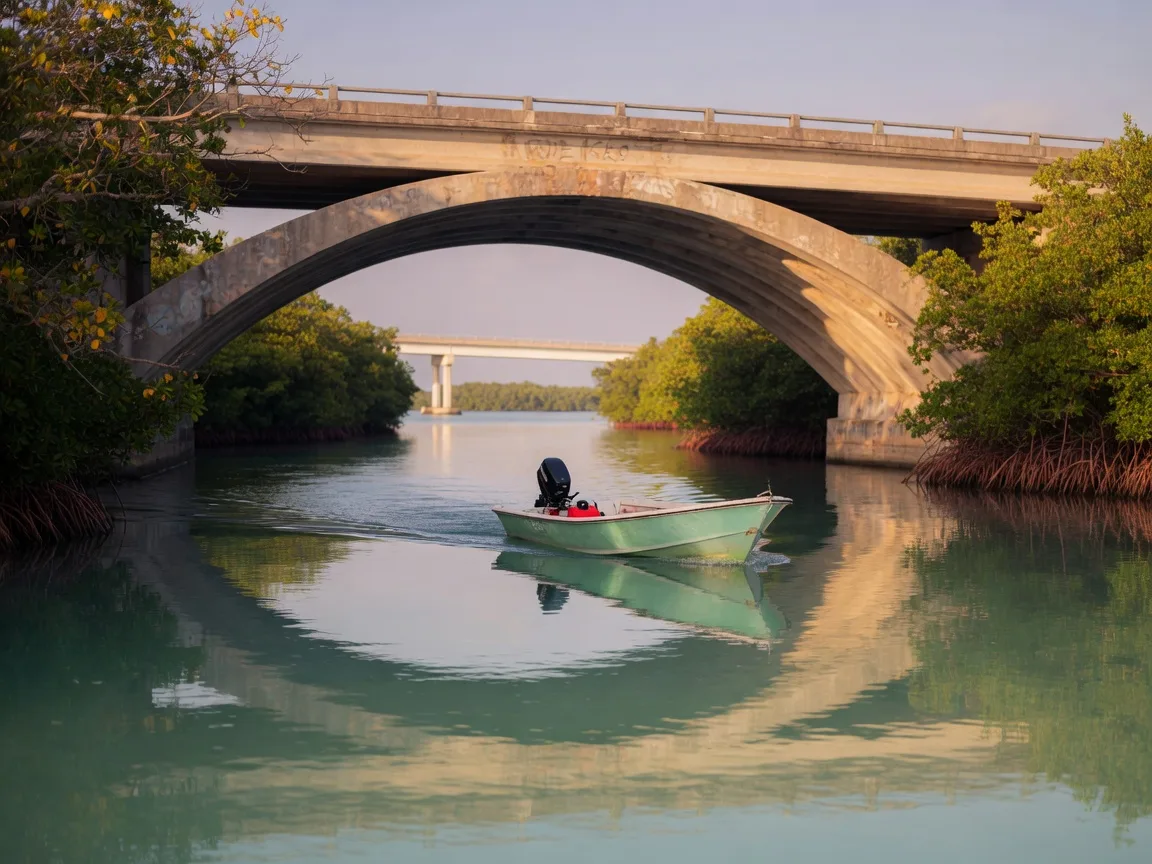
For boaters, the bridges are more than scenery. Fixed spans with generous clearance, like the 65-foot Channel Five crossing south of the island villages, let bigger boats pass without a schedule. Drawbridges open on request for the tall ones, but timing matters, and captains learn the openings the way they learn the tides. If your boat has height, one of the first questions to ask about a property is what sits between your dock and open water. The answer is a fixed bridge, a draw, or nothing at all, and it quietly determines the boats you can keep and the waters you can reach. It is one of the details my Key Largo luxury waterfront community guide and the other island guides check before anything else.
The Boat as a Second Commute
The most Upper Keys thing about getting around is that half of it happens on water. Before the bridges and the highway were ever built, boats carried people, mail, and supplies between these islands, and the habit never left. Today commercial fishing guides run out of their home canals before dawn, dive boats collect crews at marinas and docks, and weekend islanders keep work skiffs ready for the ten-minute run to a favorite flat or sandbar.
In practice, the boat is the second lane of every highway here. Families go out for a sunset cruise the way mainland families drive to a park. Neighbors trade rides to the reef. On tournament weekends, the canals become waking marinas, and the wakes and the waving are all part of it. This is the social side of waterfront ownership, and it is why buyers who plan for the boat, not around it, tend to fall in love fastest. The boating and fishing culture of the Upper Florida Keys runs through every island community, and it starts at the private dock days before it ever reaches the open water.
Marinas and boat ramps complete the picture. From the ramps and basins along Tavernier Creek to the launch sites tucked into Key Largo's bayside, public water access is woven into the neighborhood fabric. On a Saturday morning the islands hum with the sound of outboards warming up, trailers lining the ramps, and dive boats easing out of the canal mouths. The rhythm is one more reason families who love the water settle here year-round, and why a home with its own dock, or one an easy walk from a friendly ramp, earns its place in the community from the first weekend.
Taking the Kids to School, and Their Swim Gear to Practice
For residents, the road is also the school run. Kids from Key Largo, Tavernier, and the villages of Islamorada ride the same highway north and south each morning, and parents plan carpools around the same bridge and traffic patterns everyone else does. Sports, swim practice, and weekend games mean the road again in the afternoon, and the marina at Tavernier's Harry Harris Park becomes part of the family calendar for the kids who grew up launching kayaks and small skiffs there.
The mainland matters too. Miami's airports are the Upper Keys' gateway to the wider world, and the drive from Key Largo runs about an hour and a quarter when the road is clear, enough for a morning flight if you leave early. Groceries, big-box errands, and healthcare can mean a mainland trip, so residents plan the run like islanders everywhere do: one trip, everything on the list, home before the afternoon heat. My guide to raising a family in the Upper Florida Keys goes deeper into how schools, parks, and daily logistics actually work for island households.
What Access Means When You're Choosing a Home
Every waterfront buyer who moves here discovers the same thing: a beautiful house is only as good as its connection to the water. The home's canal depth at the dock, the clearance under the bridges between you and open water, the walk or drive to a boat ramp, and the distance to the marina you will actually use. Two homes on the same island can offer completely different days on the water because of these details. That is why my tours always start at the dock, and why my guide to living in Tavernier and the other community guides spend so much time on water access.
The good news is that the Upper Keys are built for this. Boats are the shared language here, dock space is community currency, and the road, the bridges, and the waterways are all part of a system designed around island time. Give yourself a couple of weeks on the ground, learn which lanes flow and which bridges open, launch the boat twice, and the adjustment disappears. You stop commuting through the Keys and start living in them.
If you are considering a move to Key Largo, Tavernier, or Islamorada, call Steve Conley at (305) 393-5859. I will show you the road, the bridges, and the docks that make island life work, and help you find the home whose access matches the way you want to live.
The road,
the bridges, the boat.
How long does it take to drive from Key Largo to Islamorada?
About 17 miles on US 1, usually 20 to 25 minutes in normal traffic. Weekends and holiday weeks can stretch that significantly, which is why locals time their trips around the island's quieter hours.
Is Card Sound Road faster than US 1 for getting to Key Largo?
It depends on the day. Card Sound Road is a toll route that enters North Key Largo from the mainland and can save time when the main highway entrance is backed up, particularly on busy weekends. It is a genuine alternative worth learning either way.
Do boats have to wait for drawbridges in the Upper Keys?
Some bridges are fixed with tall clearance, like the 65-foot Channel Five span, while drawbridges open on request for tall boats. Captains learn the schedules and clearances the way they learn the tides, and buyers should always check what sits between a dock and open water.
Can you commute by boat between the Upper Keys islands?
Residents do it all the time, for work, fishing, and fun. Guide boats leave from home canals before dawn and families run between marinas, flats, and sandbars all week. The boat is a true second commute here, part of the lifestyle rather than a novelty.
Do I need a car to live in the Upper Florida Keys?
Most residents keep a car because mainland errands, school runs, and airport trips are part of island life, but the boating culture means many households also treat the water as a daily travel lane. A car, a boat, or often both, is the practical Keys answer.
Helpful Resources & Related Guides
Explore the communities, the water culture, and the daily life of the Upper Florida Keys with these related guides and local resources.
Internal Resources
- Key Largo Luxury Waterfront Community Guide
- Island Hopping the Upper Florida Keys: Day Trips and Sandbars
- Living in Tavernier: The Upper Keys Community That Feels Like Home
- The Boating and Fishing Culture of the Upper Florida Keys
- The Boating and Fishing Lifestyle Guide
- Contact Steve Conley About Upper Keys Waterfront Homes

Steve Conley
Principal, Conley Sales Group at COMPASS, the exclusive Compass office in the Florida Keys. Licensed Sales Associate, Contractor, and Home Inspector with over 30 years and $1.4 billion in career sales serving the island chain.
Full Bio
Thinking About Buying or Selling
in the Florida Keys?
Steve Conley brings 30 years of Keys expertise, $1.4 billion in career sales, and contractor-inspector credentials to every home search. Come see why the Upper Keys feel like home the moment you cross the first bridge.
Connect with Steve